Little vademecum for shooting while cycling. #1 – Editing.
First episode of a short editing guide. Let's start with the necessary step - reducing the number of good pics.
Affectionately we call it “the McDonald’s of photography.” Sportograf is a media agency that covers major events, selling photo packages to participants. It’s not the only one, but it’s probably the largest in the world. Every weekend, dozens of teams spread out around the world to cover marathons, Spartan races, Ironmans, Hyrox, UTMB, and many other sporting events.
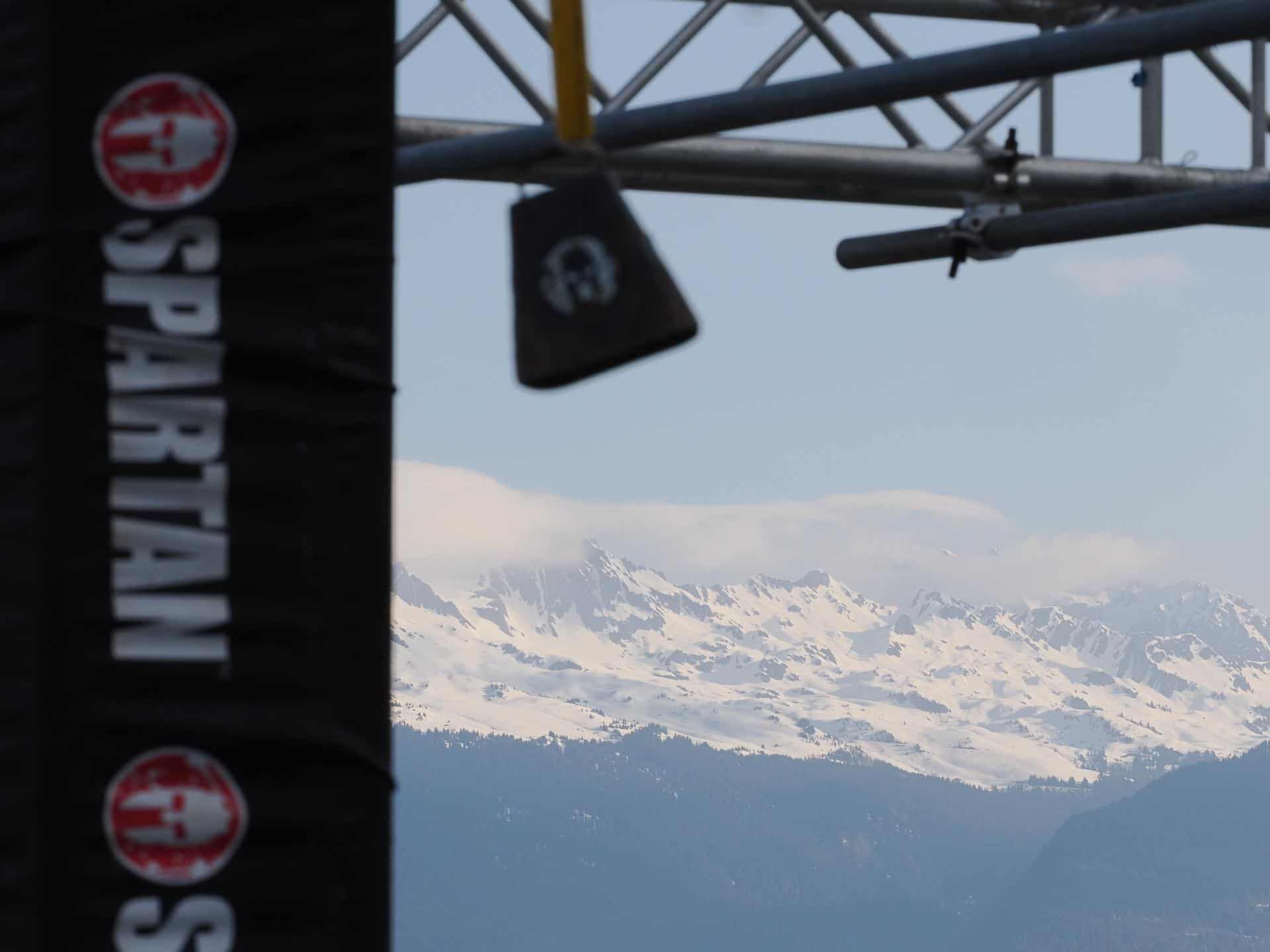
Shooting for Sportograf (and for similar agencies, each of which has a different workflow even though the logic is the same) isn’t particularly creative work, as the affectionate nickname suggests. It’s not Michelin-star cooking: each team member photographs a key moment of the race, if possible every participant. You have to stay in one spot for a long time, sometimes a couple of spots per day, and shoot according to criteria that are usually defined in advance (telephoto/wide-angle, horizontal/vertical). Shooting is strictly in JPEG, and post-production is done automatically before the photos are published.
It can seem boring, and often it is. It’s a job of endurance, because after 8 hours you have to take the same photos you were taking in the first hour; and you often sleep a bit less than you need to. Just as often, though, it’s interesting. First, because of the company, since the team is usually close-knit, and that makes everything easier. Second, because some situations let you sharpen your photographic skills. Going back to the idea that constraints can help us, here too the restrictions force us to be resourceful within a narrow range of possibilities.
In this specific case, the Spartan race in Valmorel is a race with some particular characteristics: held over two days, it’s a winter Spartan race at about 1,300m altitude, so it’s cold and you have to be ready to spend several hours outdoors. Last year it was -7°C, and it wasn’t pleasant; this year, on the other hand, it was warmer (around zero), but on Sunday there was quite an intense snowfall, which ended just as the last runners reached the finish line.
But let’s take things in order.
Improving composition from a fixed spot: training and mistakes
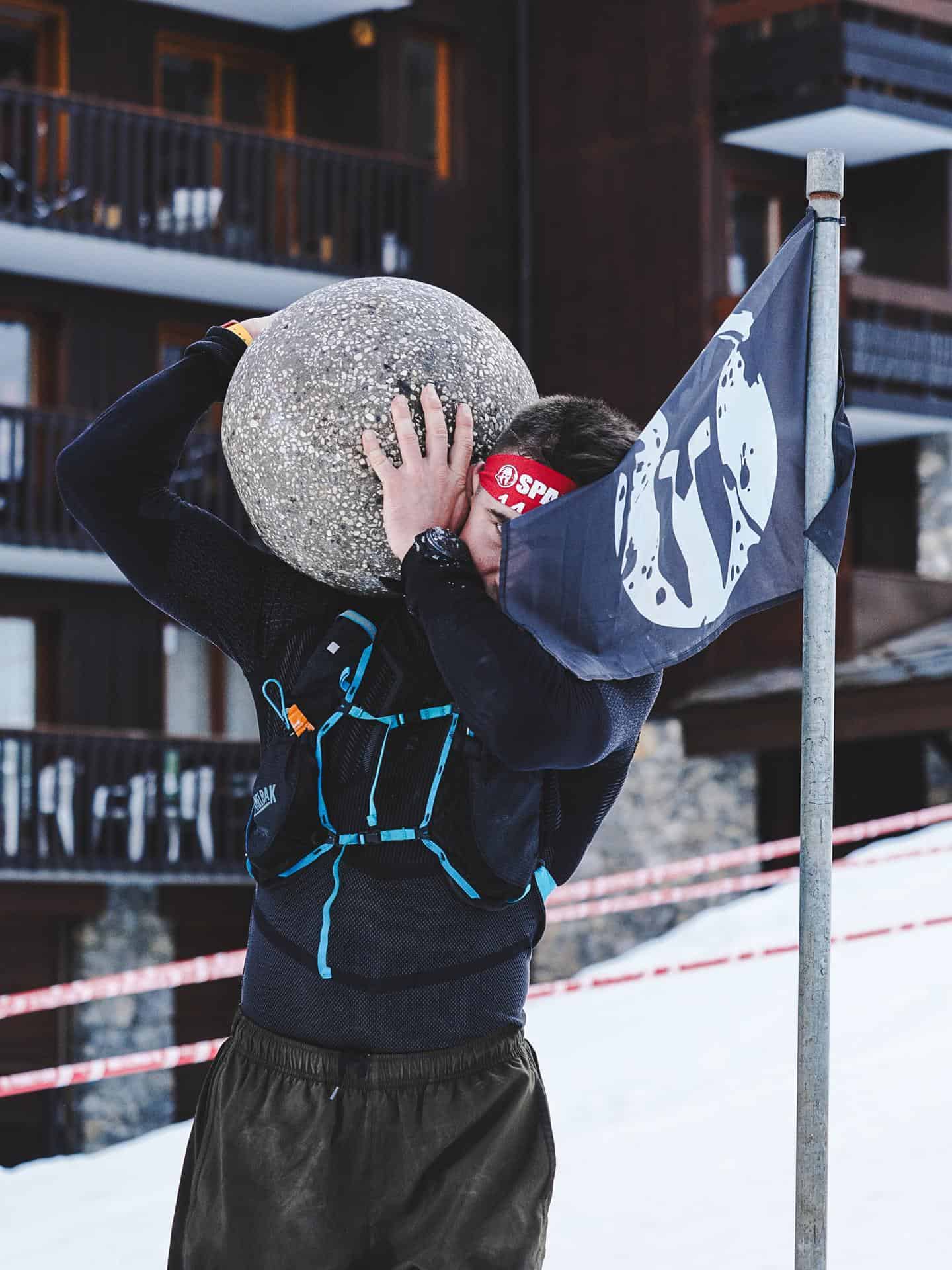
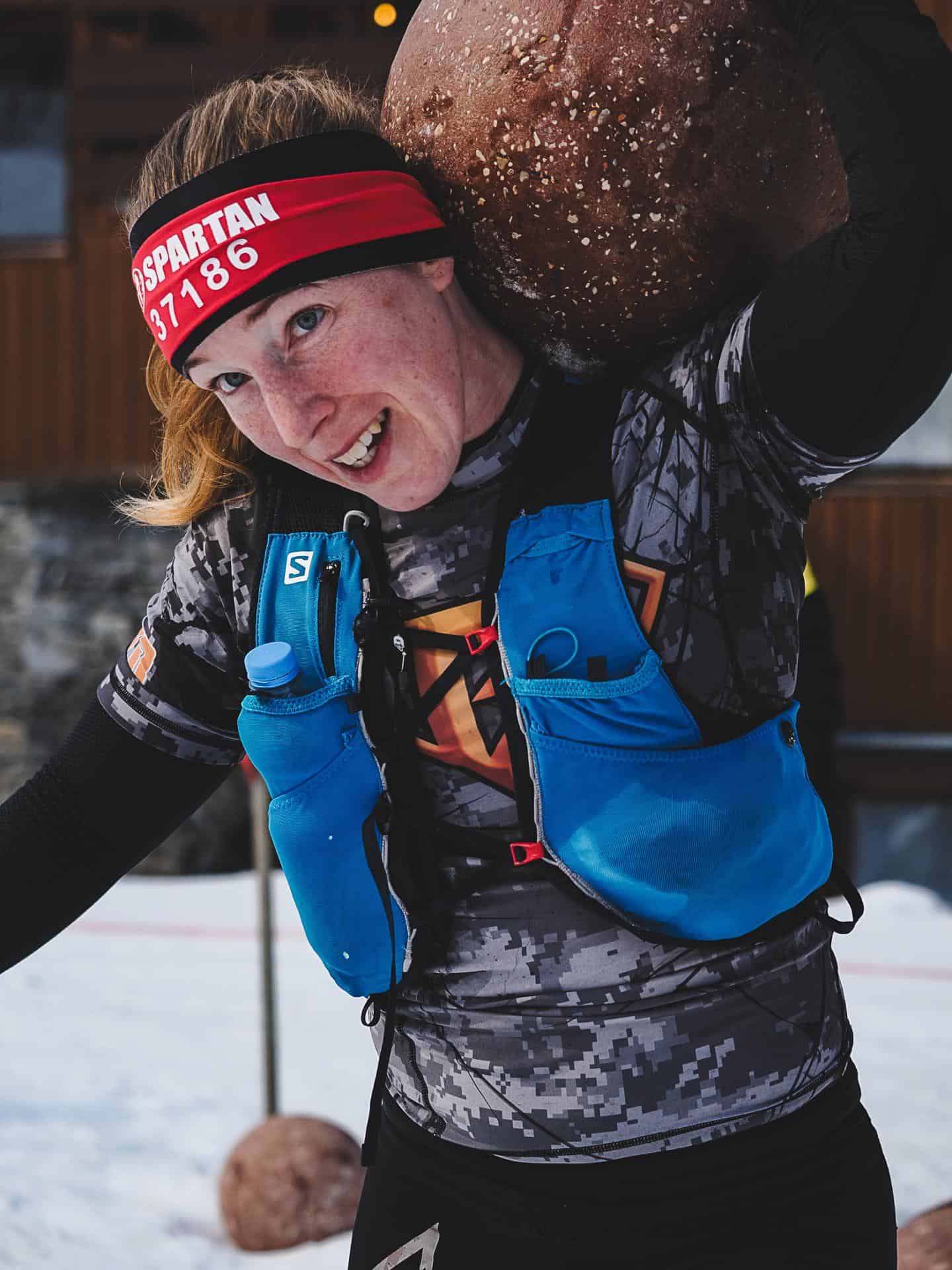
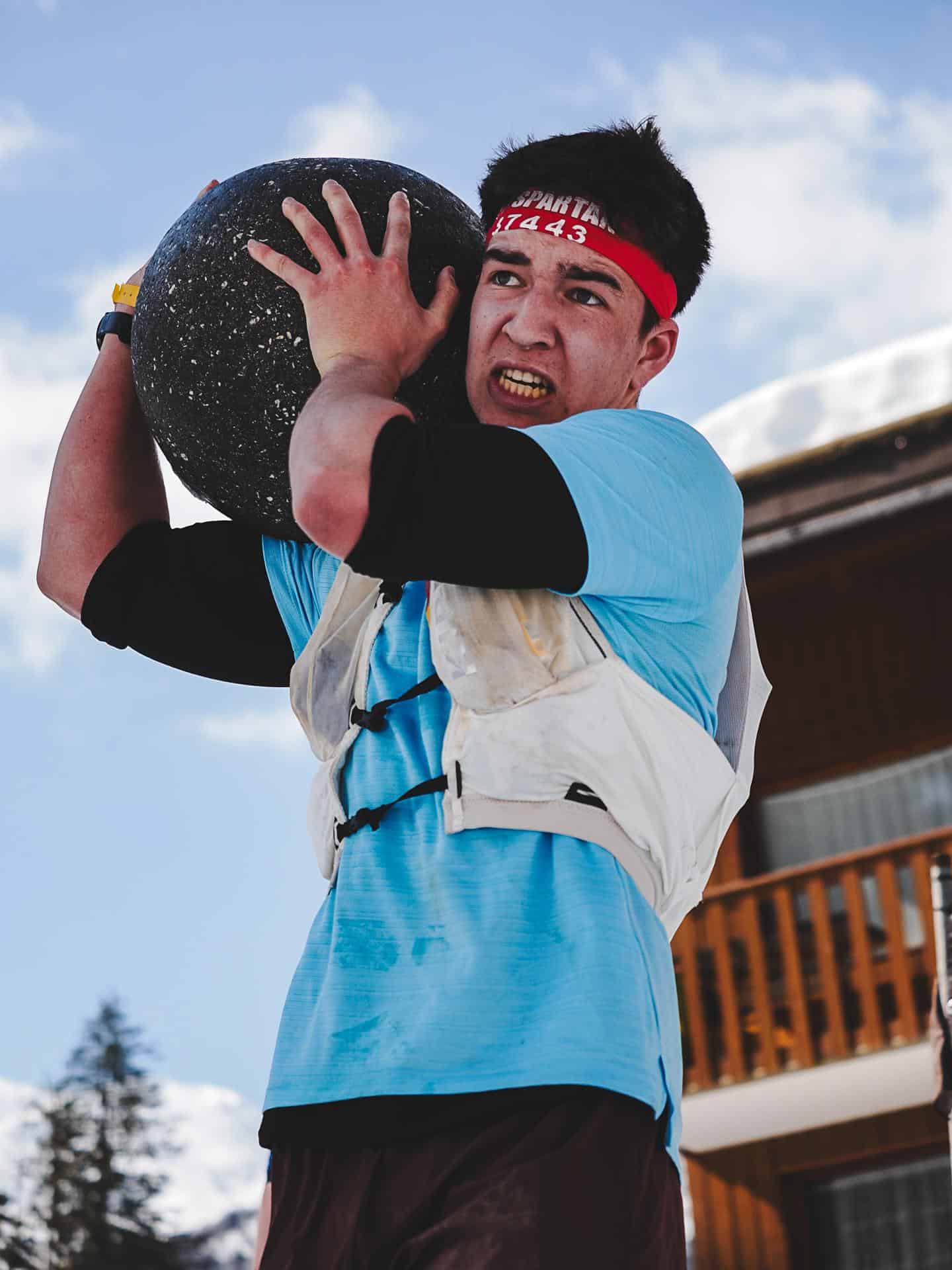
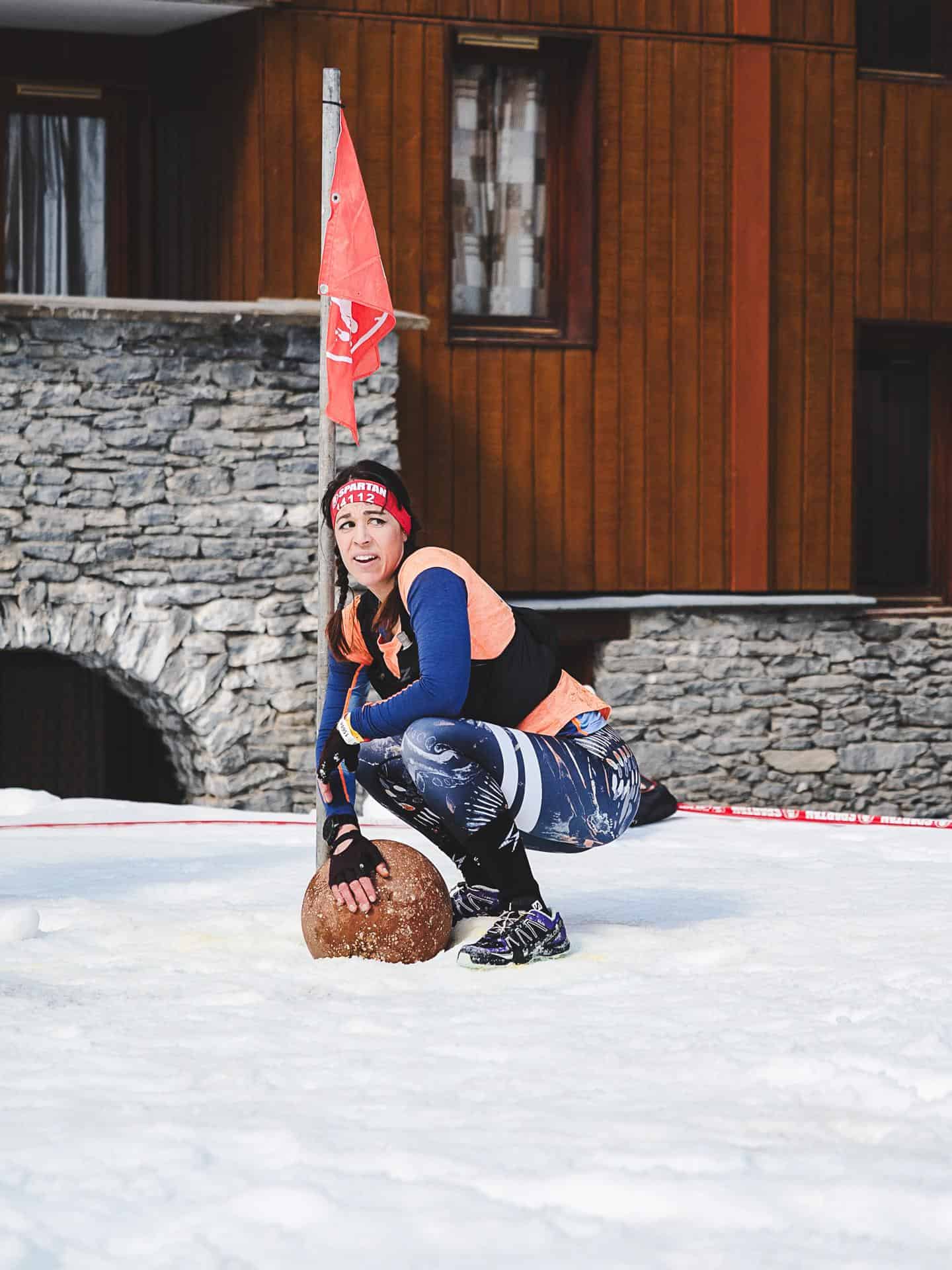
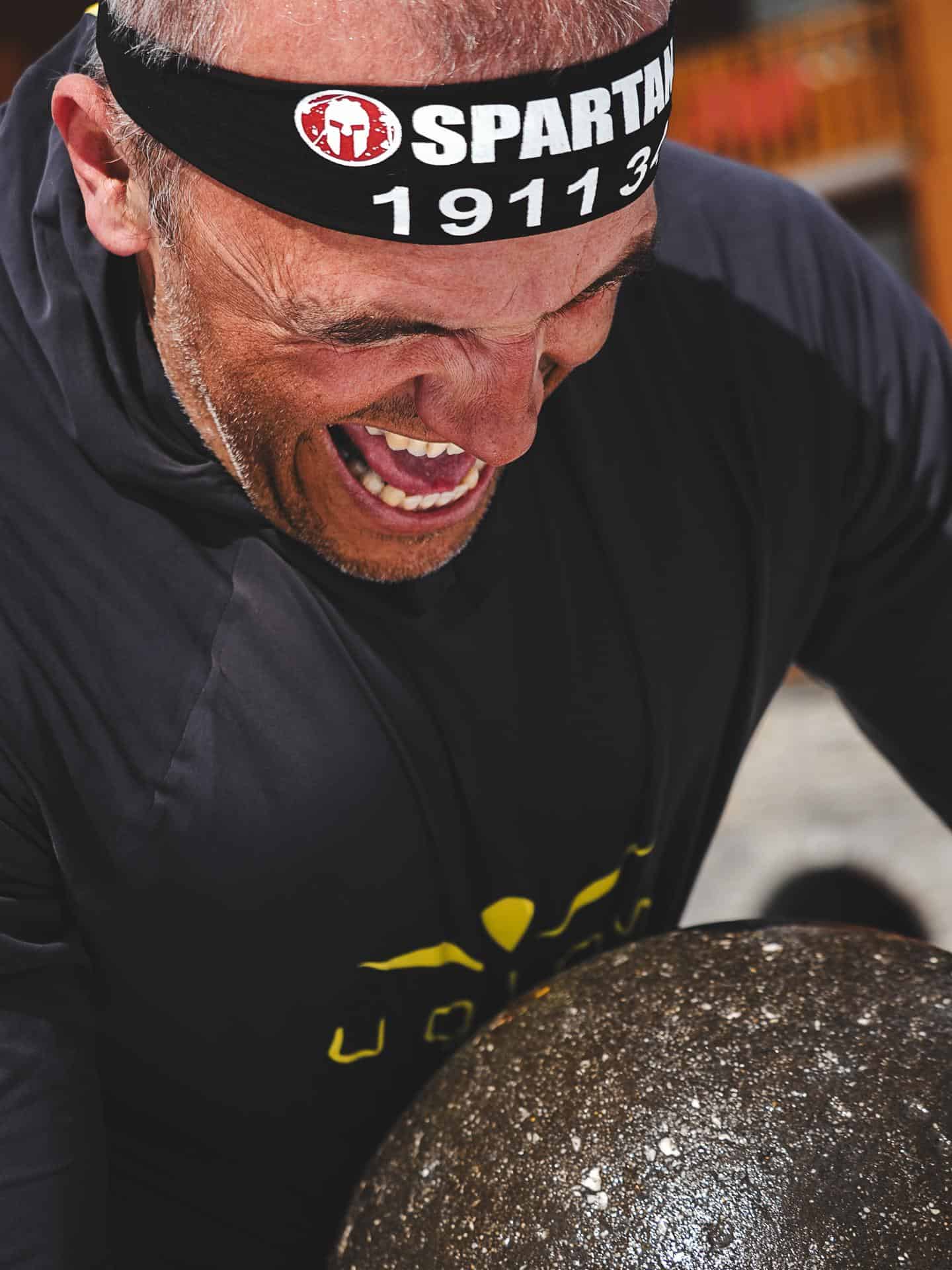
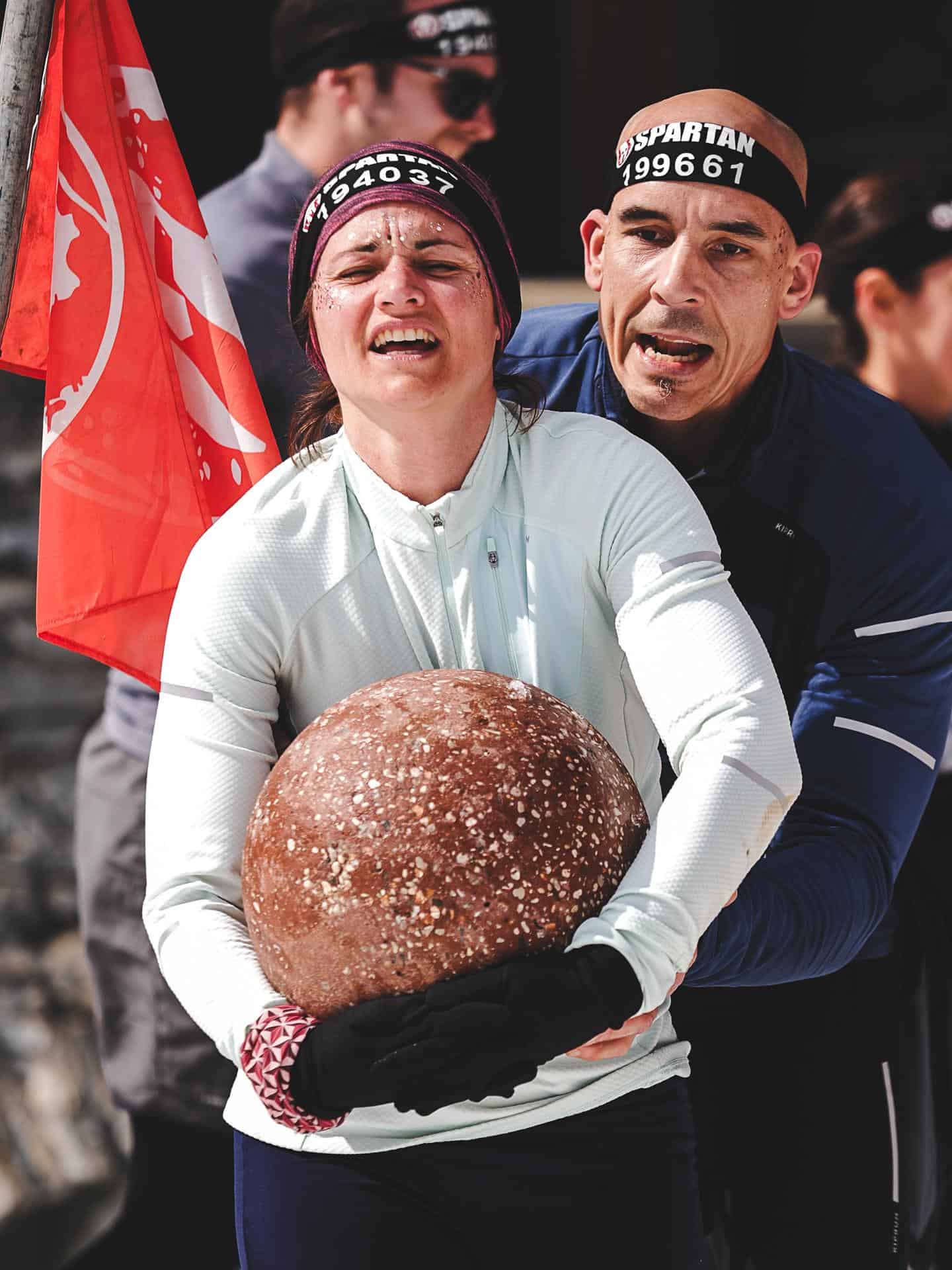
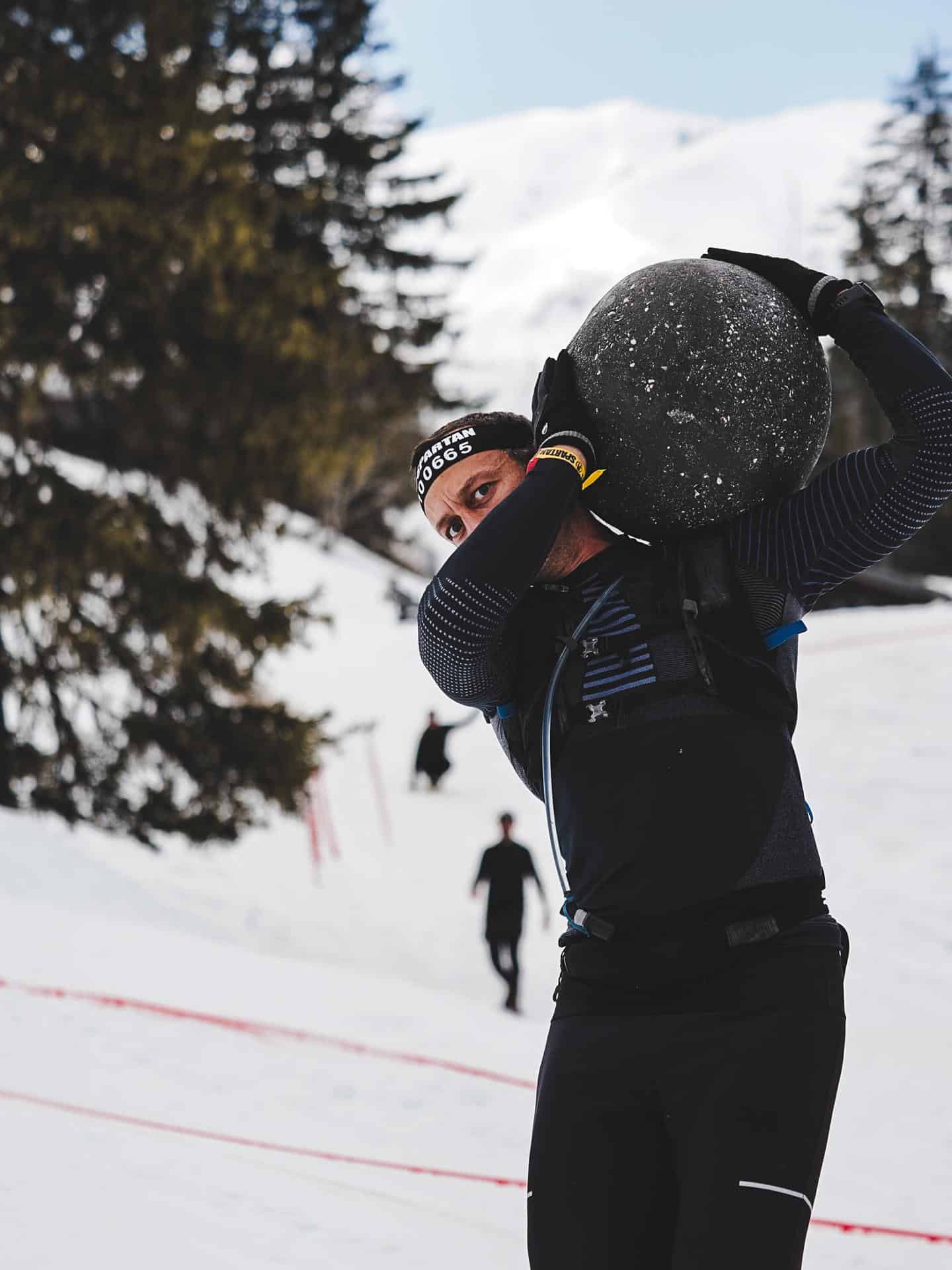
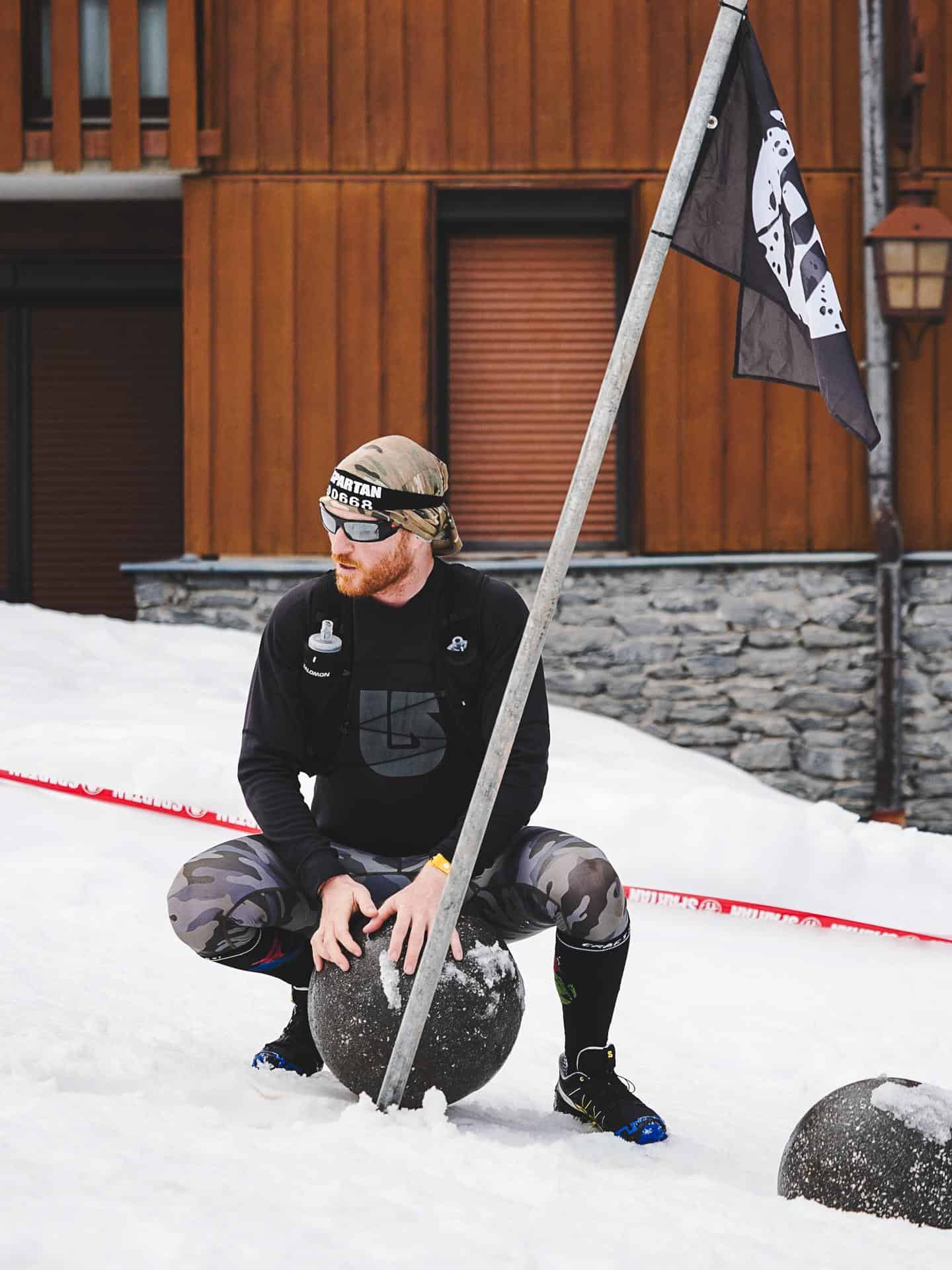
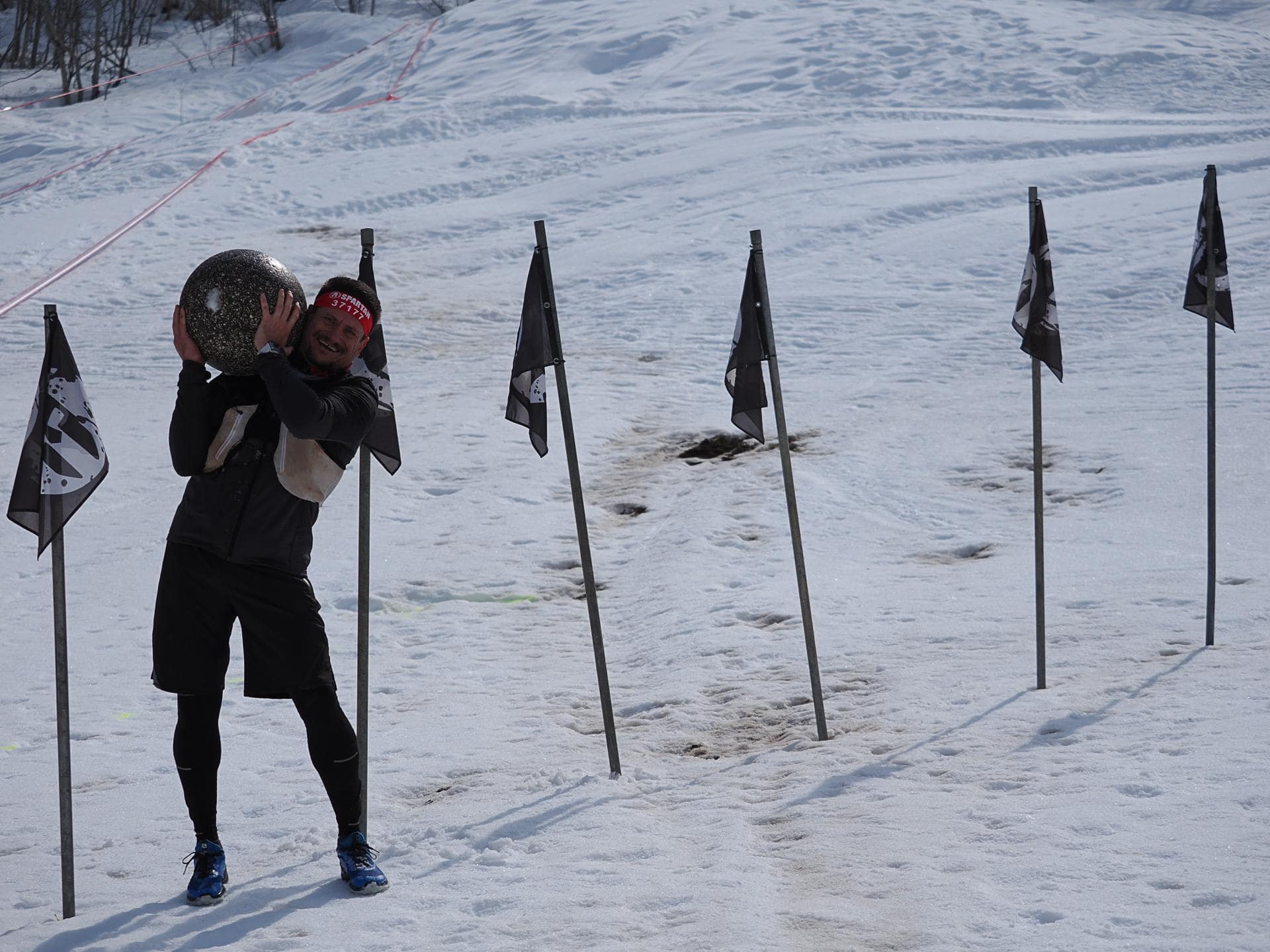
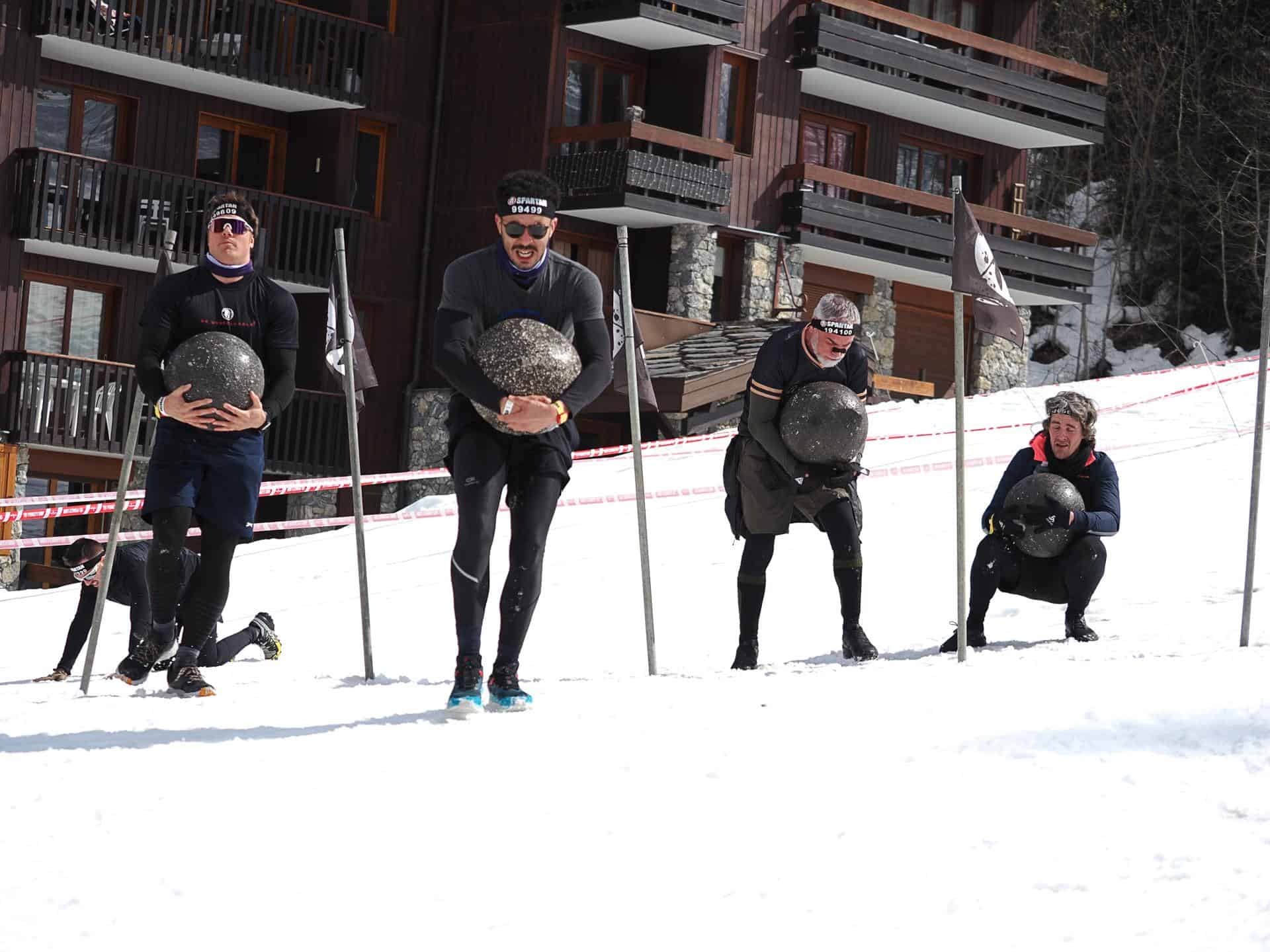
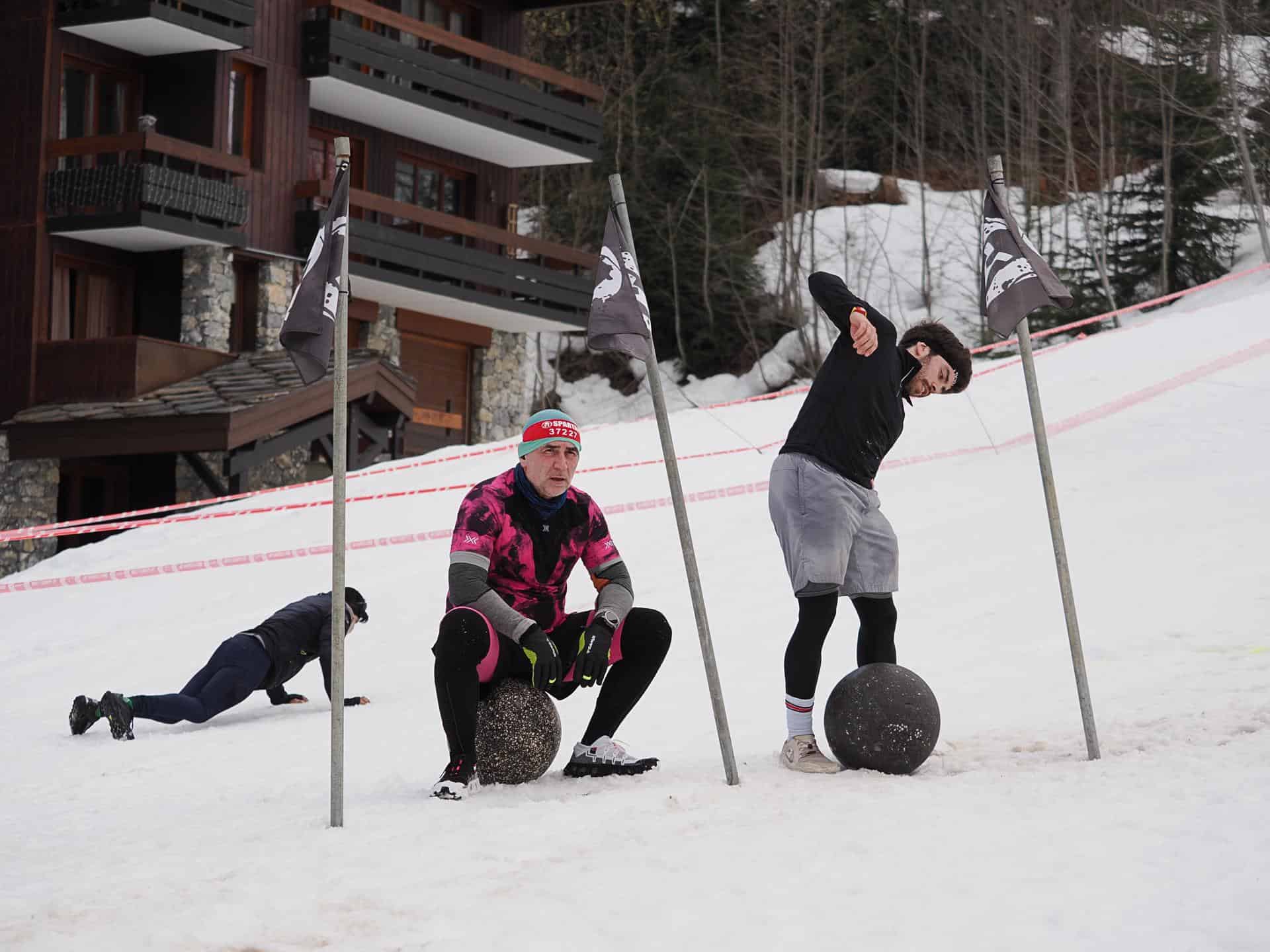
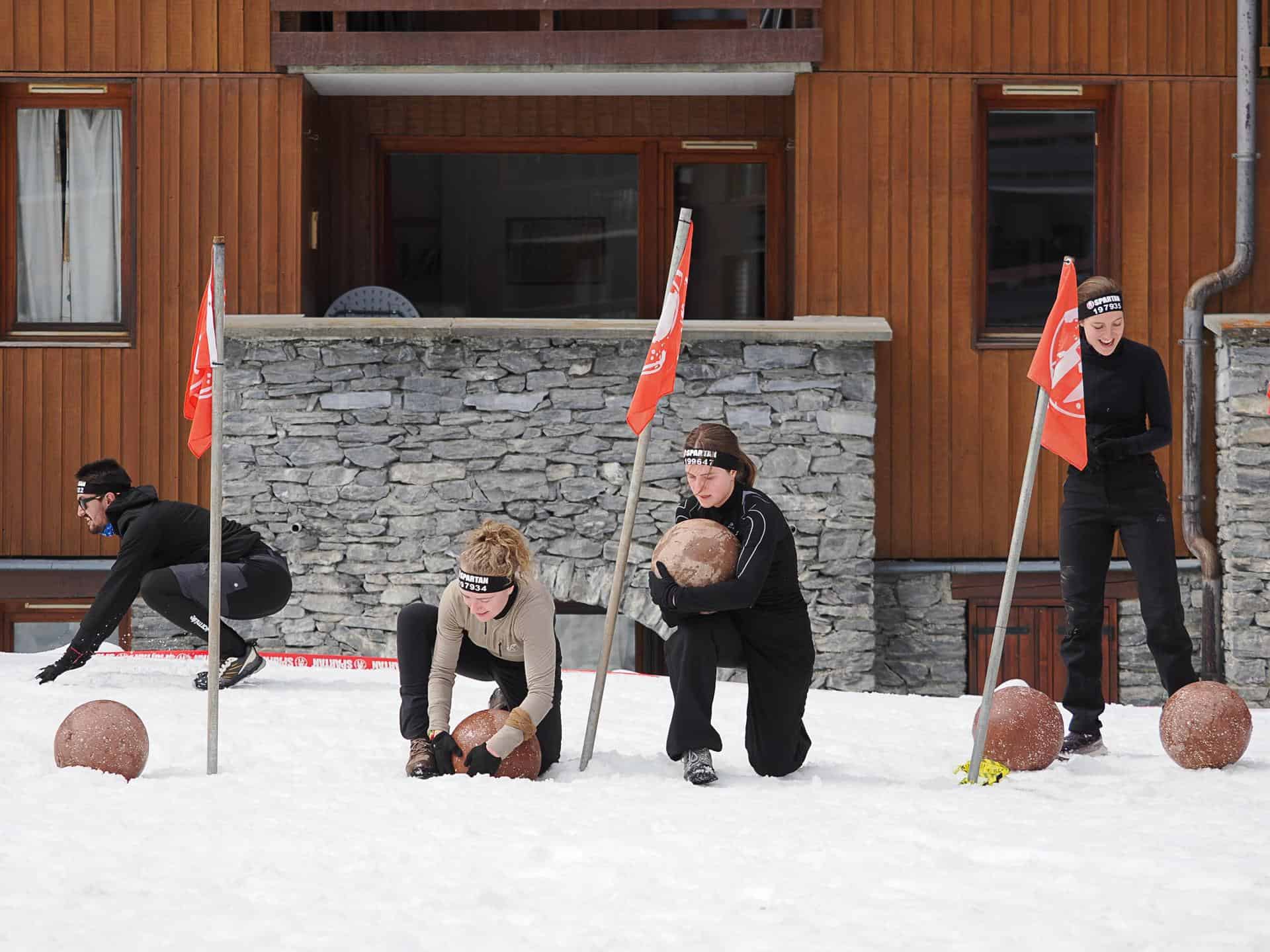
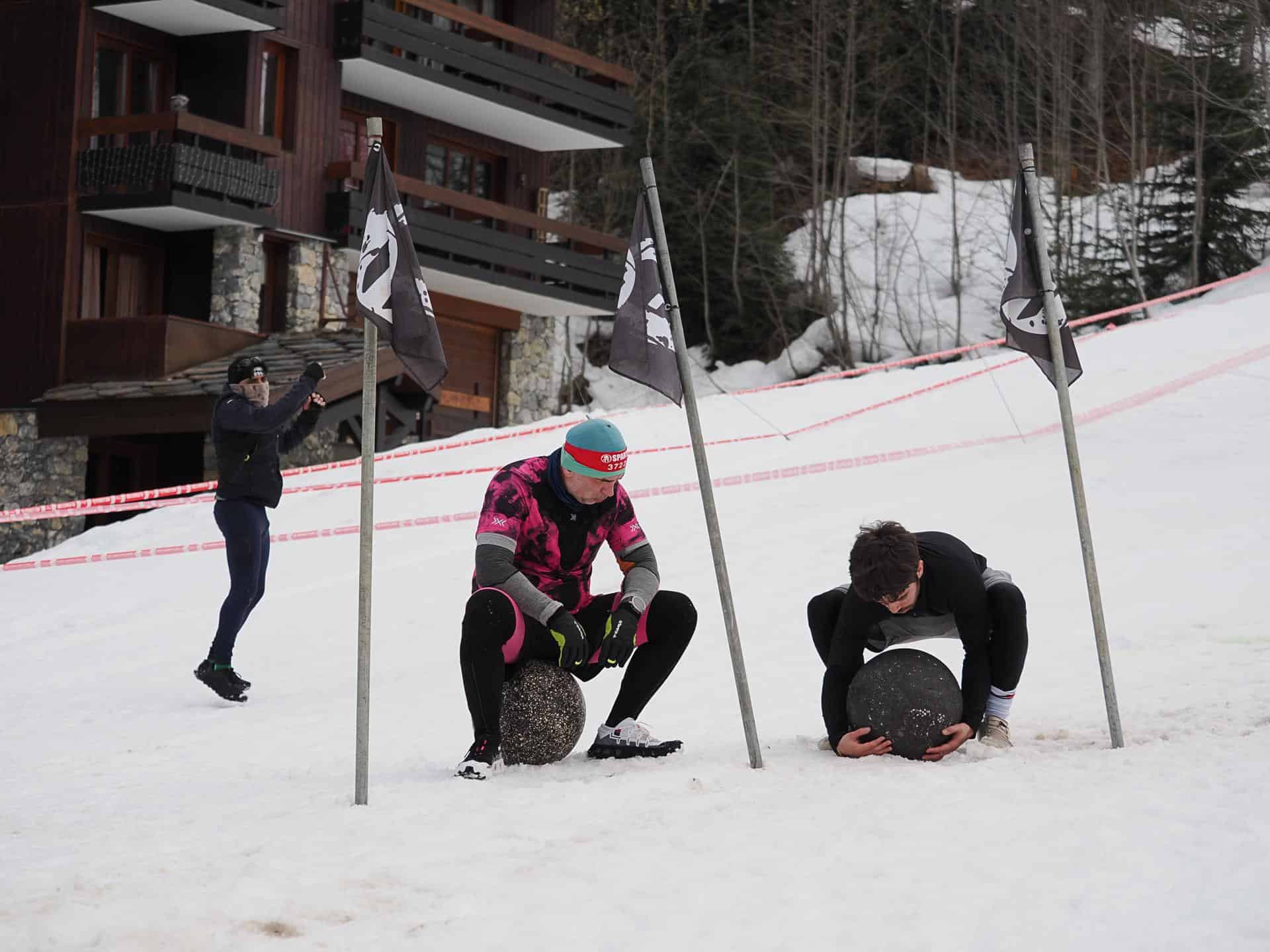
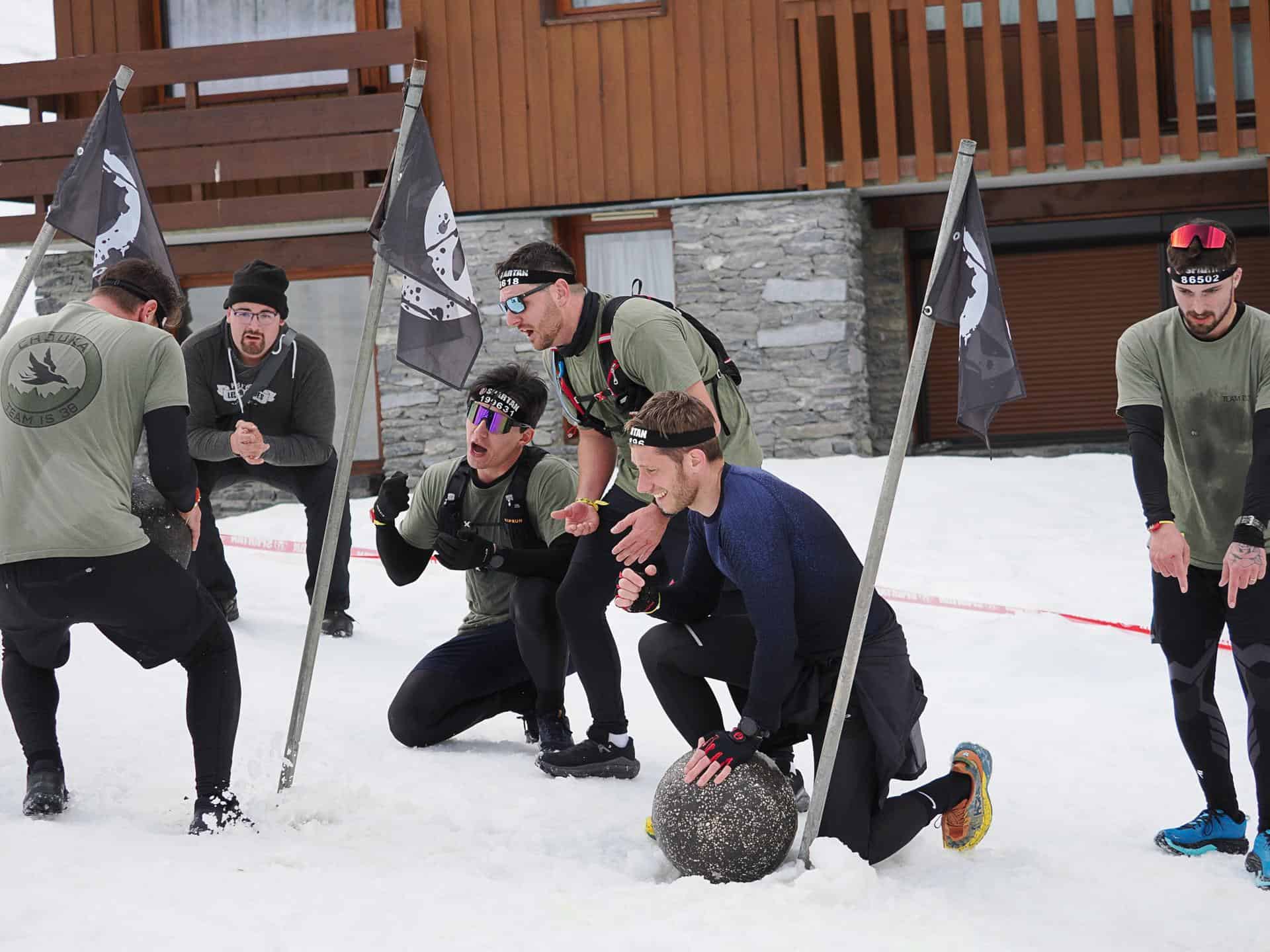
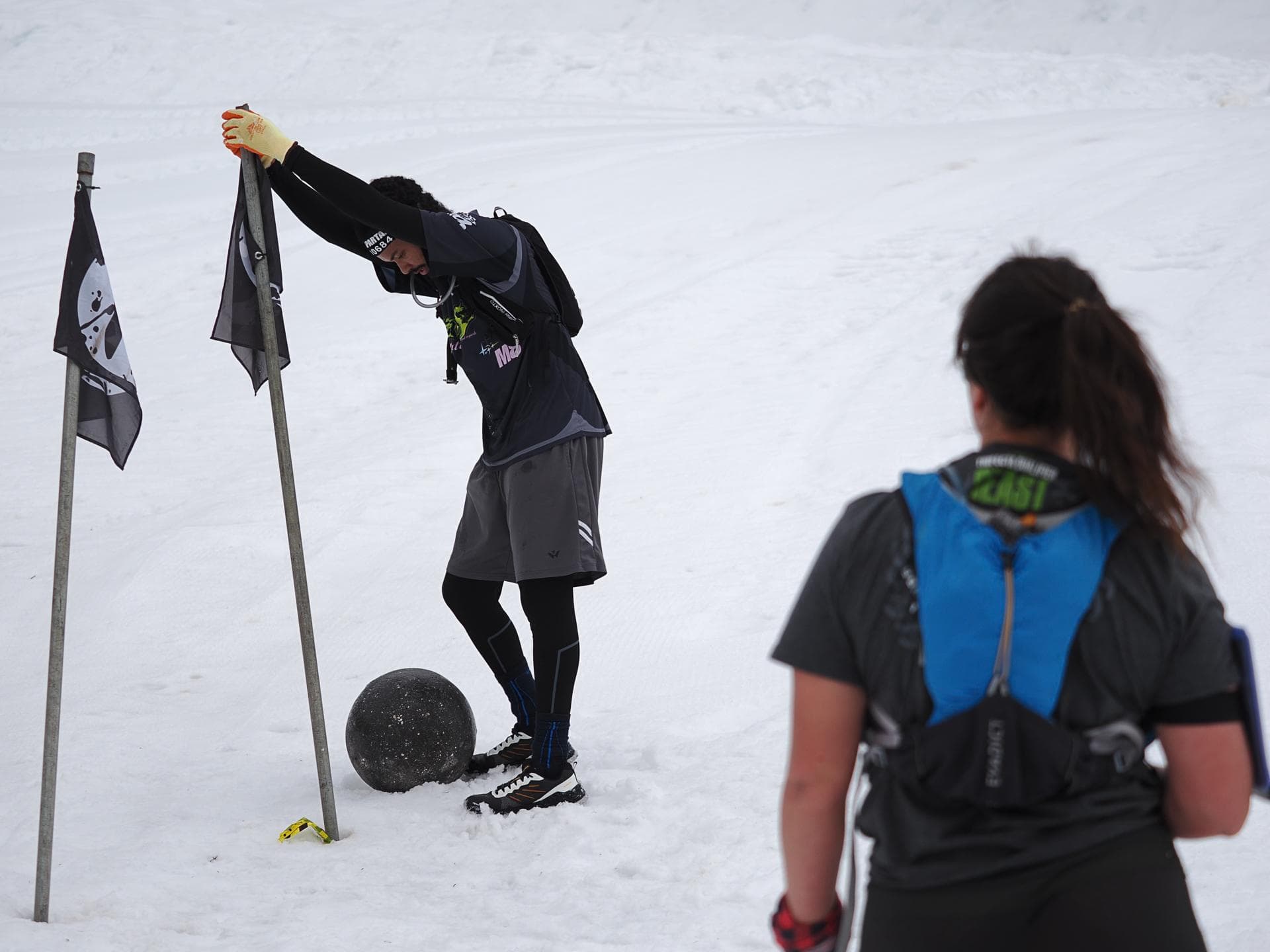
On Saturday my station was the Atlas Carry, an obstacle where you have to lift a very heavy stone ball and do an out-and-back of about 20 meters, going around a stake. The athletic movement itself is more or less photogenic depending on how the ball is lifted and carried: if it’s on the shoulders, it definitely evokes Atlas, with a certain solemnity. But if the ball is dragged with effort against the knees, or bends the back with its weight, the image isn’t particularly appealing.
Either way, the goal is to photograph everyone, regardless of how visually effective their movement is. So it’s all telephoto, with tight framing and half-body shots. Also because — and here’s the challenge — the setting isn’t much to look at: in shadow for a few hours, we’re in a clearing about twenty meters across; on two sides there are apartment buildings, separated by an access road where parked cars and trash bins show up. On the opposite side is the slope the participants come down from, with a few pine trees hiding the snow-capped peaks.
Some portraits turn out nicer than others, thanks to a lucky bit of light or an expressive gesture.
The situation—stuck there from about 9:30 to 3:30—is perfect for making a virtue of necessity and studying the scene in depth to get a few different kind of color shots.
At times I try to play with the interactions between different people: groups of participants, volunteers, referees, and the few spectators around. On some occasions, simply shapes and contrasts between silhouettes. Nothing exceptional, but a few shots that tell something beyond the pure athletic movement.
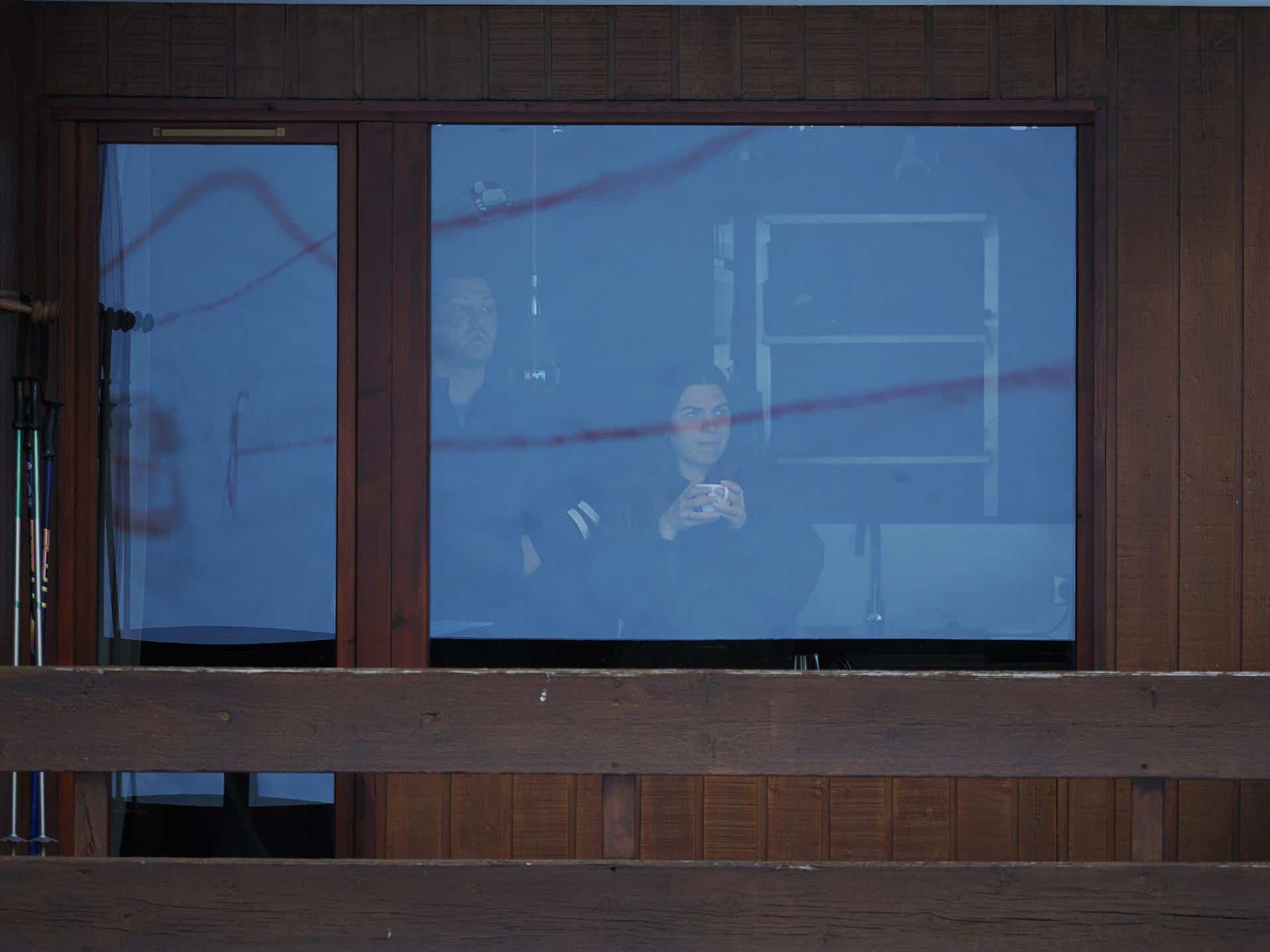
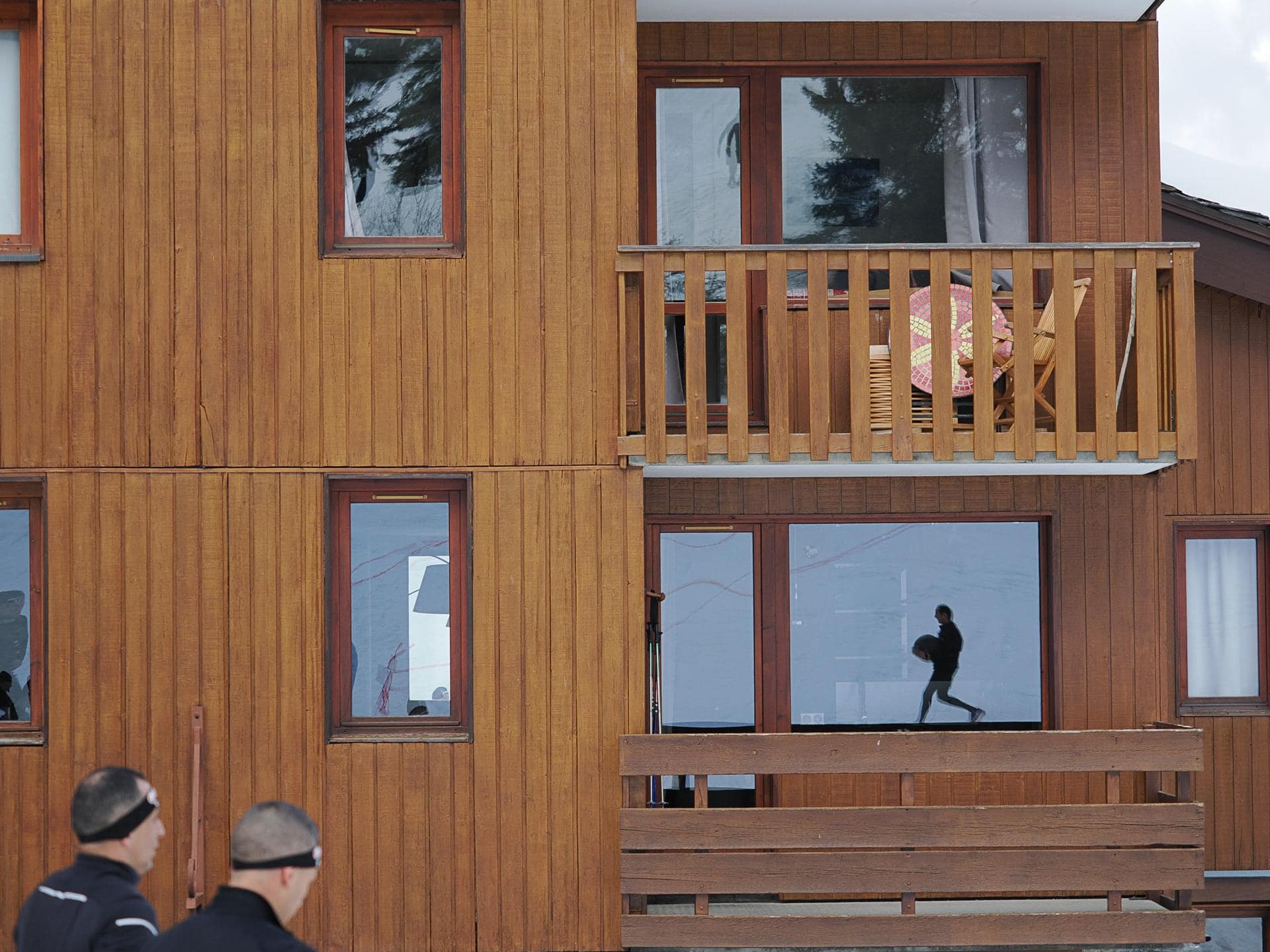
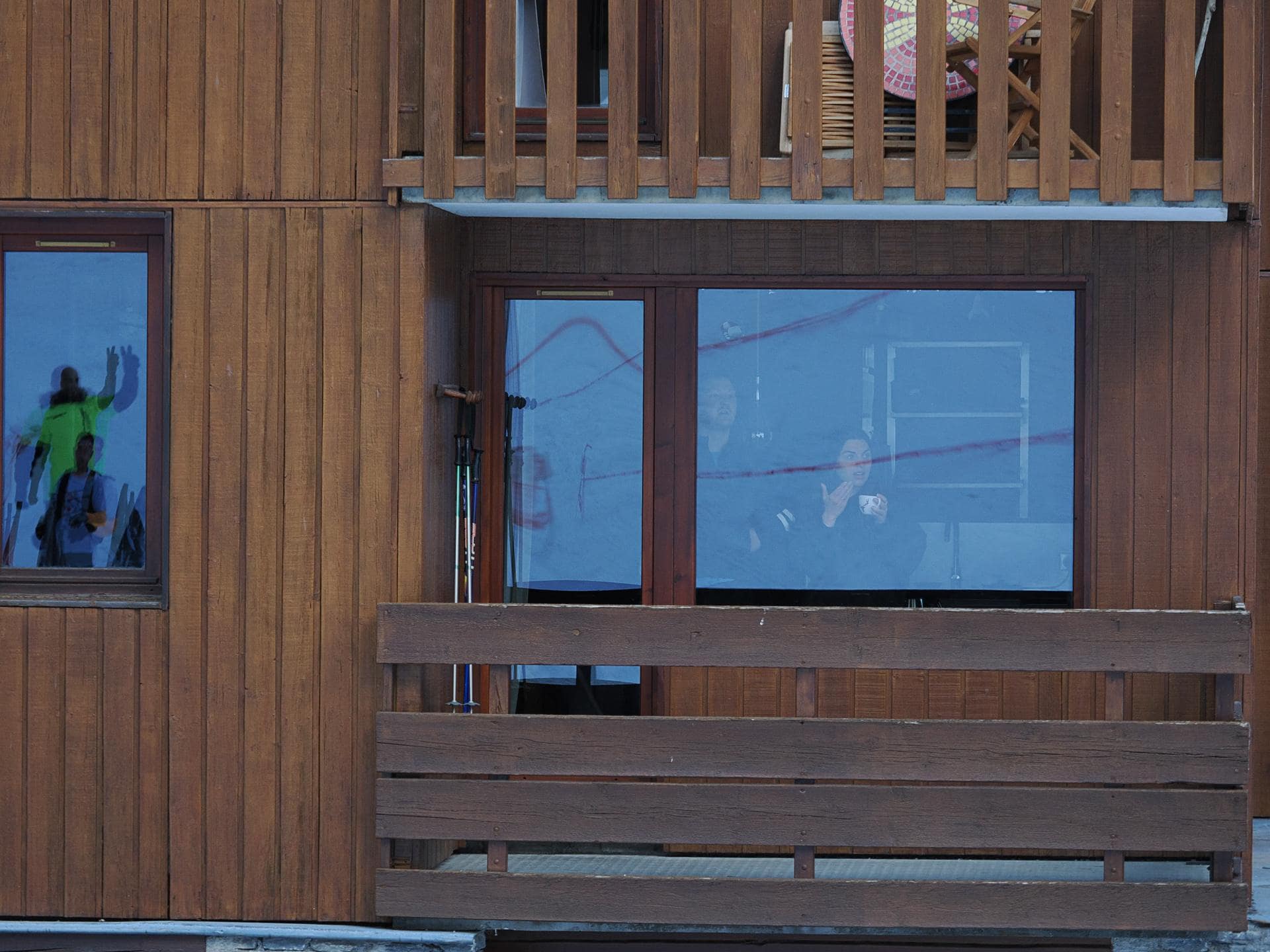
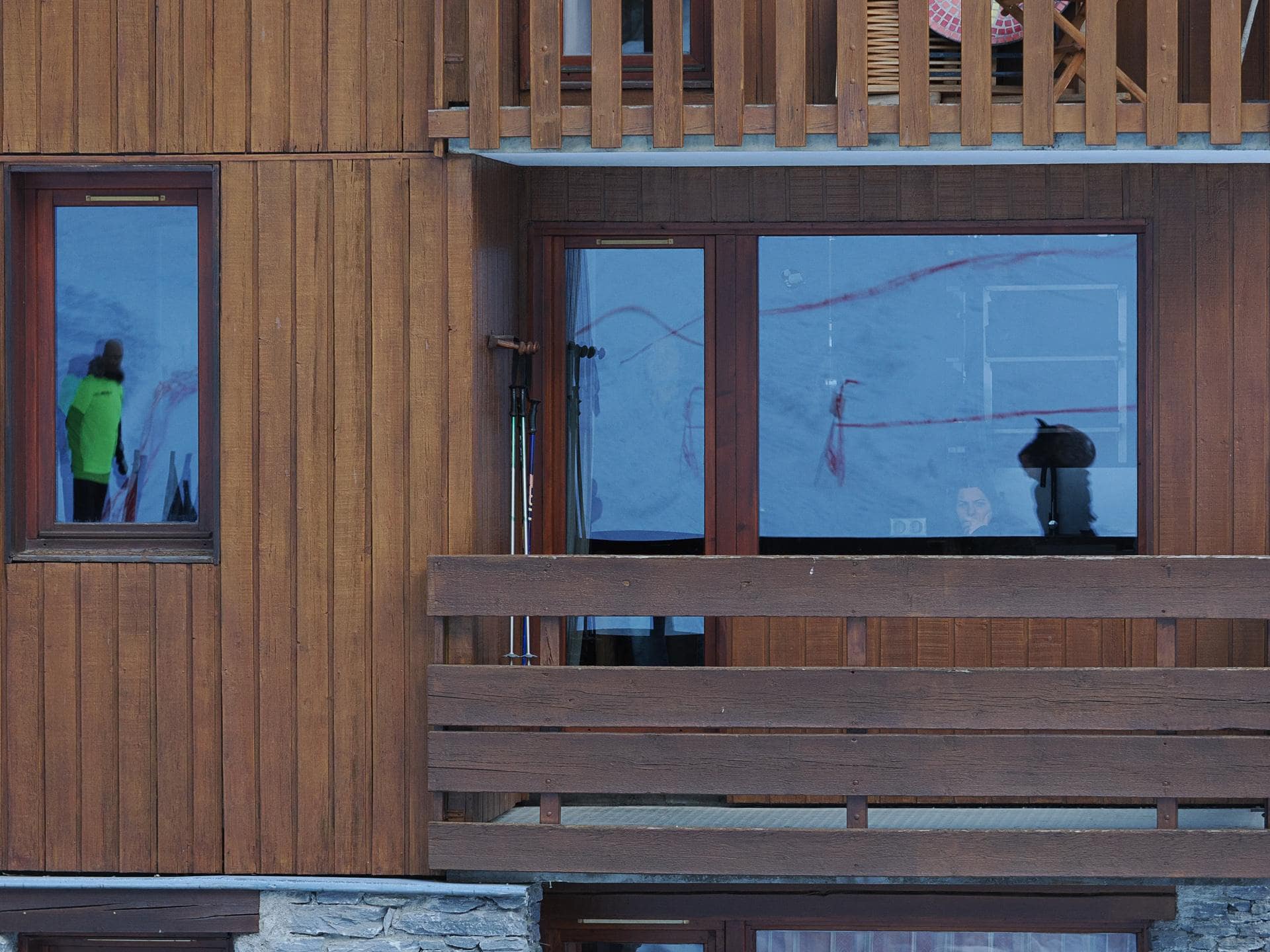
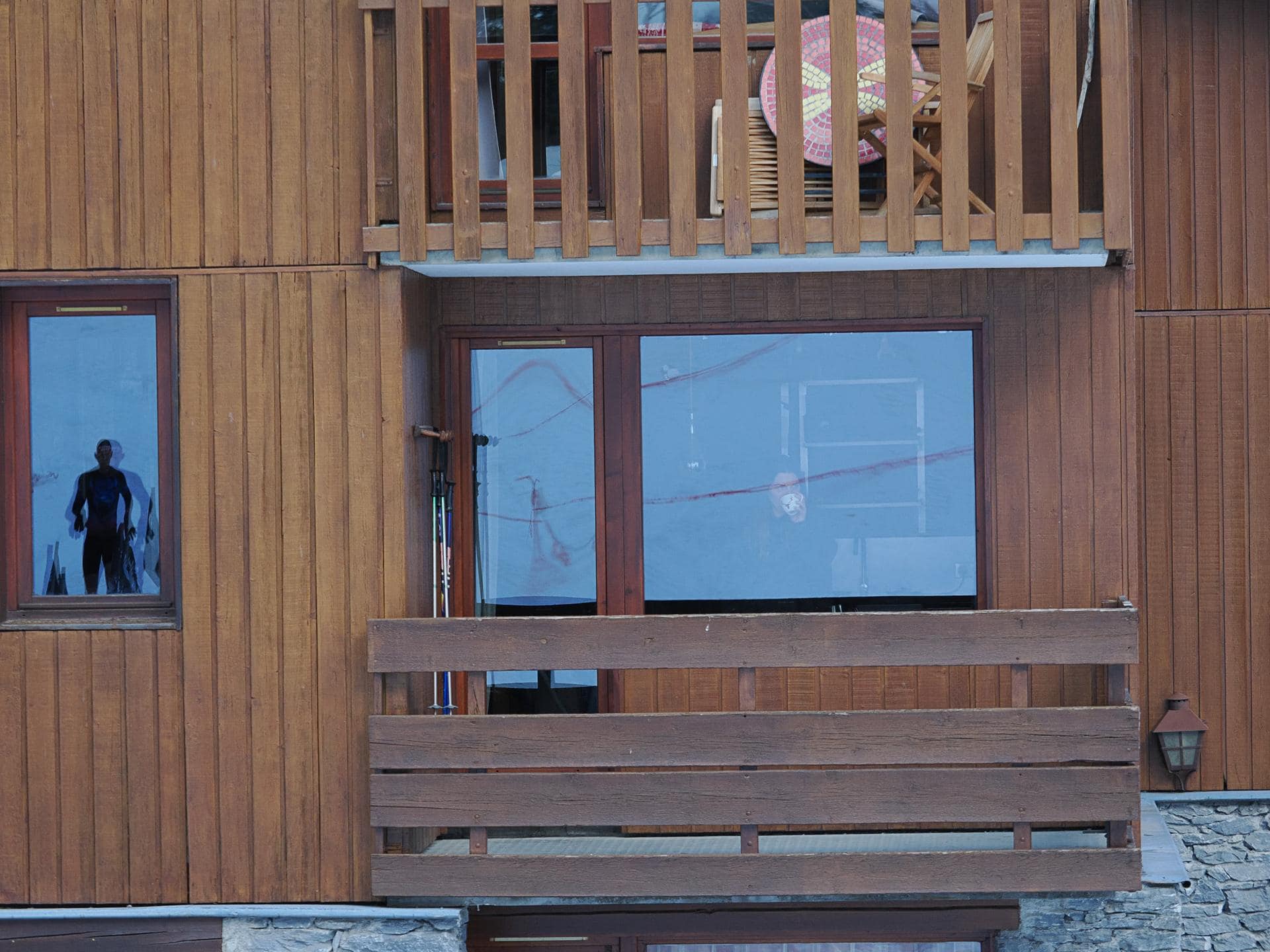
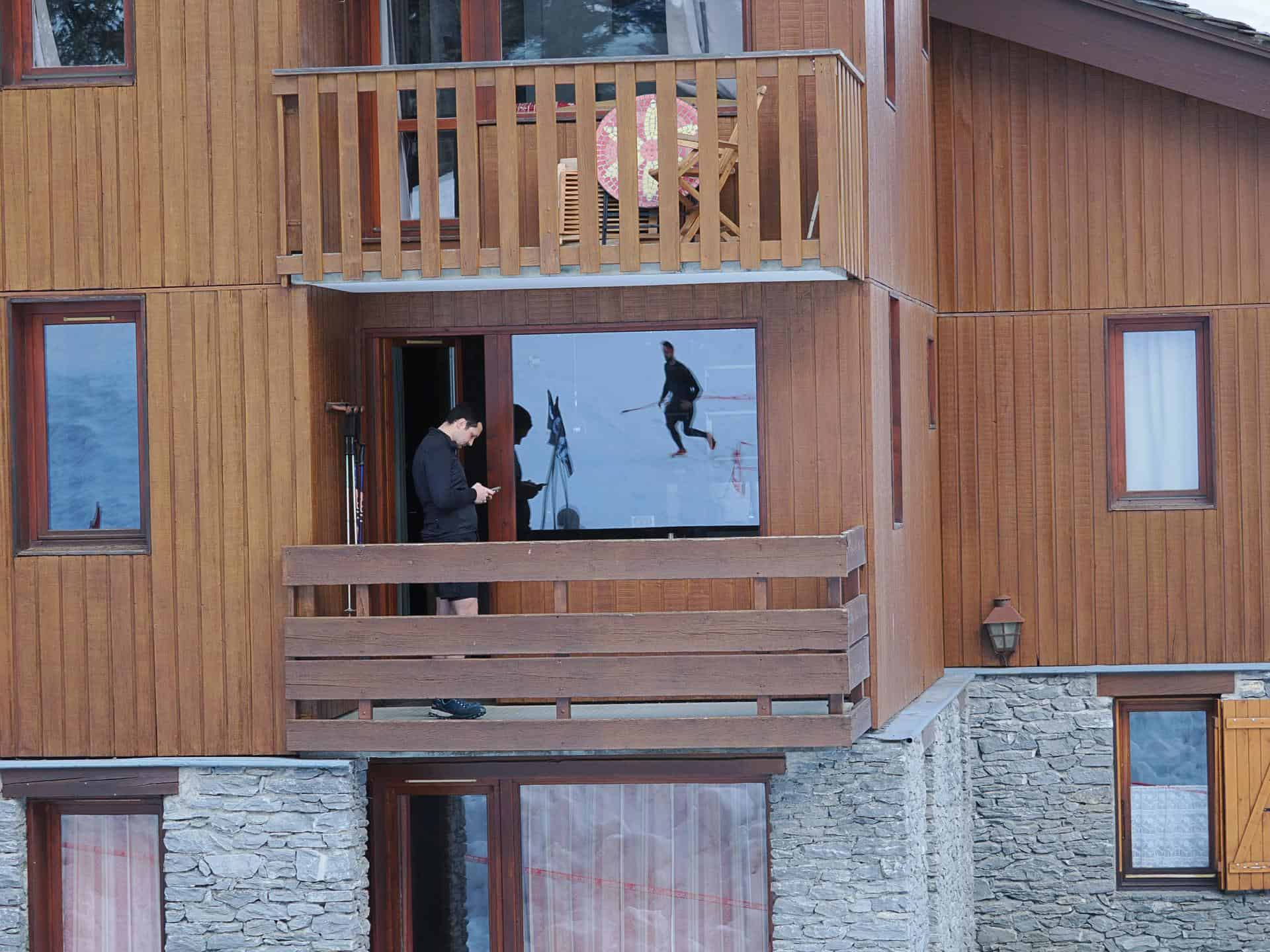
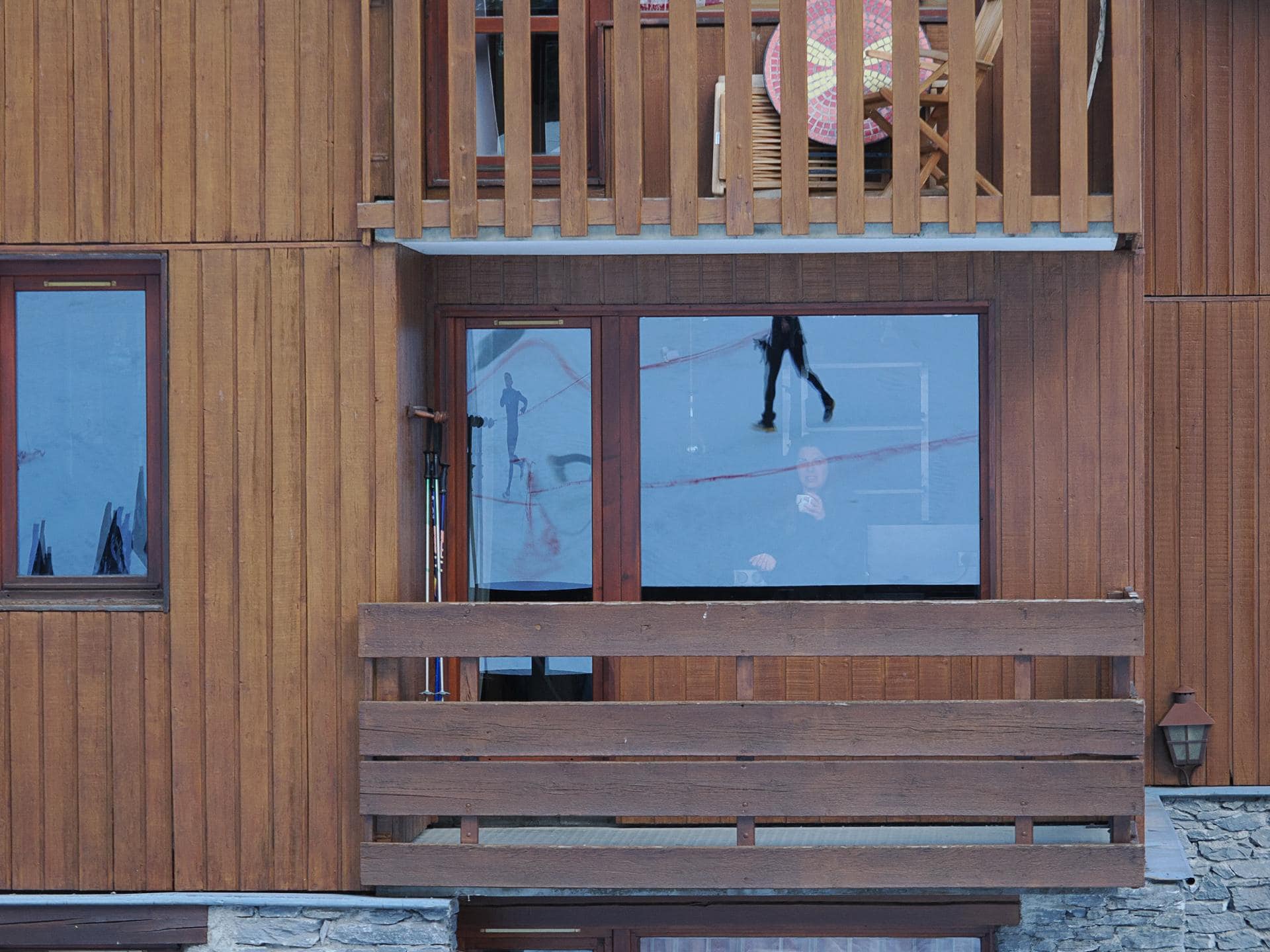
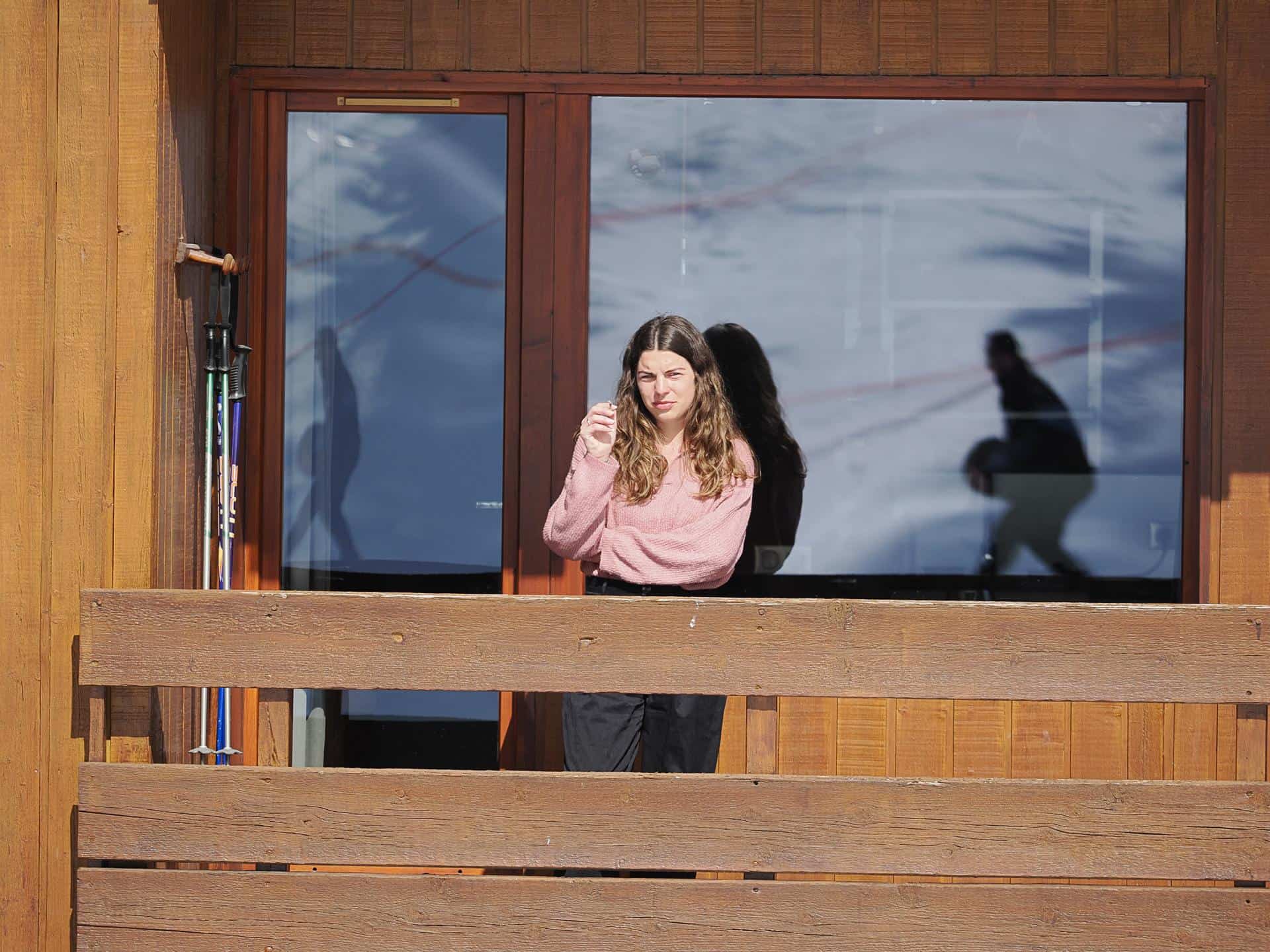
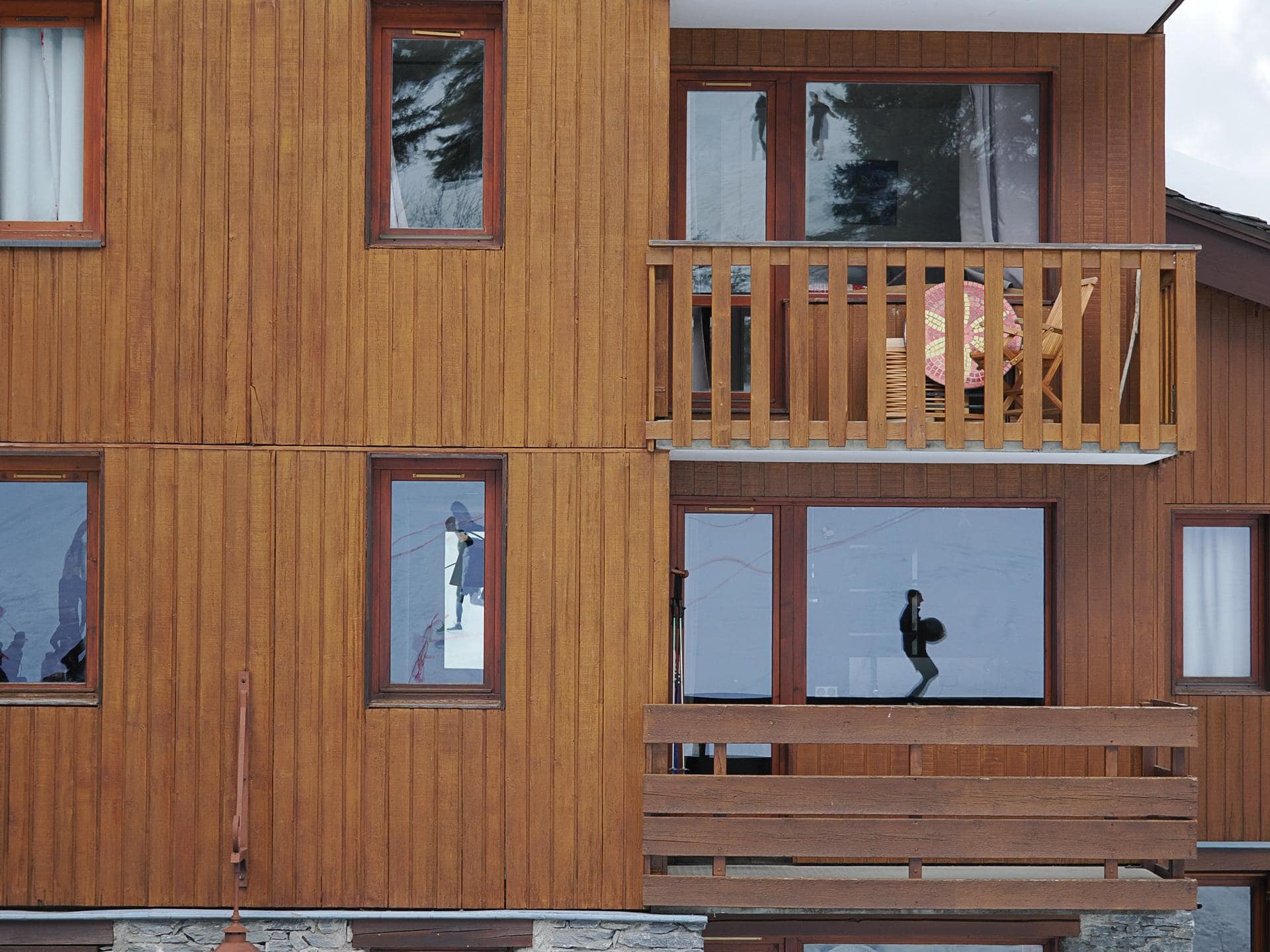
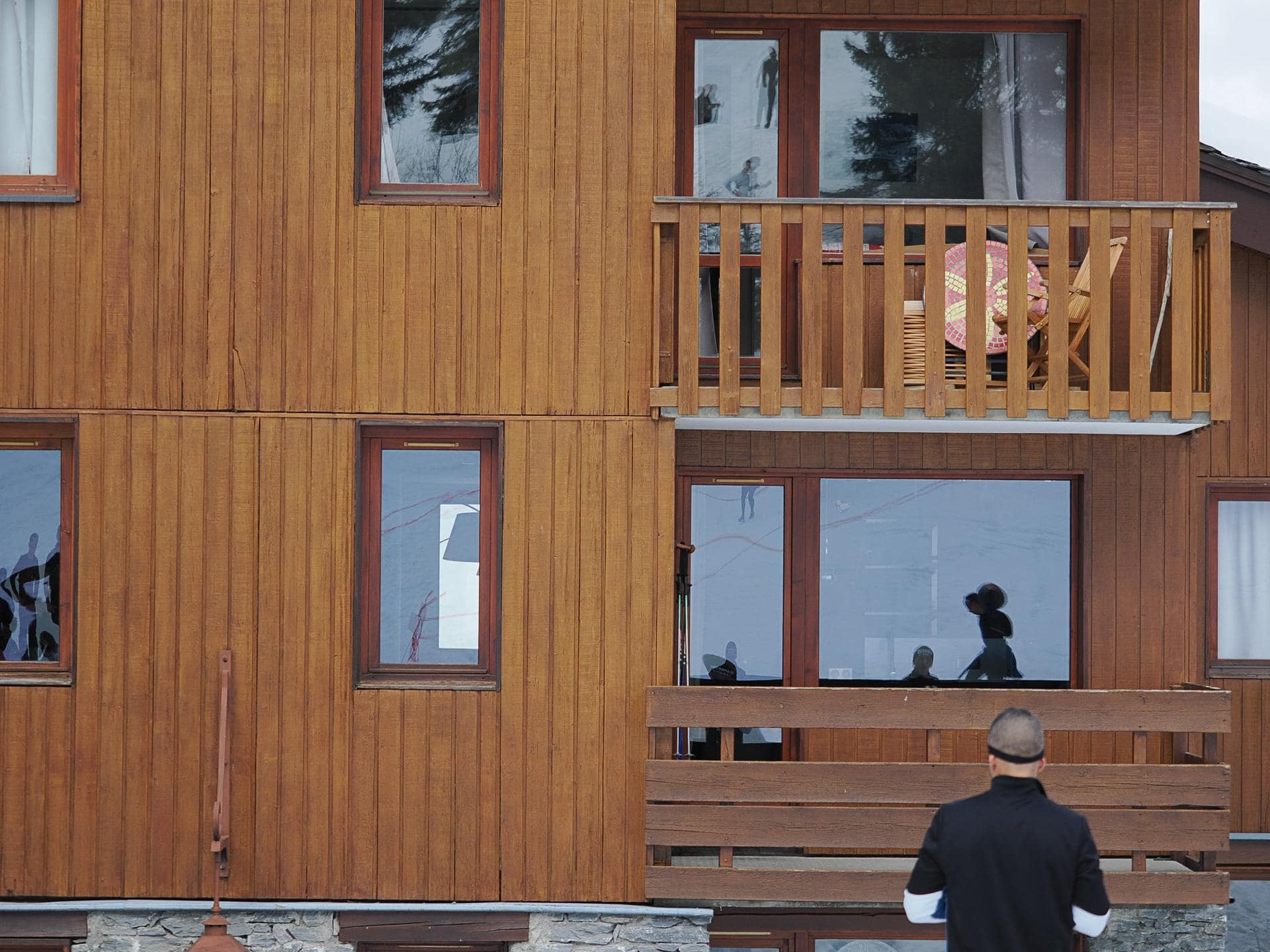
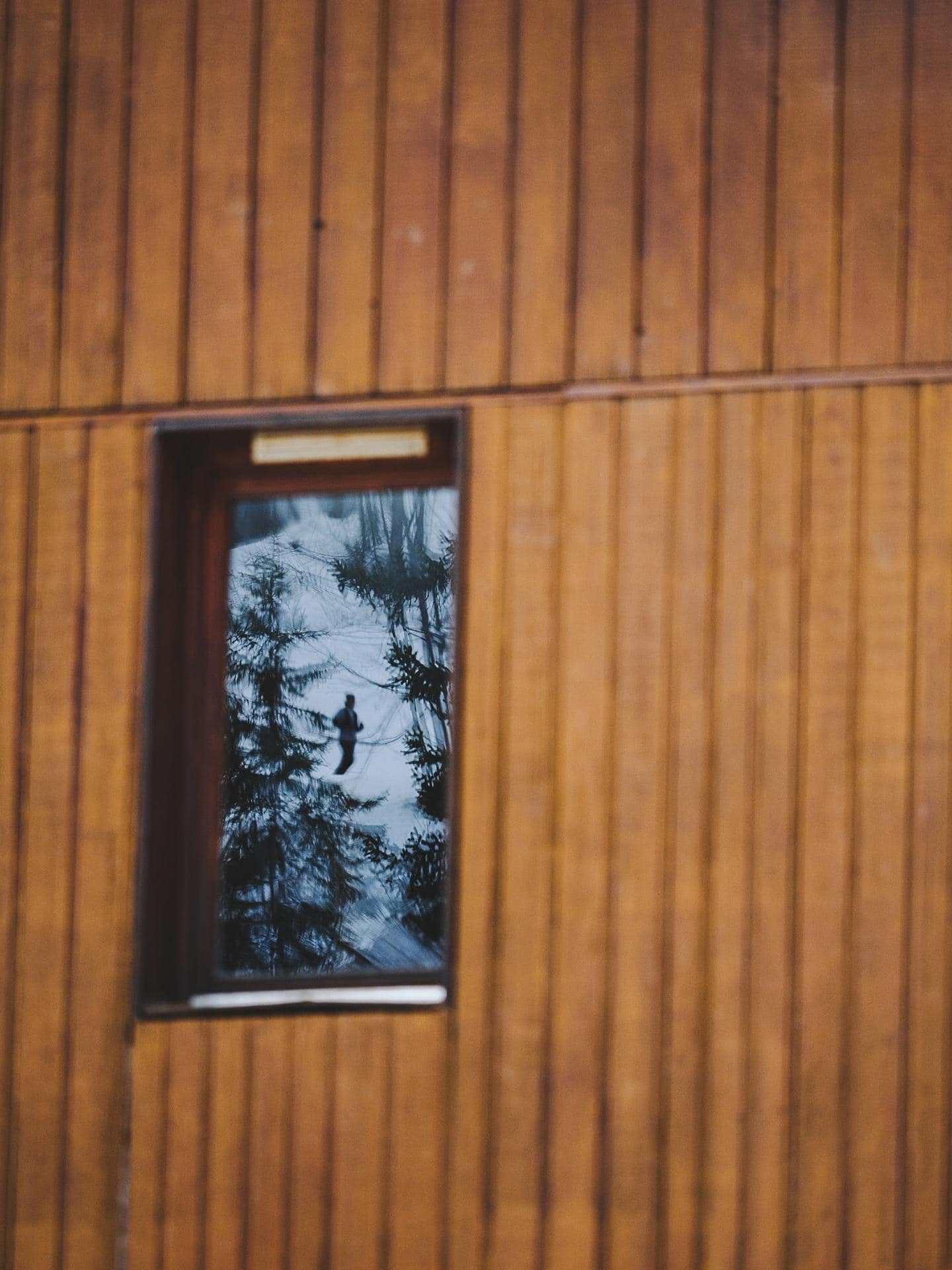
Mostly, though, I dedicate myself to one of my favorite challenges: framing within frames. Without much success, but what matters is practicing in this context where, above all, you still have to bring home the portraits, and anything extra is a bonus.
Mostly, though, I dedicate myself to one of my favorite challenges: framing within frames. Without much success, but what matters is practicing in this context where, above all, you still have to bring home the portraits, and anything extra is a bonus.
The windows of the surrounding buildings reflect the clearing and thus the silhouettes of the participants, but they also let you glimpse something of the interior. In particular, in the apartment across the way there’s a couple (he’s racing the next day, and together they watch with amusement), so at various moments I try to play with the different layers.
Unfortunately the glass is quite warped, and so the silhouettes—on those few occasions when they’re in the right position—often come out distorted and confused.
In the dead moments I keep trying systematically, but unfortunately that magical alignment between the different layers, which would have created a visually interesting scene, never quite comes together. Too bad. In the end, the photo that convinces me most is the most minimal one of all, with a simple reflection in the window. Big deal, right?
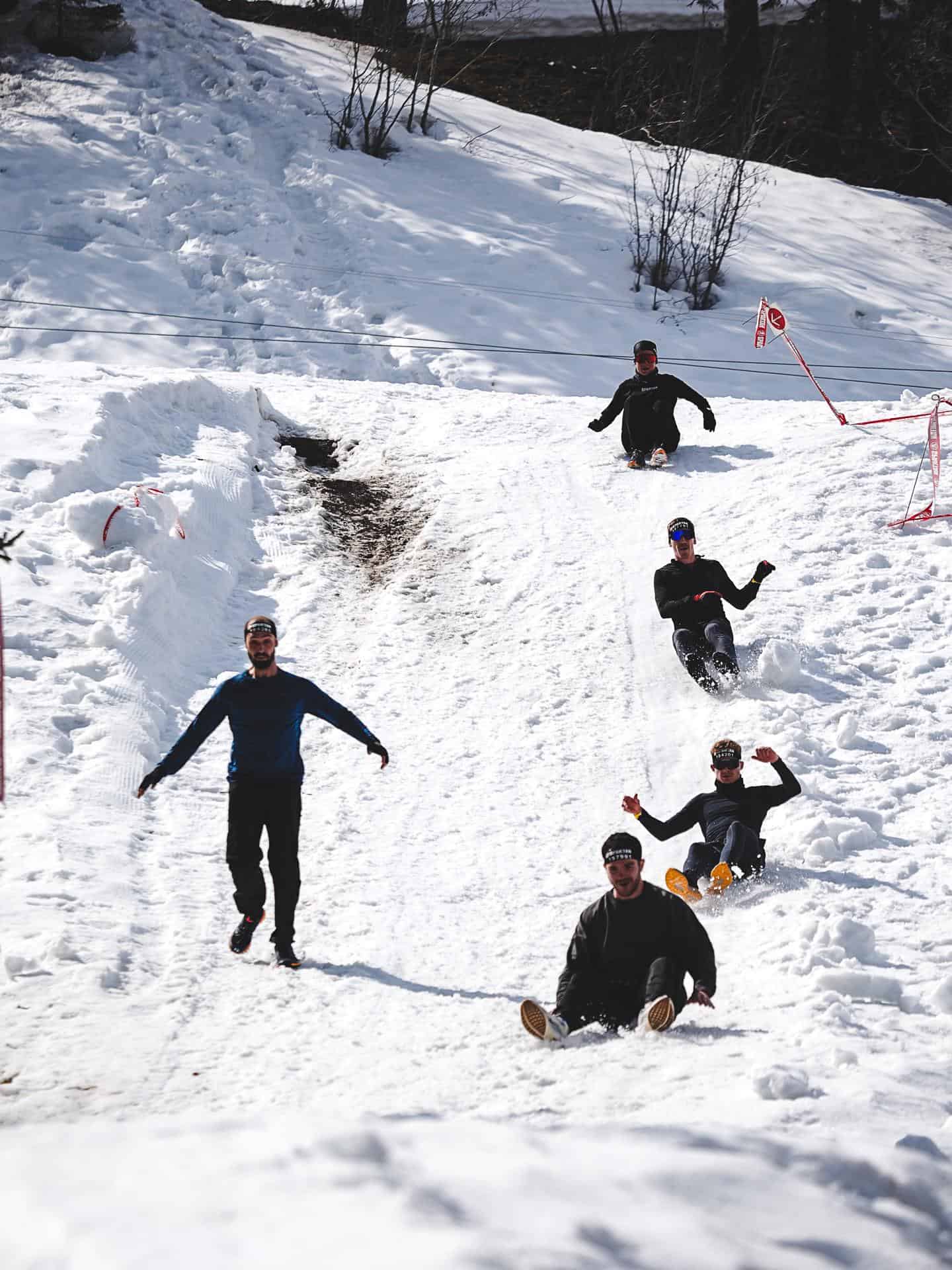
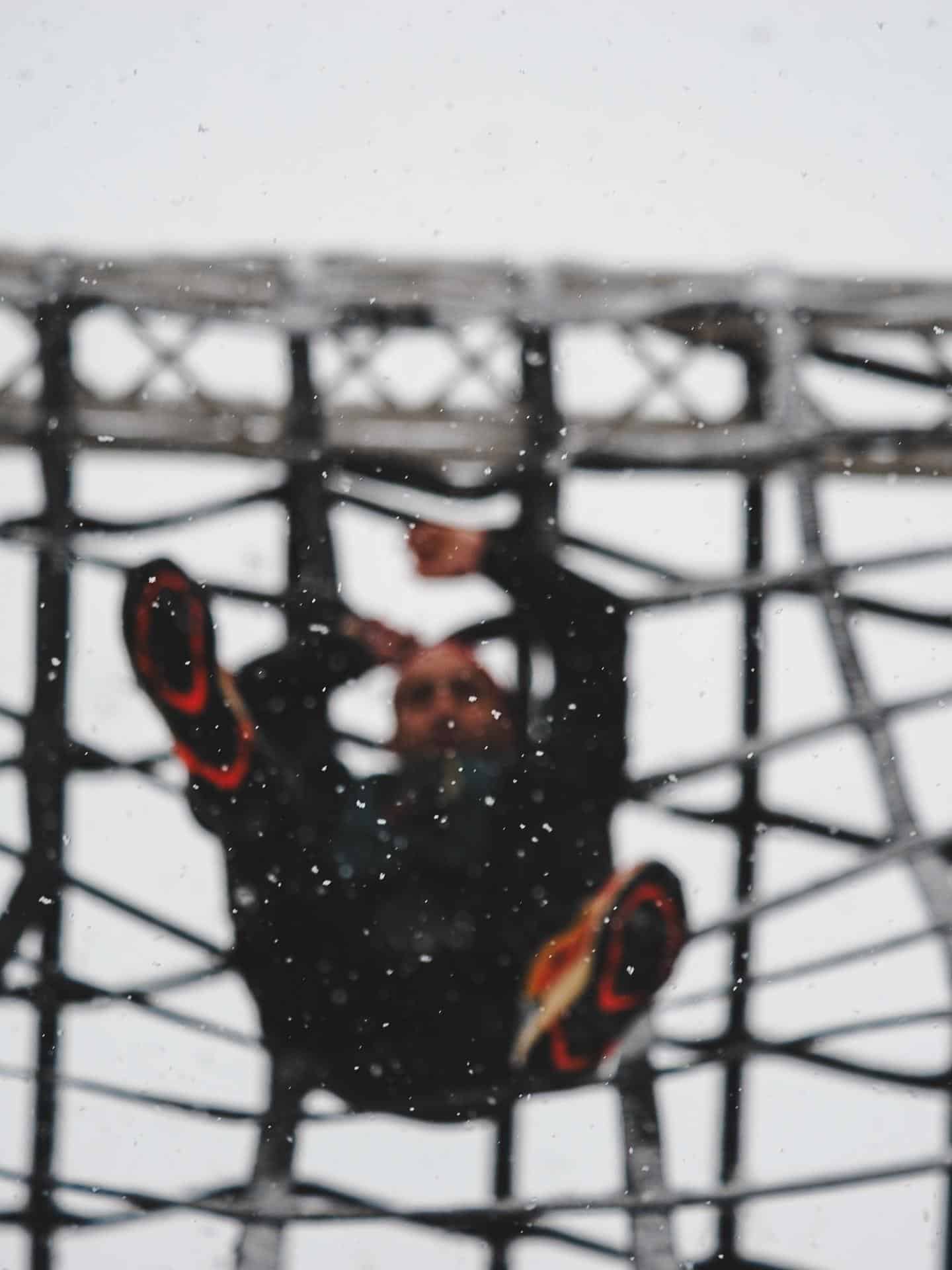
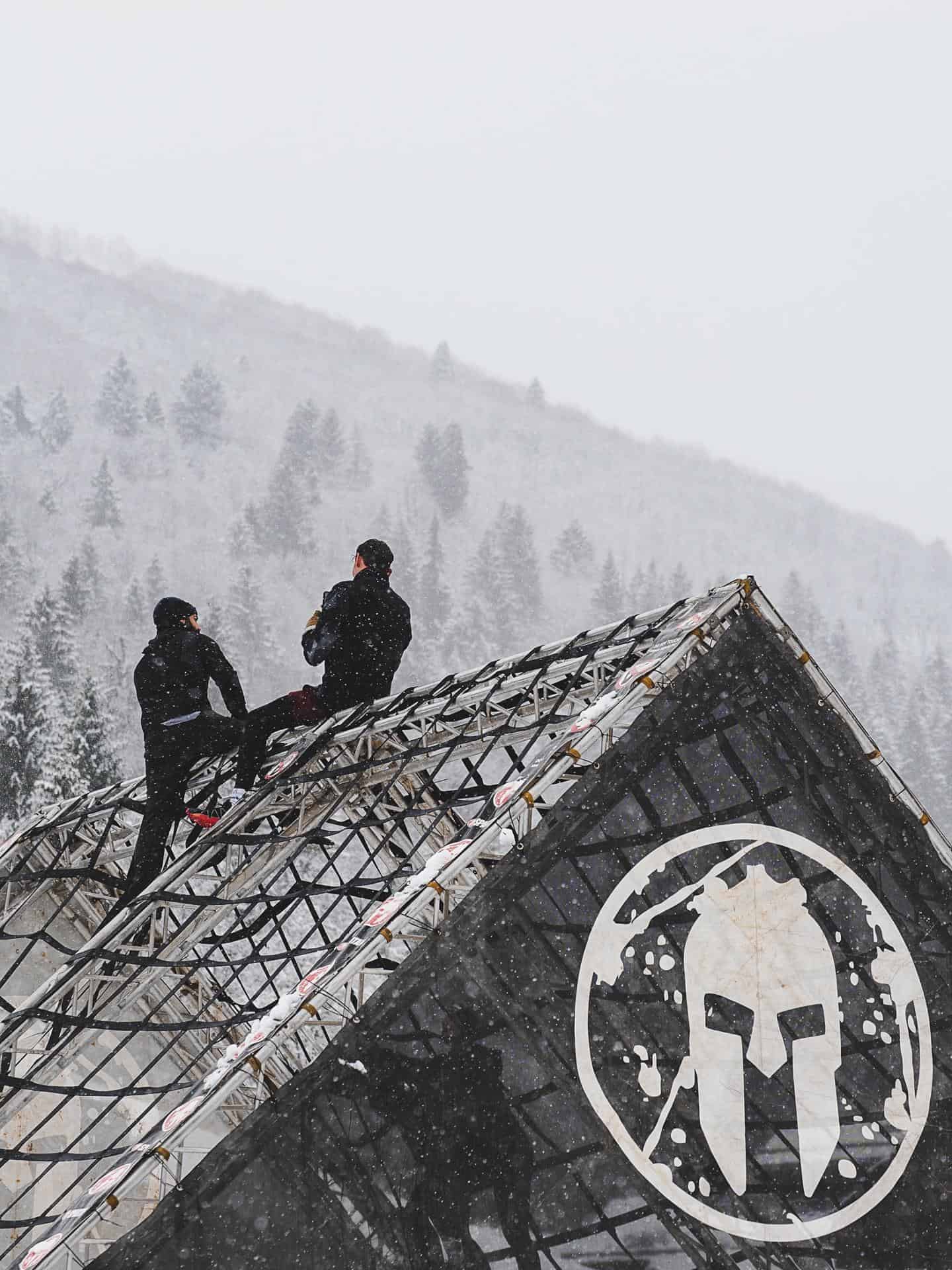
I’m at another station, the A-frame: a pyramid-shaped structure about 5m high that competitors have to climb up and down. We’re near the end of the course, with a kilometer and a handful of obstacles left. And we’re closer to the village.
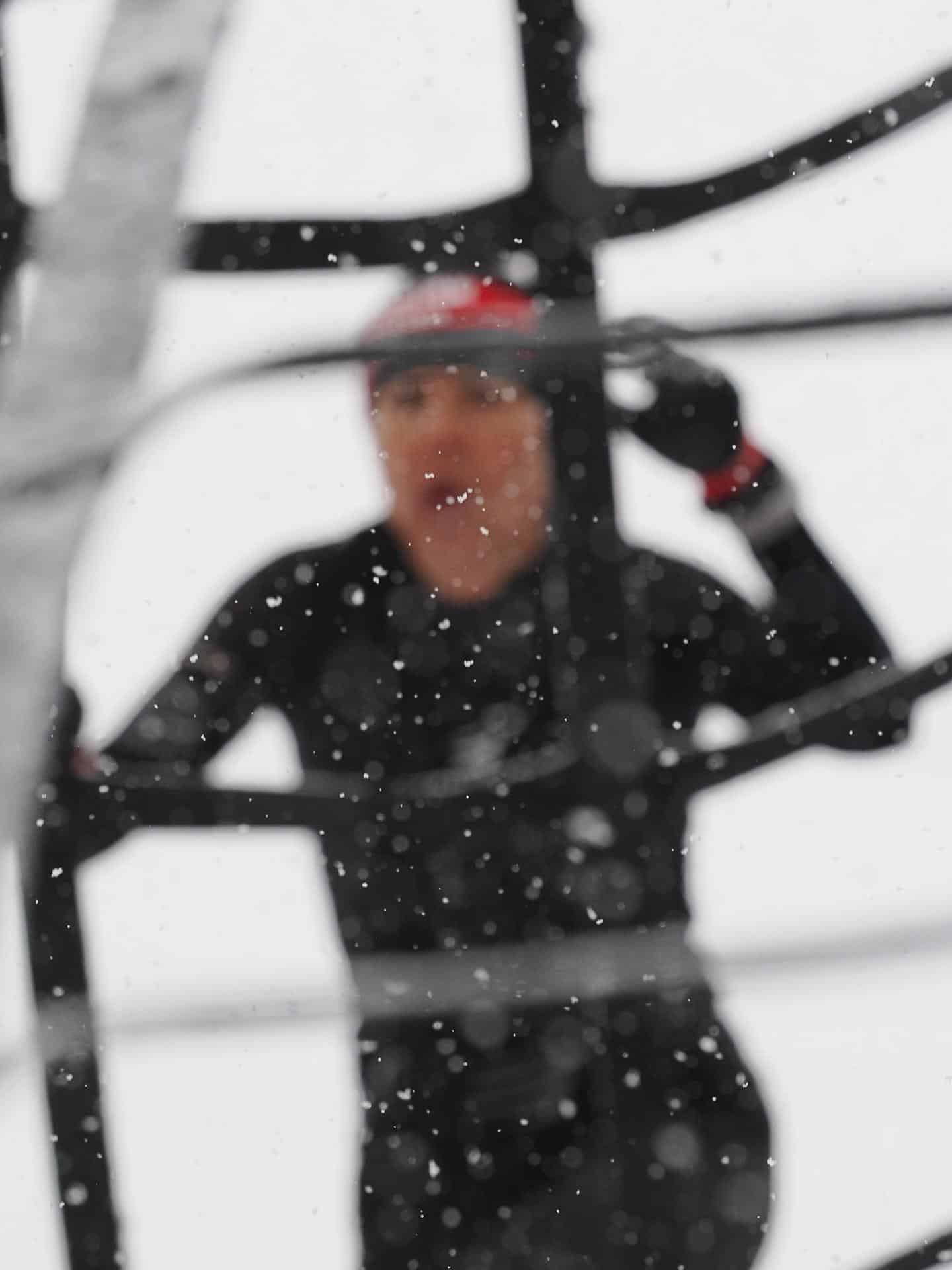
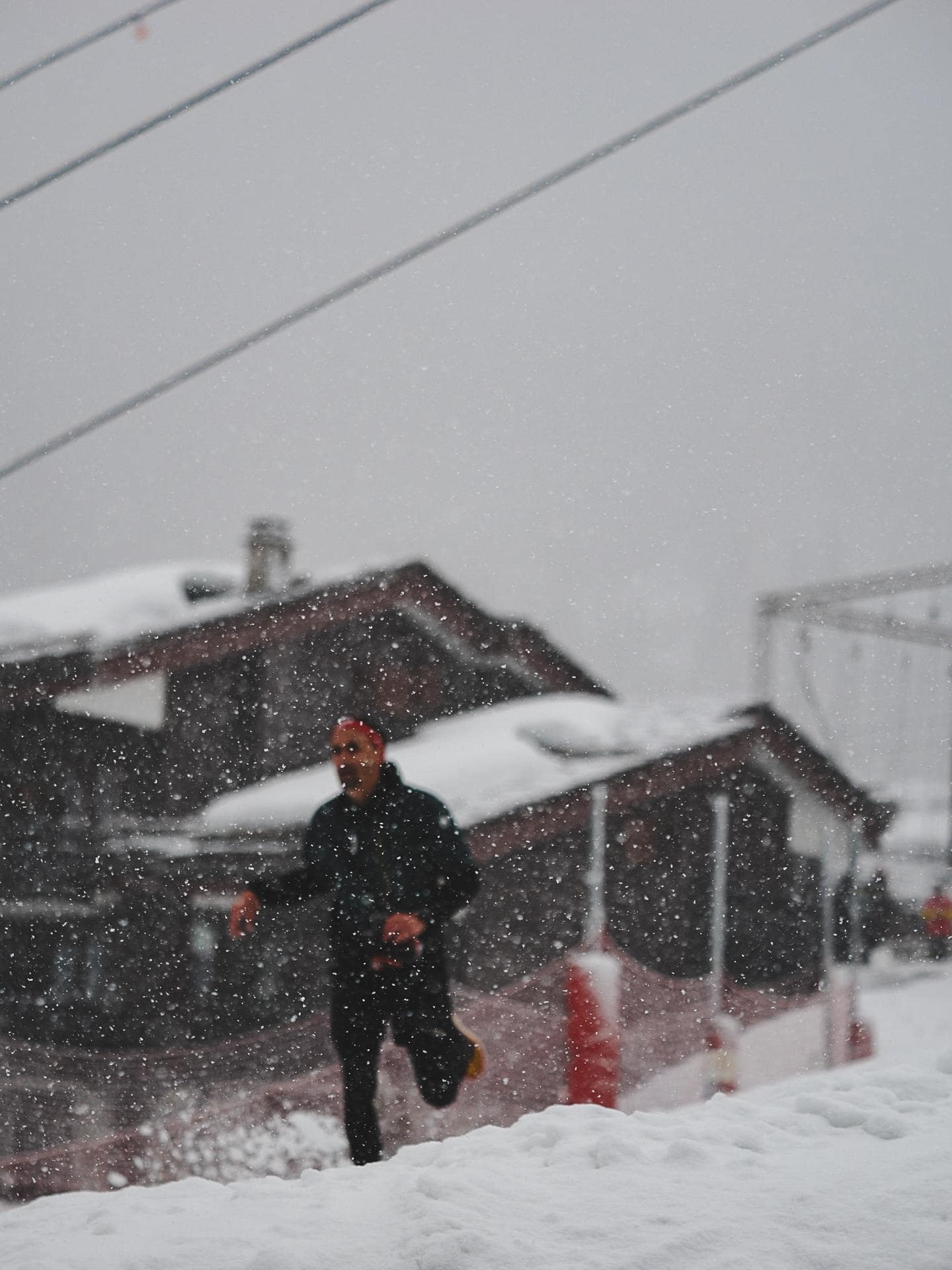
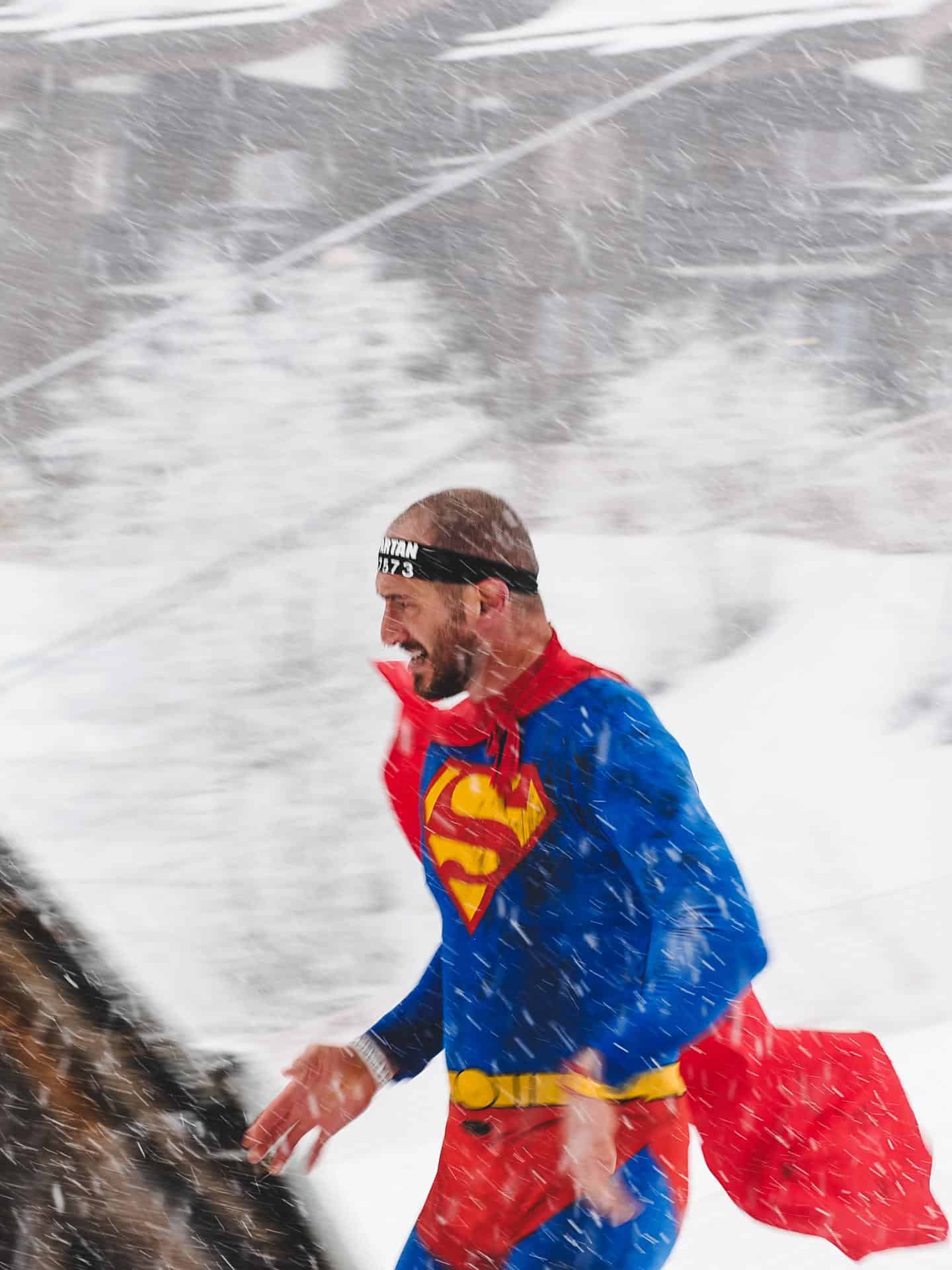
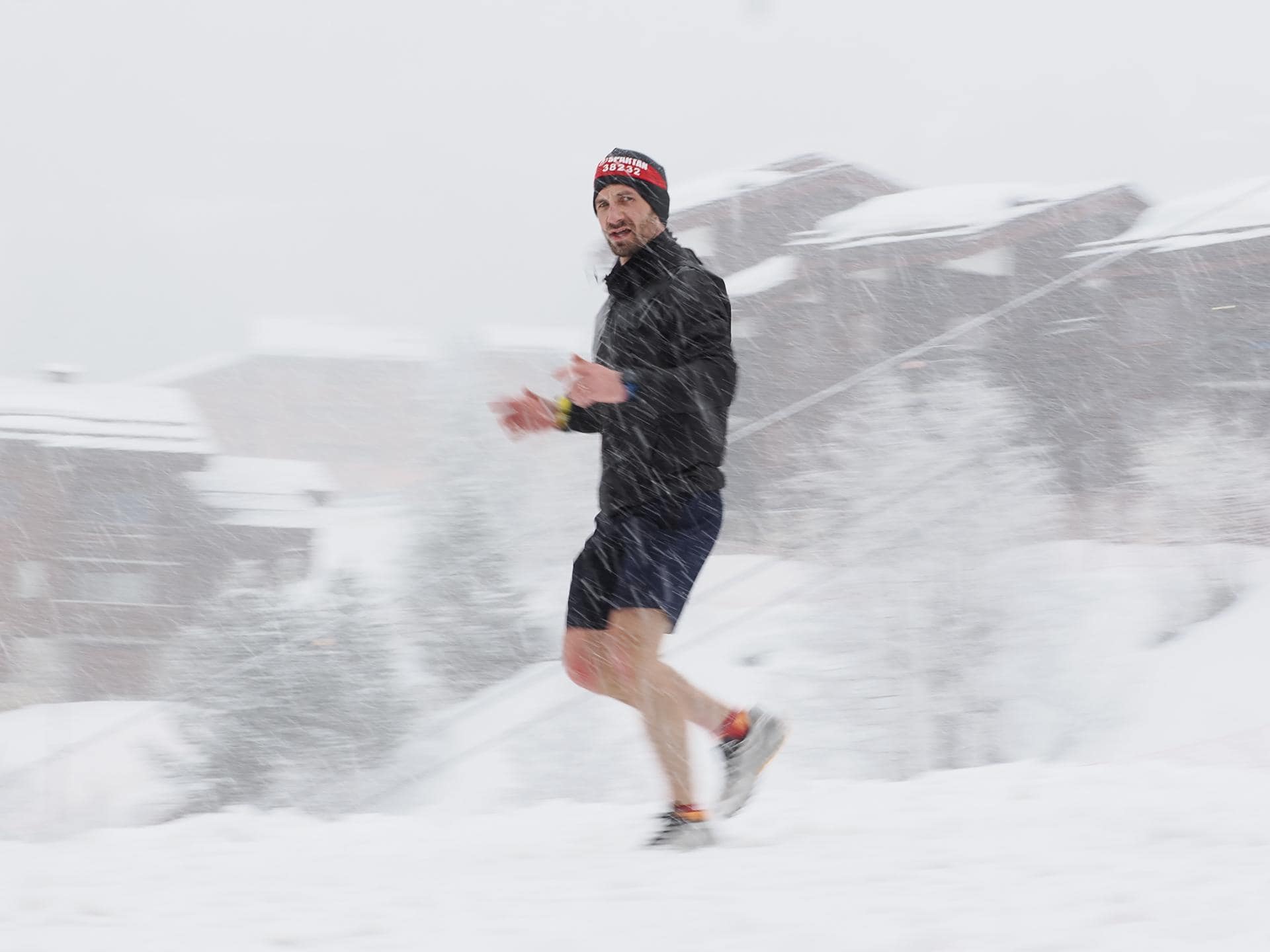
Here, though, the setting has one dominant element: it’s snowing heavily.
The first concern is weatherproofing: the team is in a flurry of activity, while I’m pretty relaxed: a colleague kindly lends me a little bag to wrap around the EM1 with the 12-40 2.8—I have to leave it fixed on a tripod near the finish line, triggered by a photocell as competitors pass. Since I’m leaving it unattended, I prefer to protect it a bit.
As for me, I go to my spot with the OM1 II and the 40-150 2.8, without worrying about protecting anything: it’s all already weatherproof enough as it is.
Shooting in snow requires a few small adjustments, in this case applied to the JPEGs:
Having taken these precautions, I start doing some test shots, and the inevitable happens: autofocus goes haywire, fooled by the big snowflakes. Face recognition does what it can, but picking out silhouettes through that thick blanket is difficult. It’s not just my problem: the team chat fills up with “hey guys, AF is failing here 1 time out of 2” and “we’re going to get some complaints about mis-focus on this job.” The problem affects every brand, apparently.
Everyone works out different solutions depending on their gear and situation. Those using the 24-70 or its equivalents have fewer difficulties, simply because there’s less snow between the lens and the subject. The serious problems are at the stations where you need the 70-200 (or in my case, the 40-150).
Manual focus? Impossible in such a dynamic setting.
Face recognition on/off? Helps, but doesn’t solve it.
Changing the AF area? Hard to tell if it makes any difference.
In short, at the start what comes out is a nice mix of variously blurred photos.
But necessity is the mother of invention, and I remember one of the OM1’s ultra-secondary functions: the AF limiter. I’d only used it once before, but here it might be the solution: since I’m always at a certain distance from the participants, I set a minimum of 2m, then increase it to 3m: that at least strips away the first layer of snowflakes, reducing the chance of error.
It’s not a revolution, but the percentage of good photos rises from 10% to 50%, maybe a bit more. An acceptable result, all things considered: it’s a slow obstacle, so there’s time to photograph almost everyone at different moments of the challenge.
I don’t know if this digital limiter works as well as the physical ones found on high-end telephoto lenses; its advantage, certainly, being in-camera, is that it’s more versatile.
In such a specific and difficult situation, one of the camera’s most obscure functions turns out to be useful: this reminds me that, however secondary and optional they may be, every so often a camera’s advanced functions come in handy—indeed, essential. 99% of the time they’re useless complications, making us hope they’ll be removed in the next model; but in the remaining 1%, they save the job.
The almost-always useless AF limiter, which now is a gamechanger. I start with 2m minimum, then increase to 3m and eventually to 4m. Interested in my Om1II review?
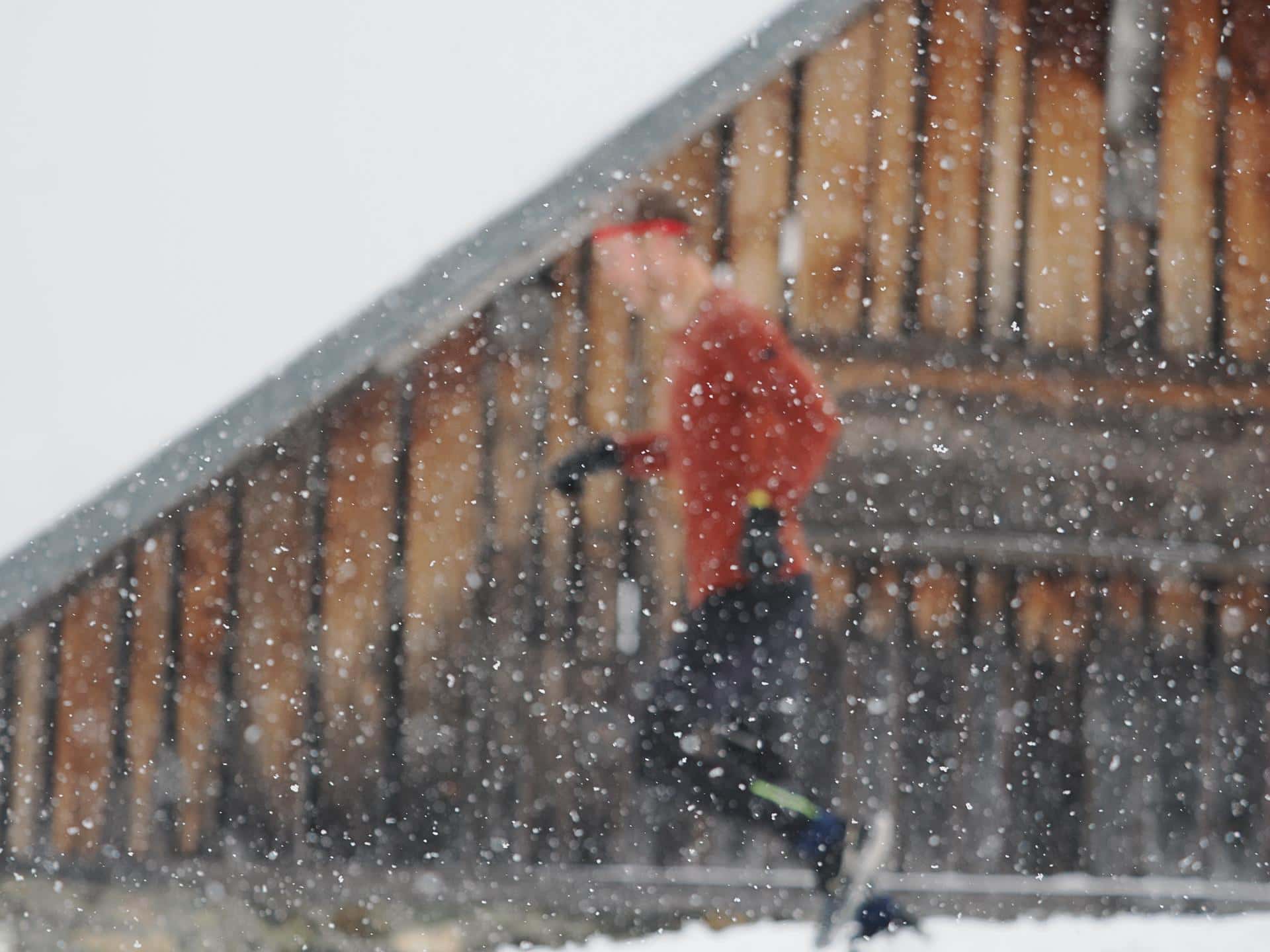
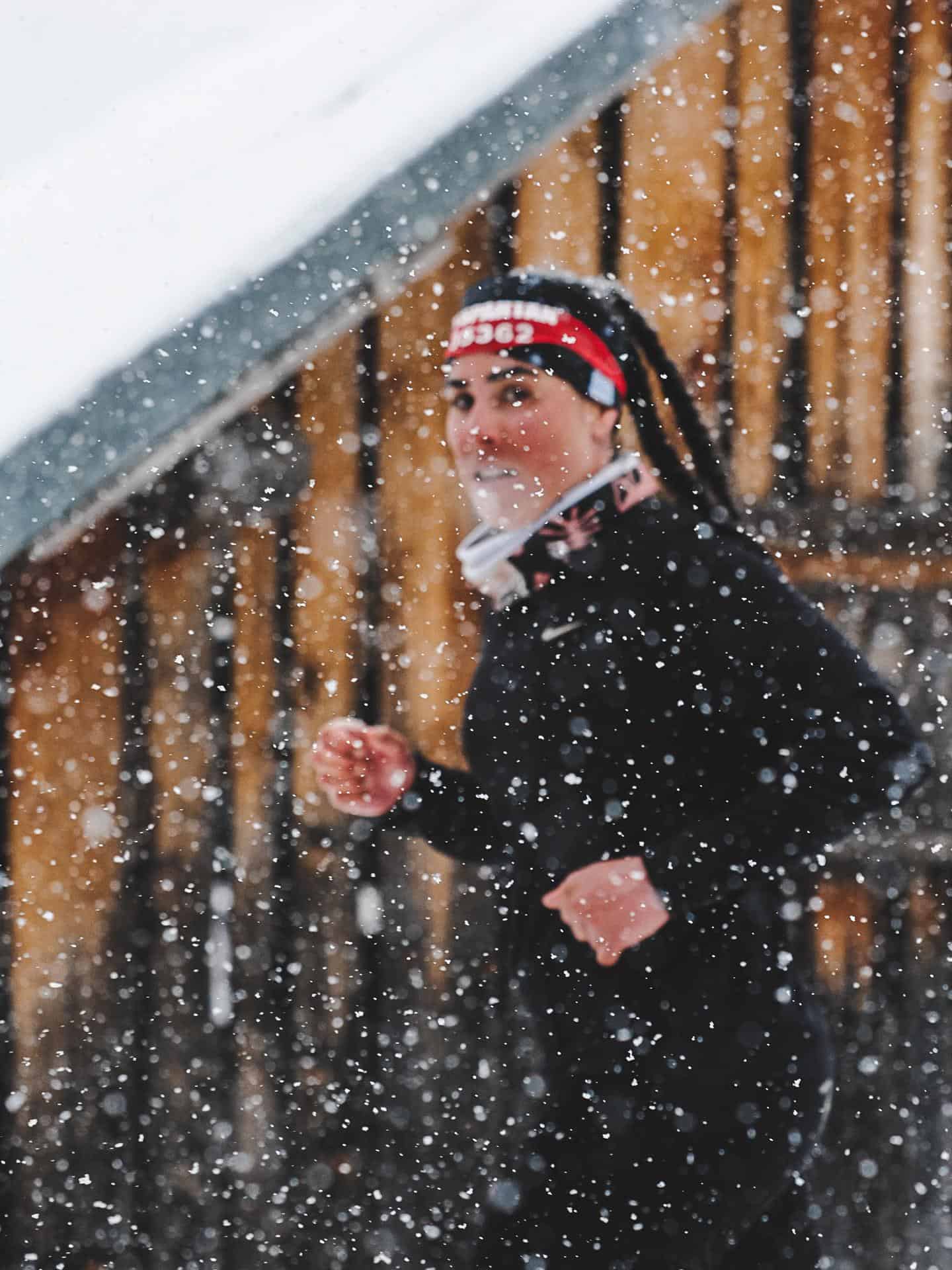
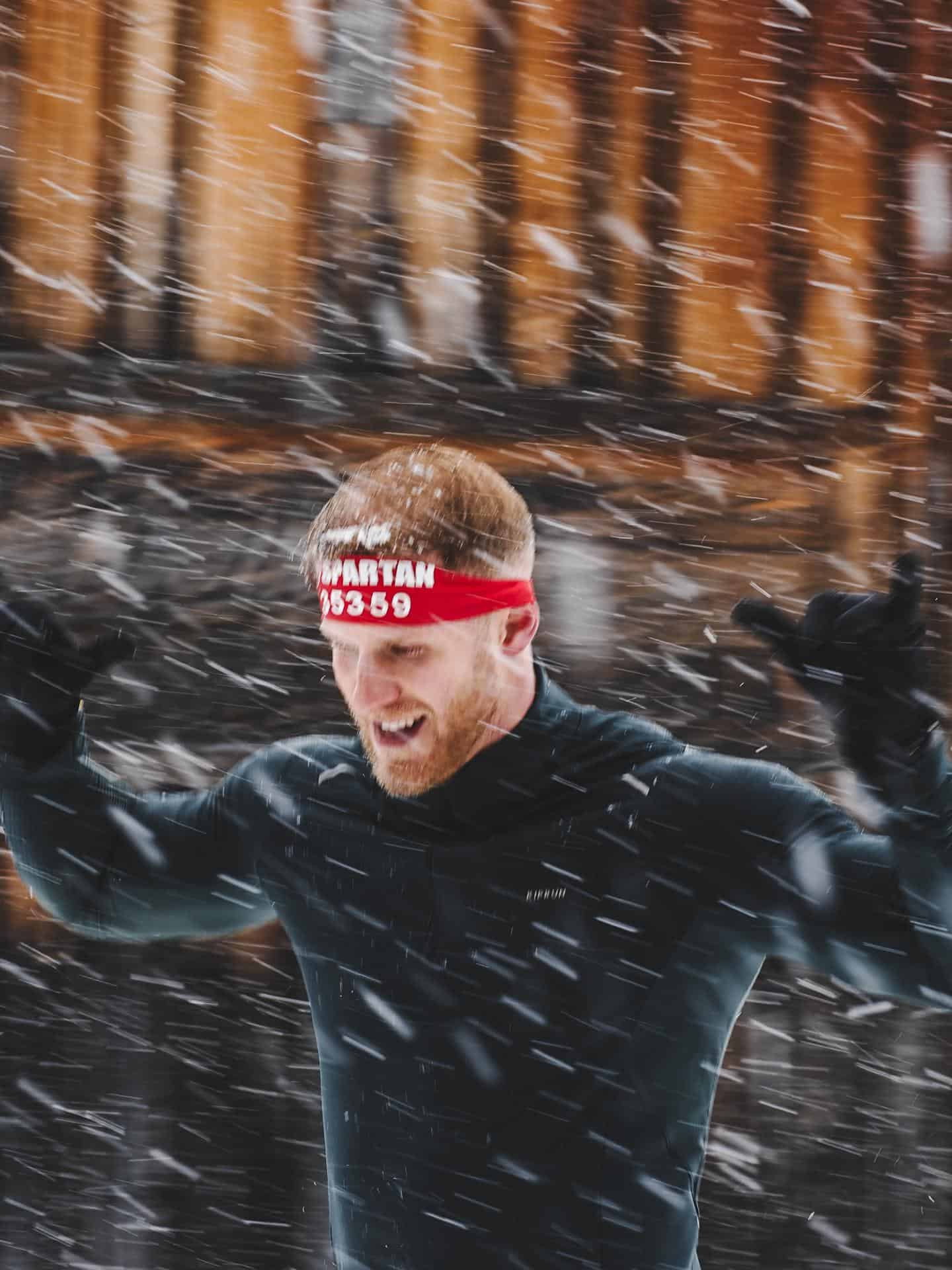
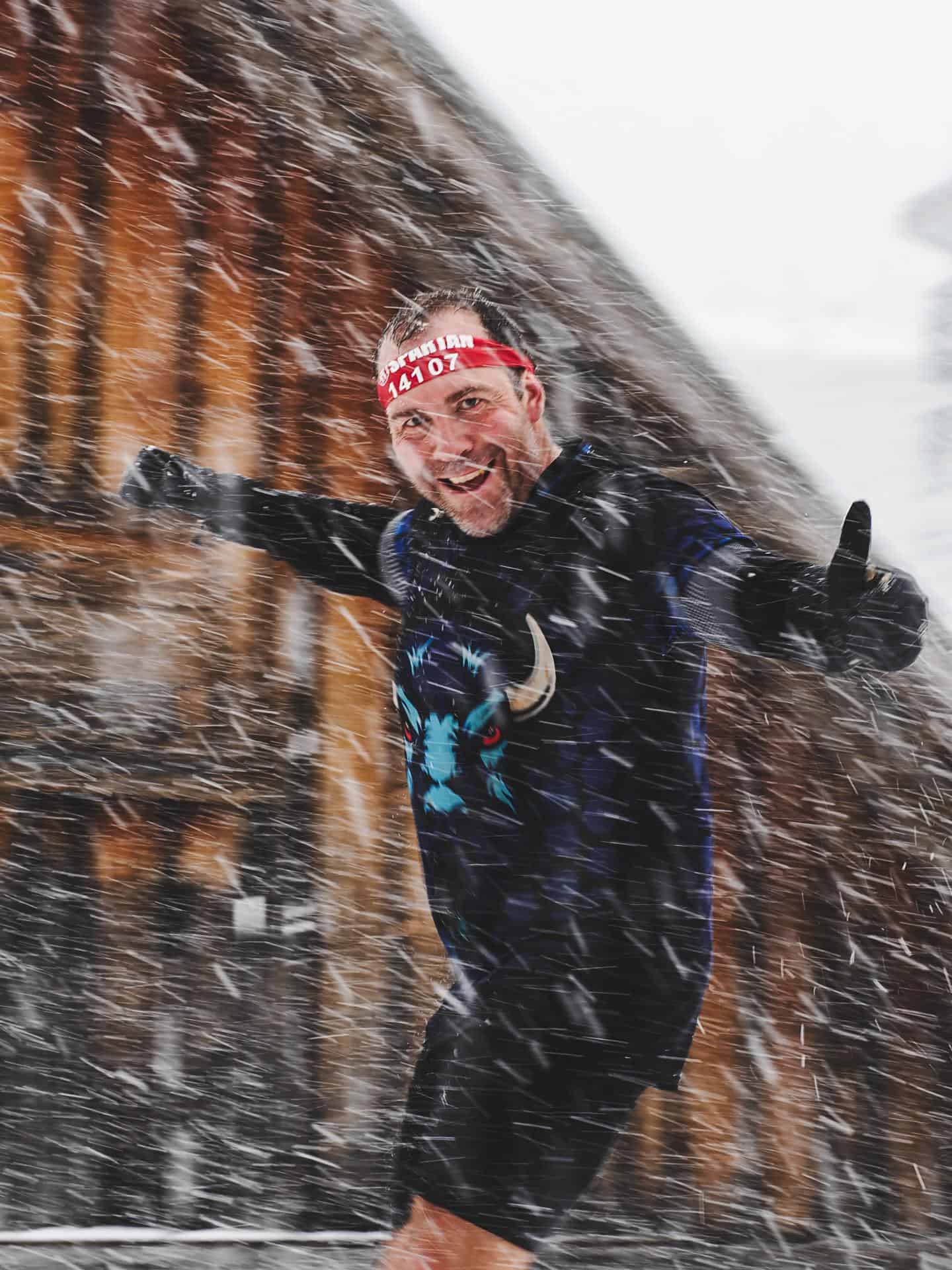
This spot also proved useful in confirming — not that it needed confirming — just how important it is to customize your camera to make it work the way you want. Besides the basic shots on the obstacle, whenever I had time I’d also take portraits of the participants as they resumed running, heading down toward the next obstacle. The pyramid to be climbed was in front of me on the left, and the course passed by, also to the left, with a wooden farmhouse in the background. Not bad, especially in panning.
So I spent the time switching between M mode (with auto ISO) and C1, my go-to setting for panning. But since it’s something I do often for bikes too, I assigned the C1 mode to the AFON button, near the AFL/AEL switch.
The downside, which is pretty annoying, is that every so often I trigger panning mode by accident, and I have to remember that damn little button is there.
The upside, which is worth all the annoyance, is that I can switch from M to C1 with one hand, since the button bypasses the top dial. Pressing it again goes back to M.
This doesn’t solve the focusing problem, since the snowflakes are increasingly intrusive; but it does solve the problem of quickly changing modes, letting me get two very different shots from a single spot. First I photograph the athletes going up and down the A-frame, then I switch and shoot as they pass by beside me.
First episode of a short editing guide. Let's start with the necessary step - reducing the number of good pics.
The italian saying is "fare di necessità virtù": a classic reportage and what it can teach us about cycling photography
A book of simple pictures (and four simple ideas) showing us how memory works.