

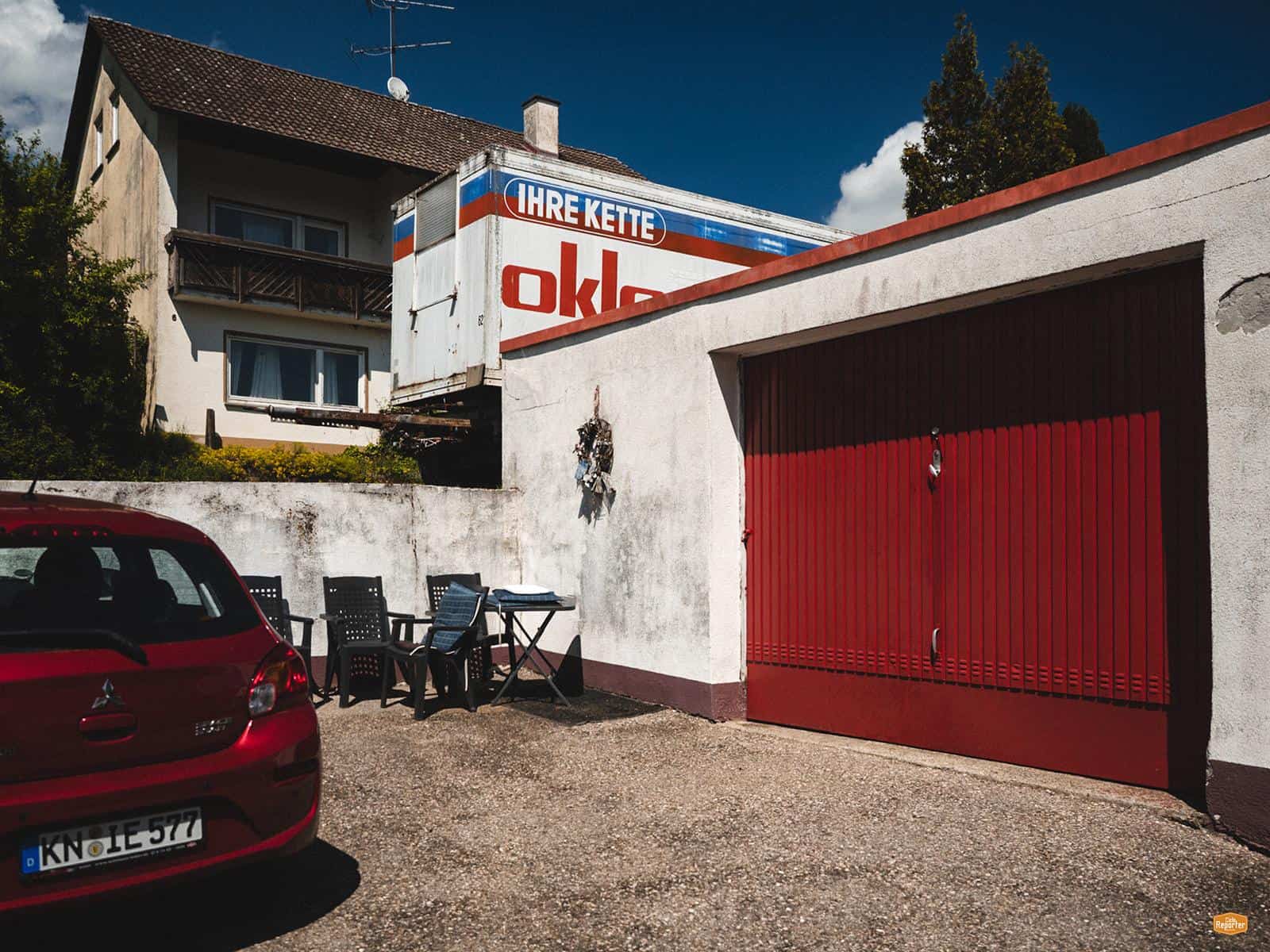
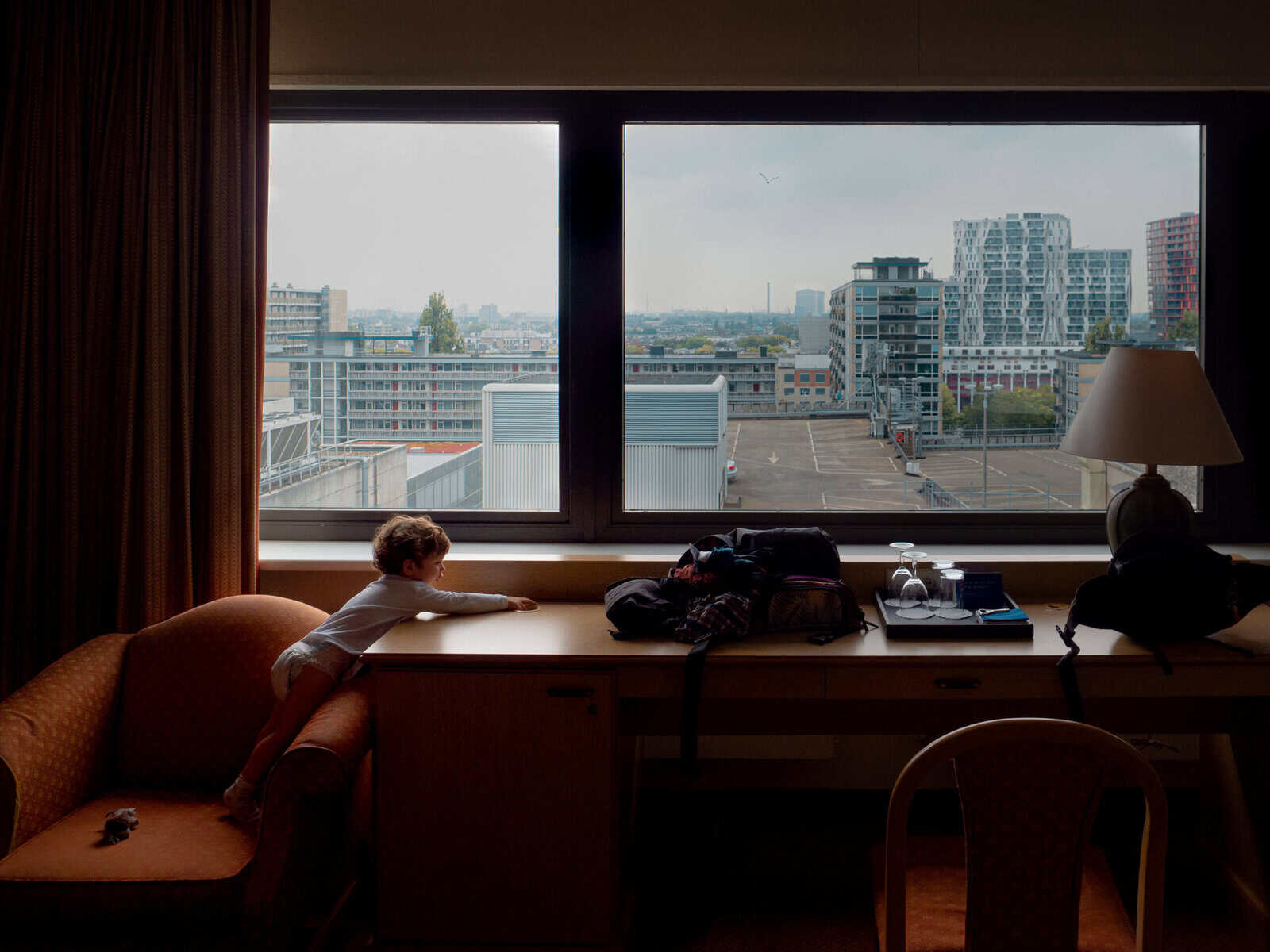
Industry: a quick detour
Where to find interesting stories? Quick answer: where things and people are on the move.
And once
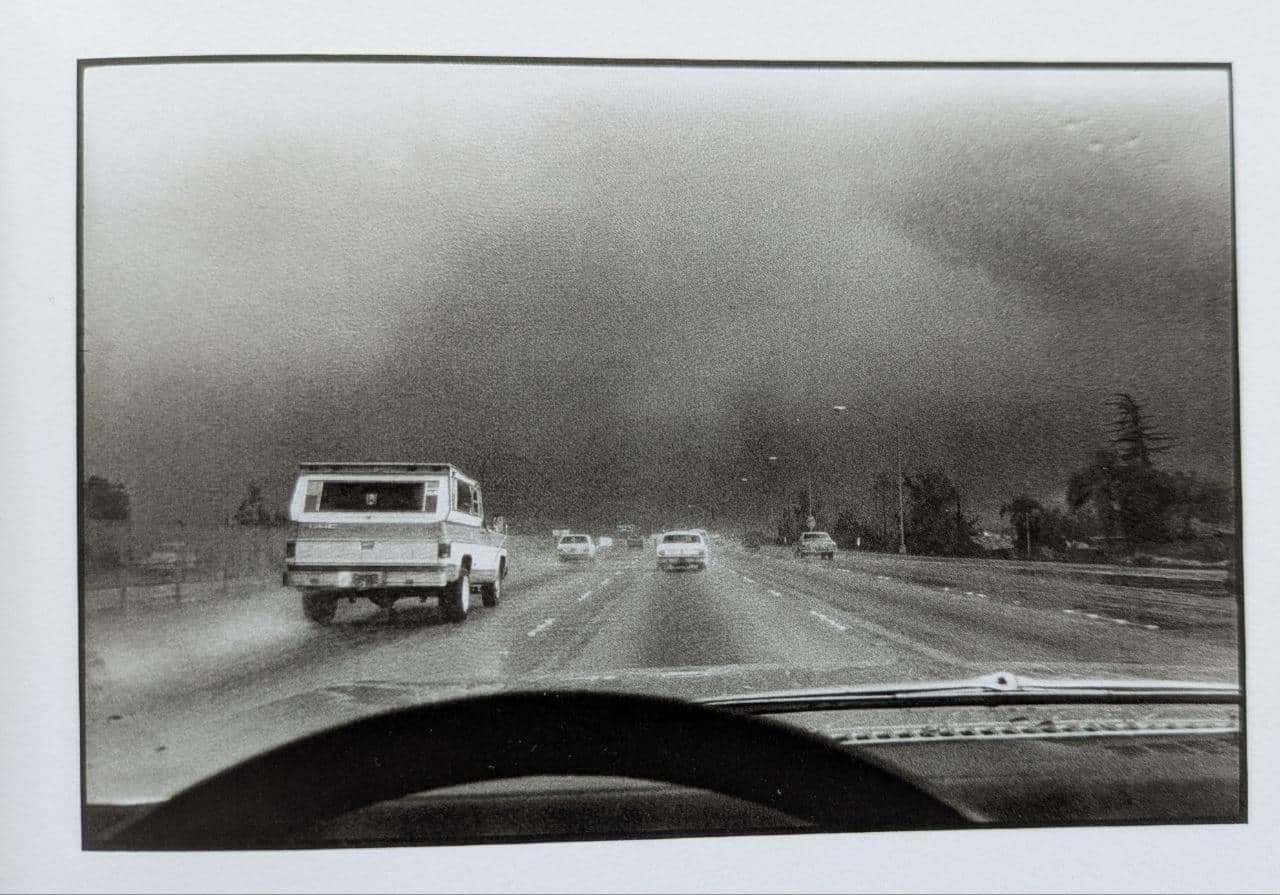
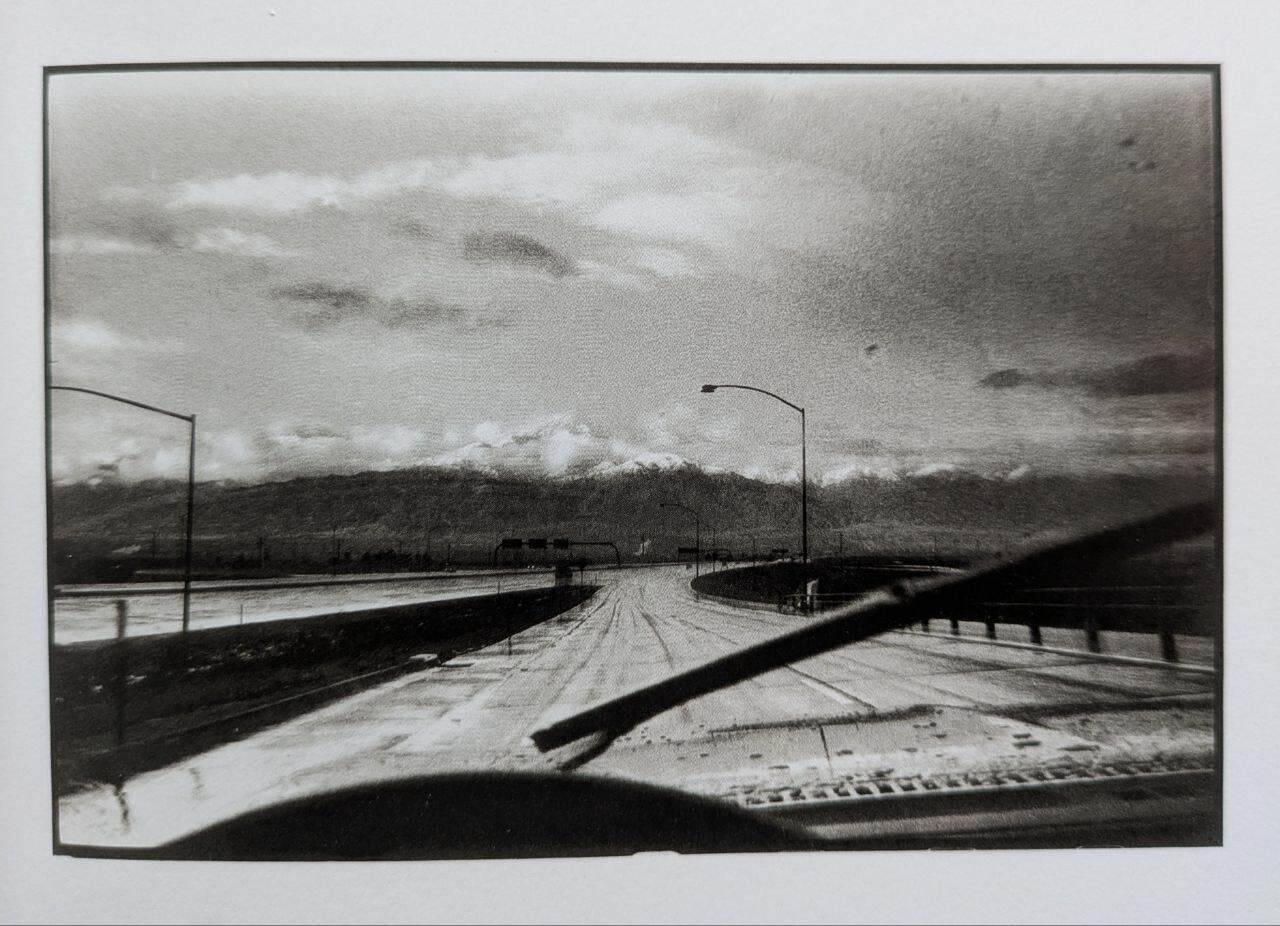
I drove from Los Angeles
all the way up to Barstow
in the middle of Mojave Desert,
together with Dennis Hopper,
to see Nick.
Wim Wenders, Once, p.46
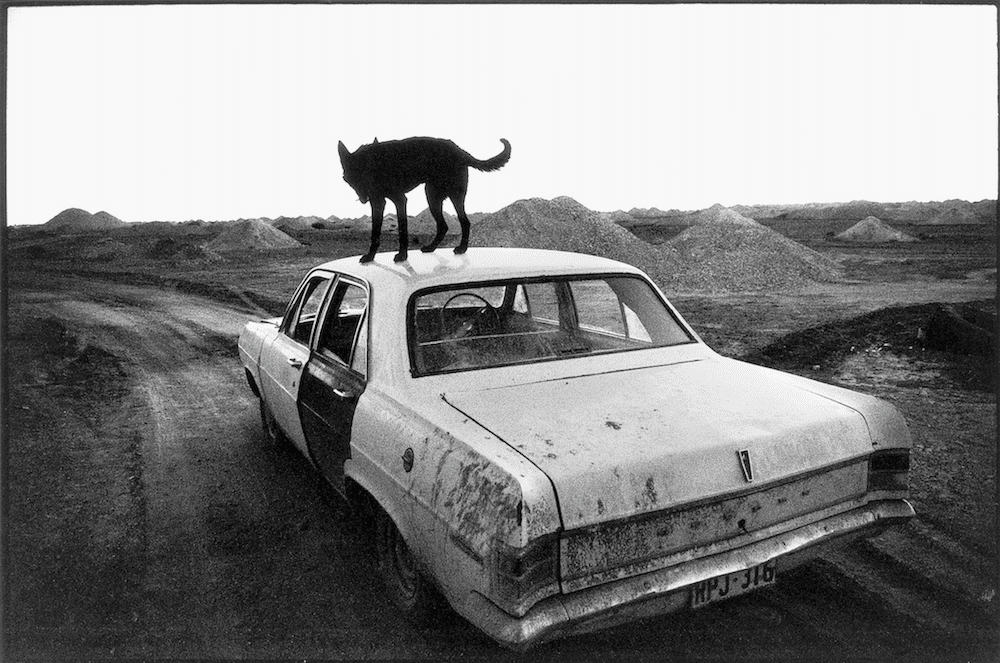
Barstow, California, lies in a basin halfway between Los Angeles and Las Vegas, surrounded by dust and dry shrubs. It’s one of those inland American towns you forget the moment you’ve passed through it. Like those along Route 66, but without the legend that goes with the road.
Therefore, finding it again in a book, not simply mentioned but made the very subject of such a vivid memory, even with a photo — felt strange. That Barstow could be as a destination itself – that, I didn’t know.
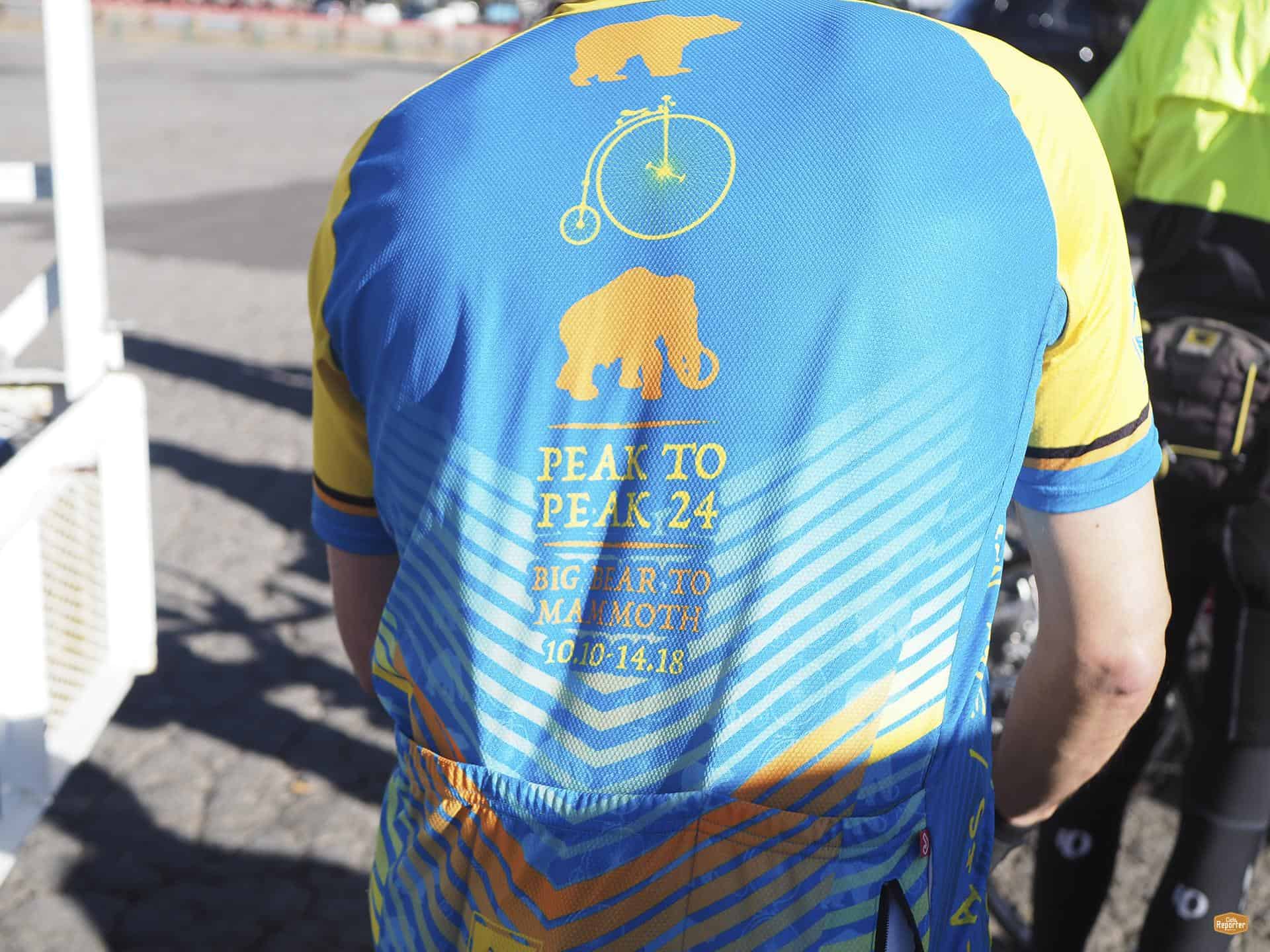
For me, Barstow meant two things: a large train hub; and one-night stop during the Peak2Peak supported cycling fundraiser event, organised by USARC.
I joined as a volunteer and photographer. From Big Bear to Mammoth by bike — five days of riding to raise funds in support of young people with disabilities in sports.
So, when I reached this page in Wenders’ Once, I was flooded with memories; my mind began to travel.
My task was to follow the group – around 100 enthusiast riders with all kinds of bikes – in a pickup that guzzled fuel like a train. The classic American pickup. Along with the other vehicles in the caravan, we served as sweep, scout, refreshment, and company.
And of course, I took photos: those few months in the U.S. were the third piece of the puzzle that made me start thinking of photography as something serious. (For the record, the first was a rambling trip along the Alta Via dei Monti Liguri with three friends; the second, a honeymoon by bike through the Balkans; the fourth and last, the Lazio Trail.)
But how does memory work, really? Of that unforgettable trip, I remember the people: David — one of the founders of P2P, my guide in San Gabriel, and a dear friend; Jeff from Colorado, the owner of that enormous pickup; Matt, the official photographer. I also remember the feelings tied to the Owens Valley, and the moment I began to grasp the Western mindset toward adventure and nature. And so many other moments, some sharp, others blurred. How does memory work?
In Barstow we slept in an unremarkable sports center, packed together in our sleeping bags. The next morning, I was supposed to stand at an intersection to direct participants toward Ridgecrest. The town — I remember David’s description well; he knew every secret of the valley, having first worked on the trains and later for the Bureau of Land Management — is a major railroad hub for freight arriving at the vast Port of Los Angeles. Otherwise, it’s a pretty nondescript place.
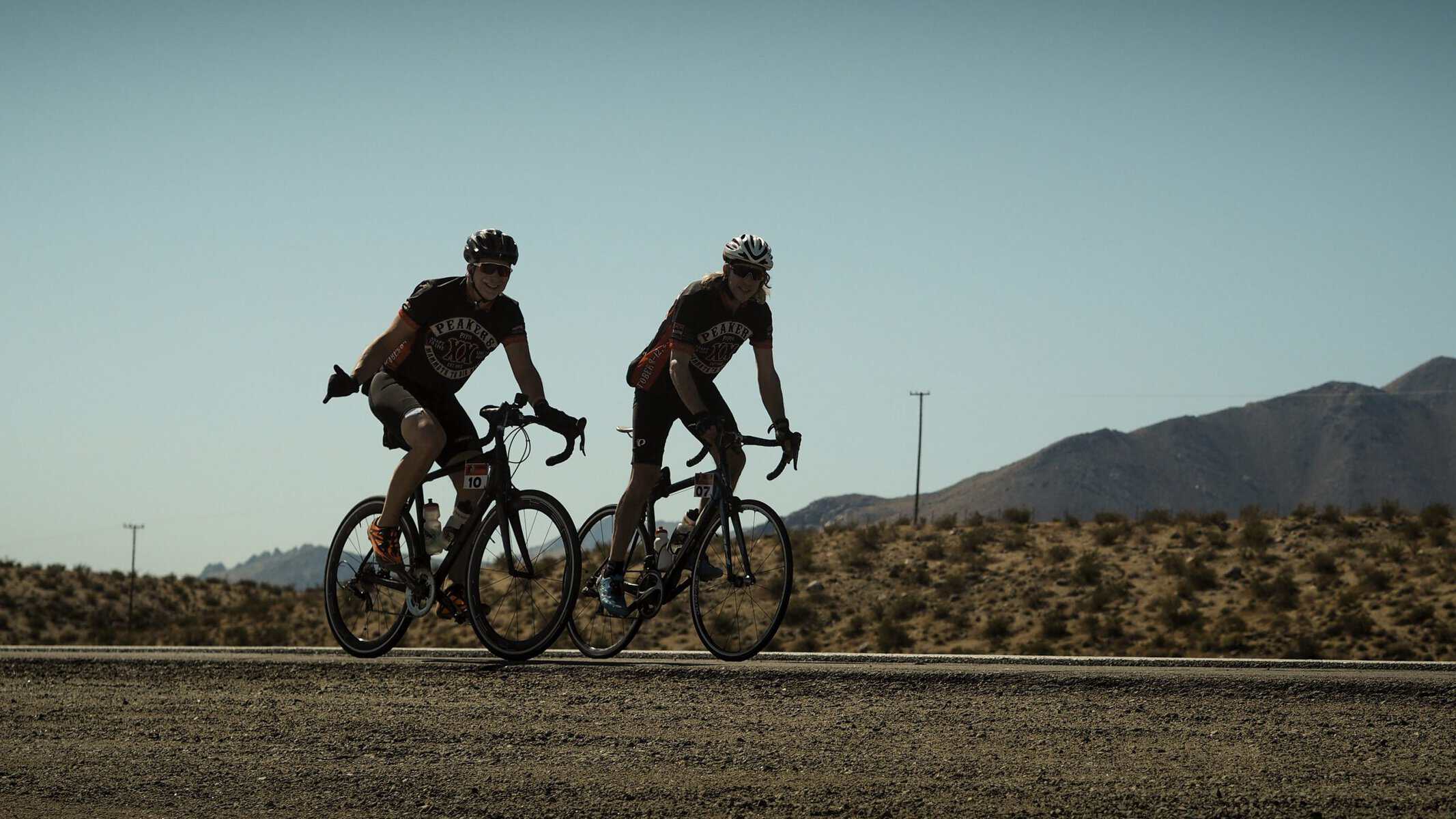
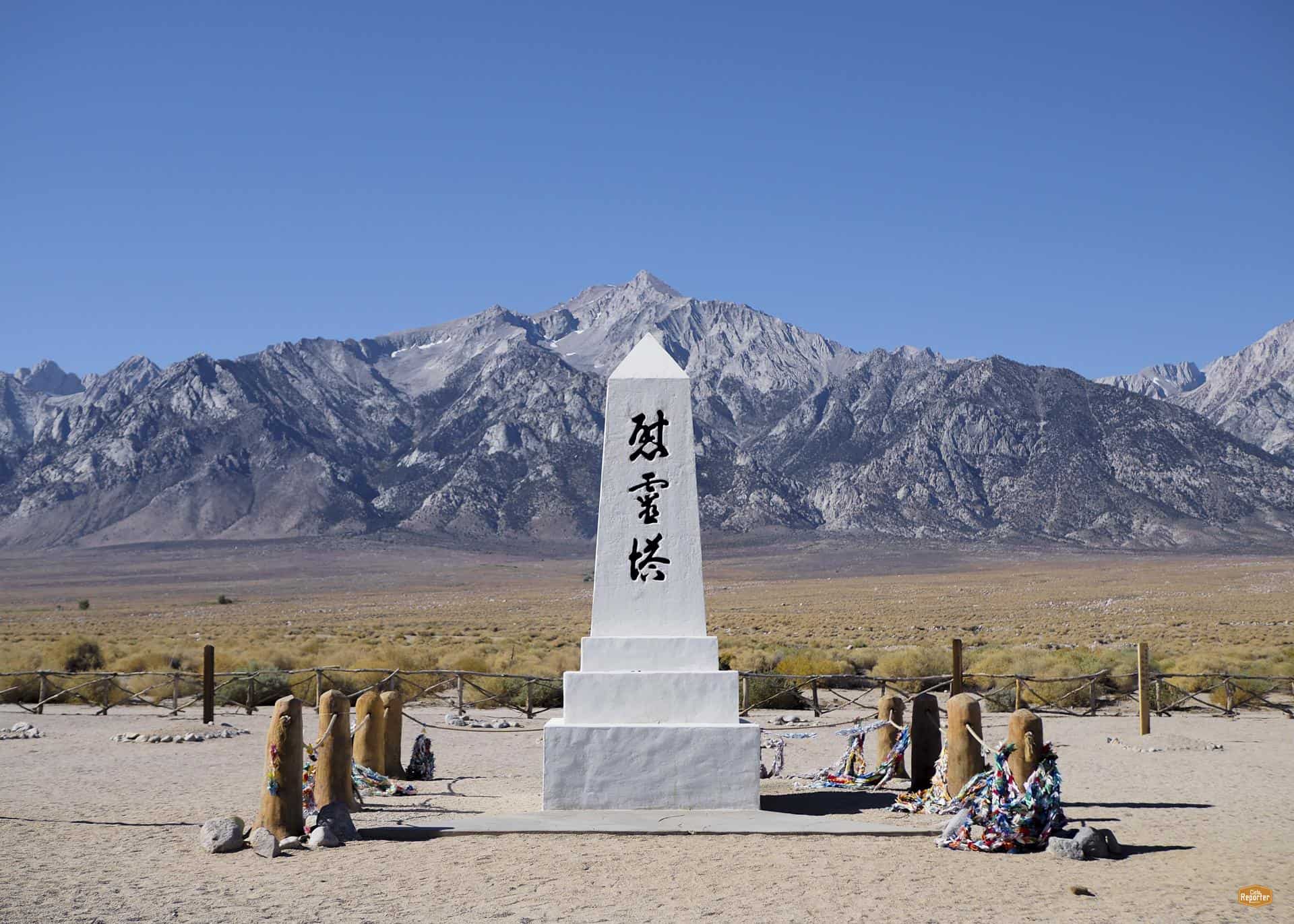
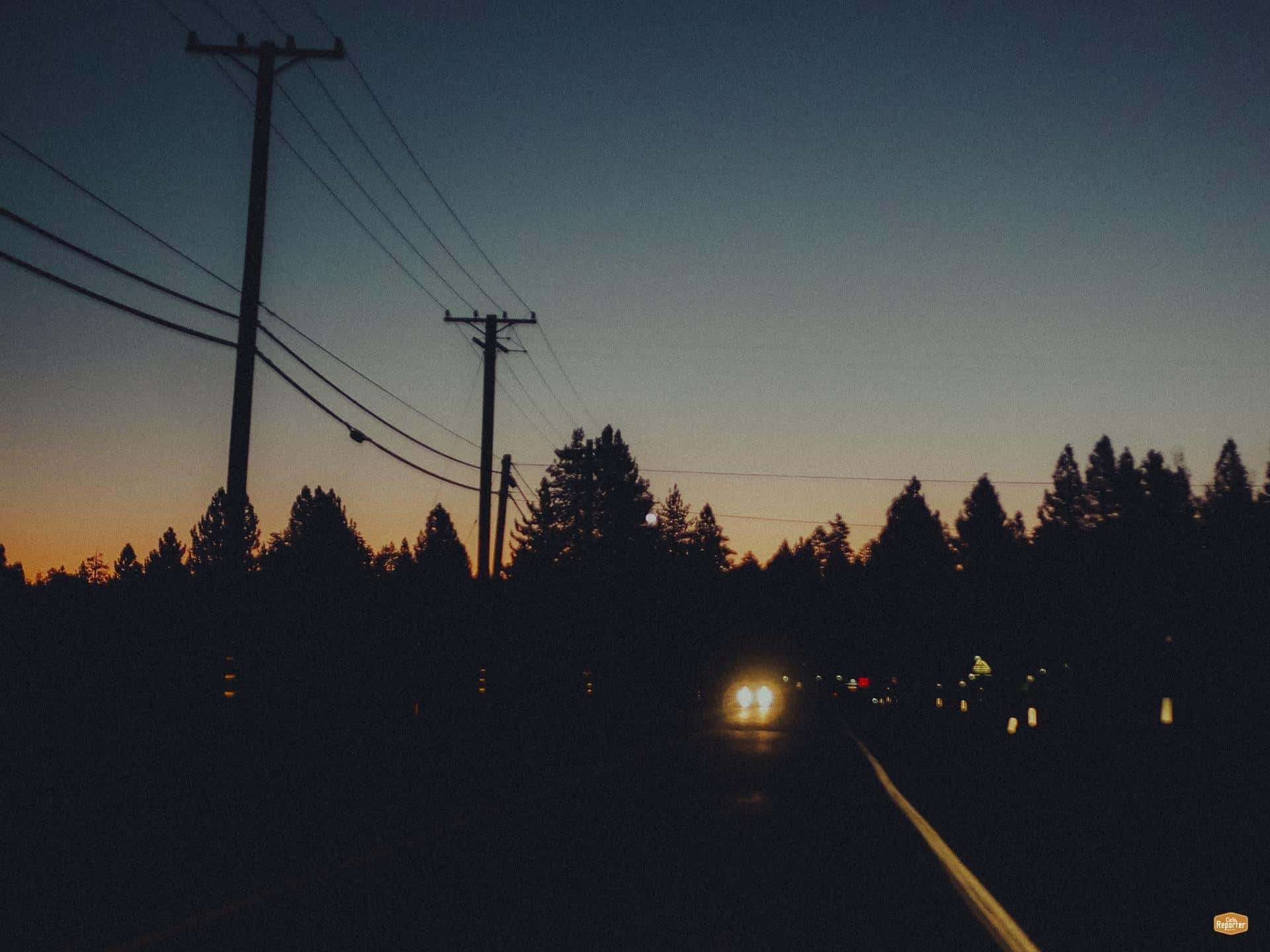
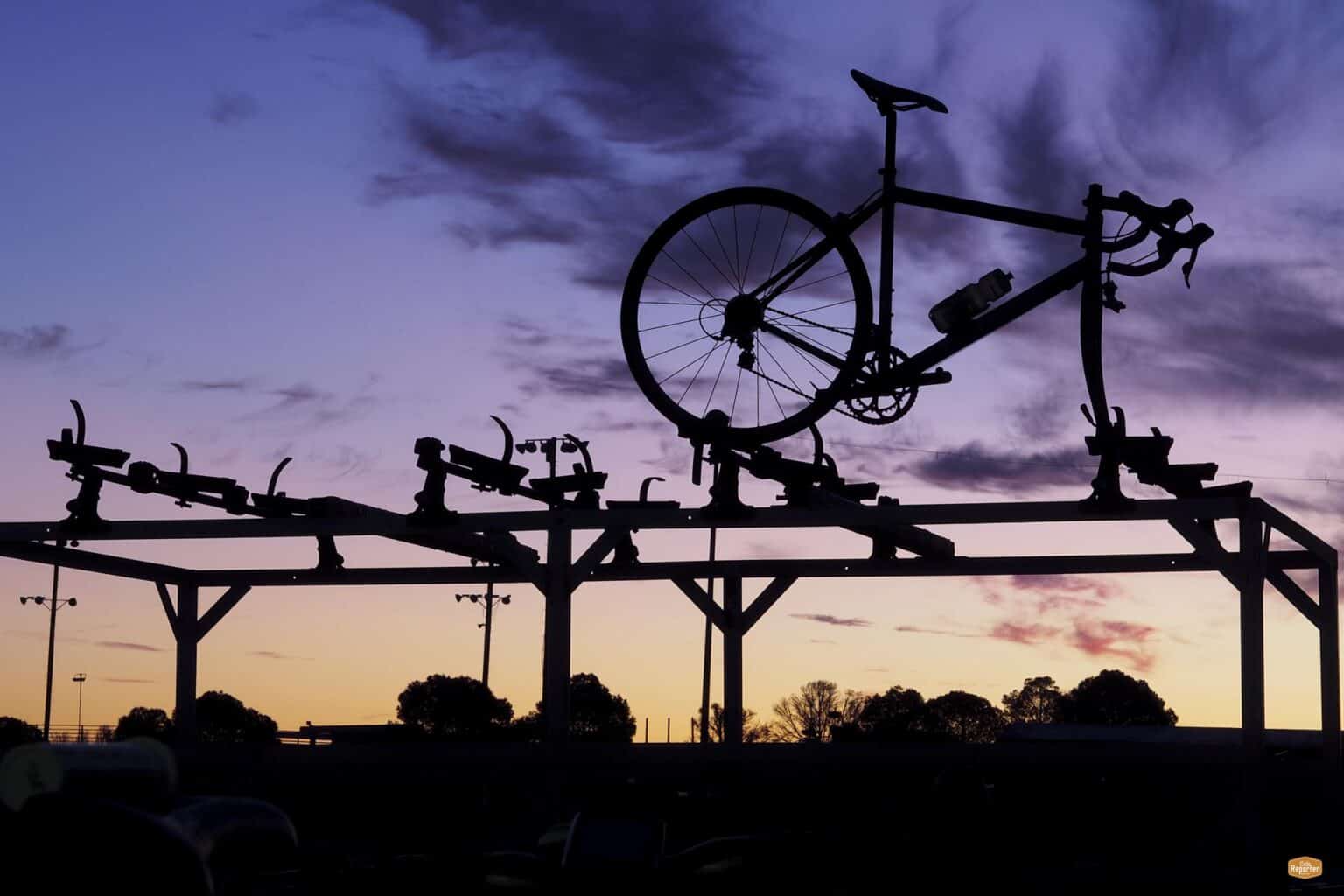
Other places from that experience left far more vivid memories: the Manzanar internment camp; the town of Lone Pine with its enormous gun store; the post-apocalyptic village of Red Mountain, where silver prospectors pile up heaps of arsenic along the roadside, totally cool; the night I slept in a bivvy below freezing — that one I remember clearly. I also remember Ridgecrest, known only for the earthquake that had destroyed it four months earlier. That’s where, at base camp, I took this silhouette at dawn.
And yet, my memory connected the dots on its own; it brought back all those stories starting from Wenders’ two photos, linking them to mine. It pieced together the story of those five days in a Californian valley.
Personal memories aside, Wenders’ photos of Barstow raise that mysterious question about memory. The nostalgia they stirred feels gentle, almost cheerful. I let myself sink into it with pleasure, even as I become painfully aware of the time that has passed. Even his short texts are nostalgic, and by that I mean that they are not simply descriptions of the pictures. Yes, they tell what’s the situation, and they add some bits of information: the place he drives by, the friends he meets, the purpose of the trip.
But – and it’s a very important but – all of us can relate to them in some ways, because they describe universal situations.
Not unlike Roy De Carava’s unique combination of words and images, they play very effectively with the relationship between real and plausible. How’s that?
And, by contrast, how is that possible that the same nostalgia is not awakened by old videos?
Watching the videos from those same moments on my time in California feels cruel: instead of bringing pleasant sensations back to the surface, they highlight the gap between then and now.
We instinctively associate photography with memory and remembrance. We look through old photo albums and rediscover childhood, grandparents and uncles long gone, houses since demolished or renovated beyond recognition. Yet the feeling is almost always gentle, even sweet.
Recently, I read an article by Roberto Morelli that explores precisely this difference, and I found myself completely reflected in it:
“It doesn’t happen only to me. I fall in love again with photo albums and nestle into the nostalgia of printed pictures. [...] But if the exact film of those moments appears — if I’m made to relive the gestures, voices, and sounds in their precise unfolding — I can’t bear the impact. What’s moving in a snapshot becomes painful and alienating in a stream of images. I don’t want to see them anymore. So why is that?” His conclusion is clear: “My unease,” writes Morelli, “comes from the merging of everything into a complete fragment of life, which I watch even as I’m living in my present time. The video brings back from the past a whole slice of life that we can no longer fit into the present.”
Roberto Morelli Tweet
That discomfort leads to outright refusal:
“I’ve carefully put everything away in a drawer: I won’t open it again. […] Different image formats, worn by time — fragments of my life and my family’s, my wife Sandra and our three children when they were small. […] I’ll never watch them again. The old videos hurt too much.”
According to Morelli, the reason for this gap between photos and videos lies in their finiteness. The film, he writes,
“Leaves no room for imagination; it’s conclusive and definitive. It even has a kind of mortality, because the people in that moment — the versions of us that once were — no longer exist.”
In short, a video contains everything: form, color, movement, sound — it’s a finished narrative. There’s no room for nostalgia, which must instead compose itself freely (and imprecisely — the video evidence often contradicts our flawed memories). It contains so much that it reminds us of our mortality, which, well, is not a happy thing.
A photograph, by contrast, is only form and color; it invites us to complete the picture, to reconstruct it with our own tools, freely. This is why Wim Wenders pictures (but I’d say any good picture) work for anybody. Universal situations that could be also present and future, rather than exact, unique pieces of life that are no more.
That’s probably why photographs are said to be even more evocative in black and white, and they are called “timeless”: with color removed, there’s even more space for us to fill in the gaps.
For the same reason, we undergo a video, powerless, while a photograph activates us — our mind becomes its protagonist. It’s free to build a new architecture from that fragment.
Even if we don’t fully understand how memory works, we know it responds differently to these two forms of image.
“Photography,” Morelli writes, “seems to me the exact opposite. Its stillness opens space for imagination, caresses memory, invites us to rummage through it. It doesn’t have the video’s pretension to tell everything. It opens something up; it forces us to elaborate, whereas video, in its completeness, shuts down every possibility.”
And so the conclusion is simple:
A film closes; a photo opens.
We could put it another way: while the film tells, the photo suggests. It’s the same idea explored by Geoff Dyer in his essay The Ongoing Moment: but rather than infinite, from this perspective photography is indefinite — it has no borders, it’s unfinished. Completing it is up to us.
Inevitably, this work of freely reconstructing memories from a few images is highly subjective. To connect the missing dots and rebuild the story from those fragments, we have to use our imagination. This leads us to a simple conclusion—one that gains new value in light of this awareness: the meaning of a photograph largely depends on the viewer. Its sense is completed individually, depending on one’s experiences, inclinations, and cultural or personal sensitivities.
The good news is that this incompleteness leaves us a wide range of interpretations: each one of us will see different things, and his/her memory will be sparked in different directions.
This range of creative possibilities is, in fact, much narrower when we watch a video than when we look at a handful of photos. Among memories of journeys through desolate parts of America and recollections of his friends and colleagues, Wim Wenders writes:
Just as I, while photographing, wanted to lose myself out there—in the world and within things—in the same way now the world and things emerge from the photograph to enter into me, or into any other observer, and there they wish to keep acting. Only there do stories come to life—there, in the eye of the beholder.
—W. Wenders, Once
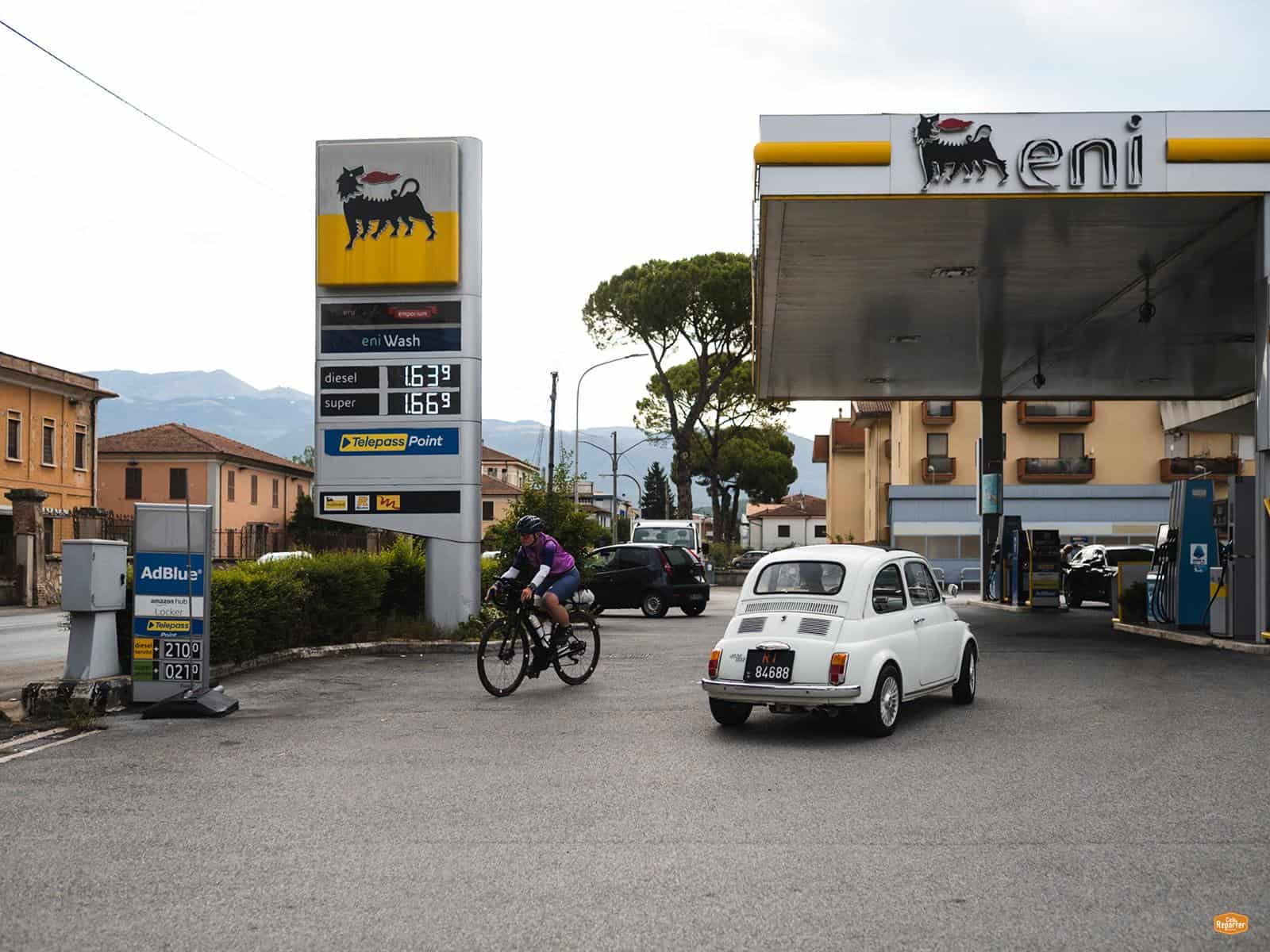
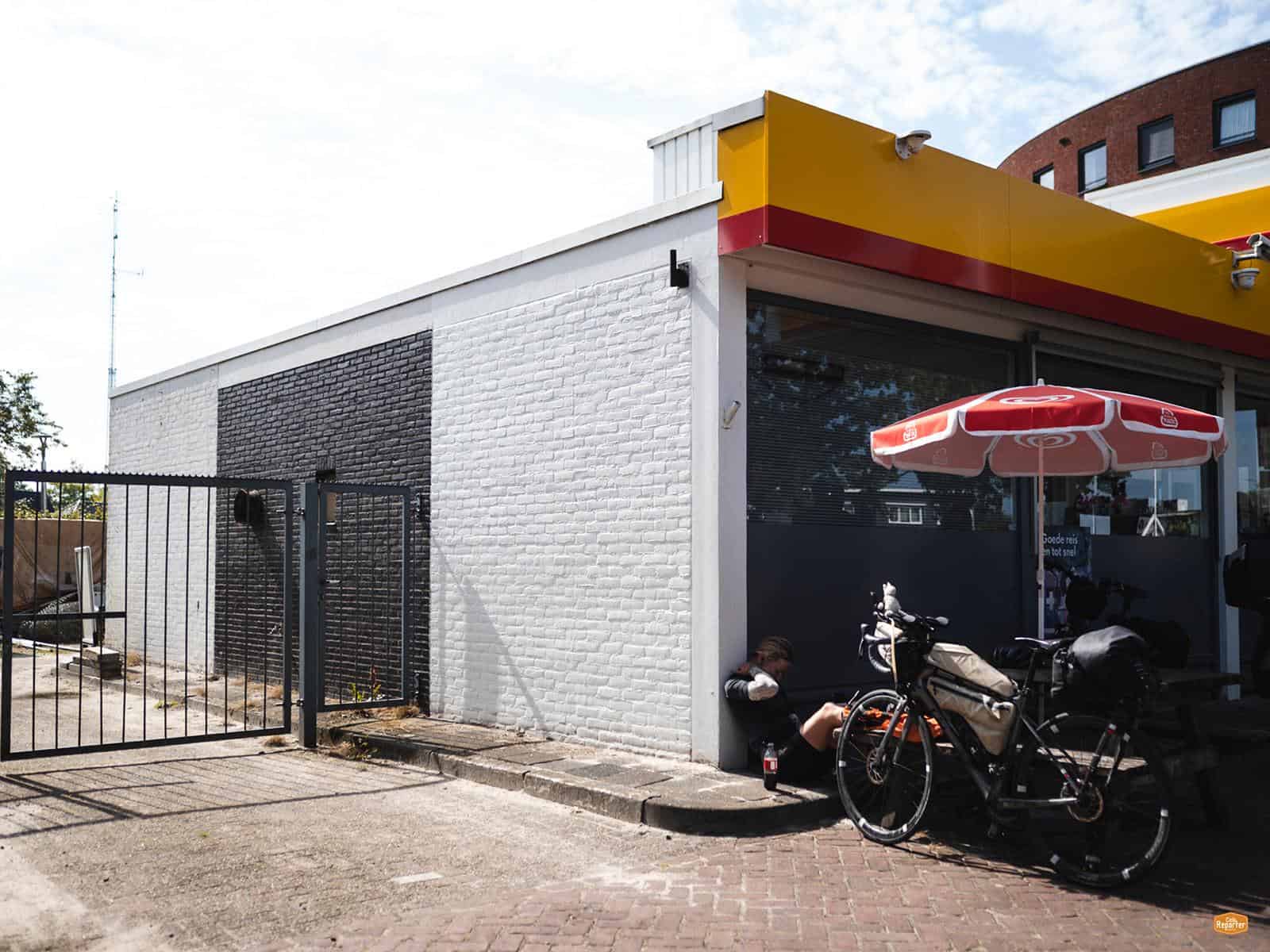
There are no truly uninteresting places for taking pictures—or at least, they’re much rarer than we think. Personally, I have my own perversion: gas stations, old walls, lately even air conditioned inverters make me grab my camera. Provided there’s somebody doing something.
He himself says it clearly, so clearly that it’s worth quoting the whole short poem. We could print it poster size and put it on the wall, alongside Martin Parr’s 10 advices and Oakley Hall’s 15 rules to write effectively:
Every second,
somewhere in the world,
someone releases a shutter
capturing something
because he (or she) is fascinated by a certain LIGHT
or FACE,
or GESTURE
or LANDSCAPE
or MOOD,
or simply because a SITUATION
wants to be captured.
The subjects of photography,
obviously,
are countless.
Every second multiplies them infinitely again.
—W. Wenders, Once, p.50
Practically anything can be an interesting subject to photograph—also because beauty can become tiresome. What’s truly worth telling almost always passes through a challenge, a sad or unpleasant moment; thus, decay and desolation are essential parts of any story.
On this last idea, I completely agree: when I think of some truly “non-photogenic” places, a few do come to mind, yes. But I’m quite sure that by exploring them more deeply, I’d uncover something interesting. Usually, if we think a place is unfit for photography, the shortcoming is on our side.
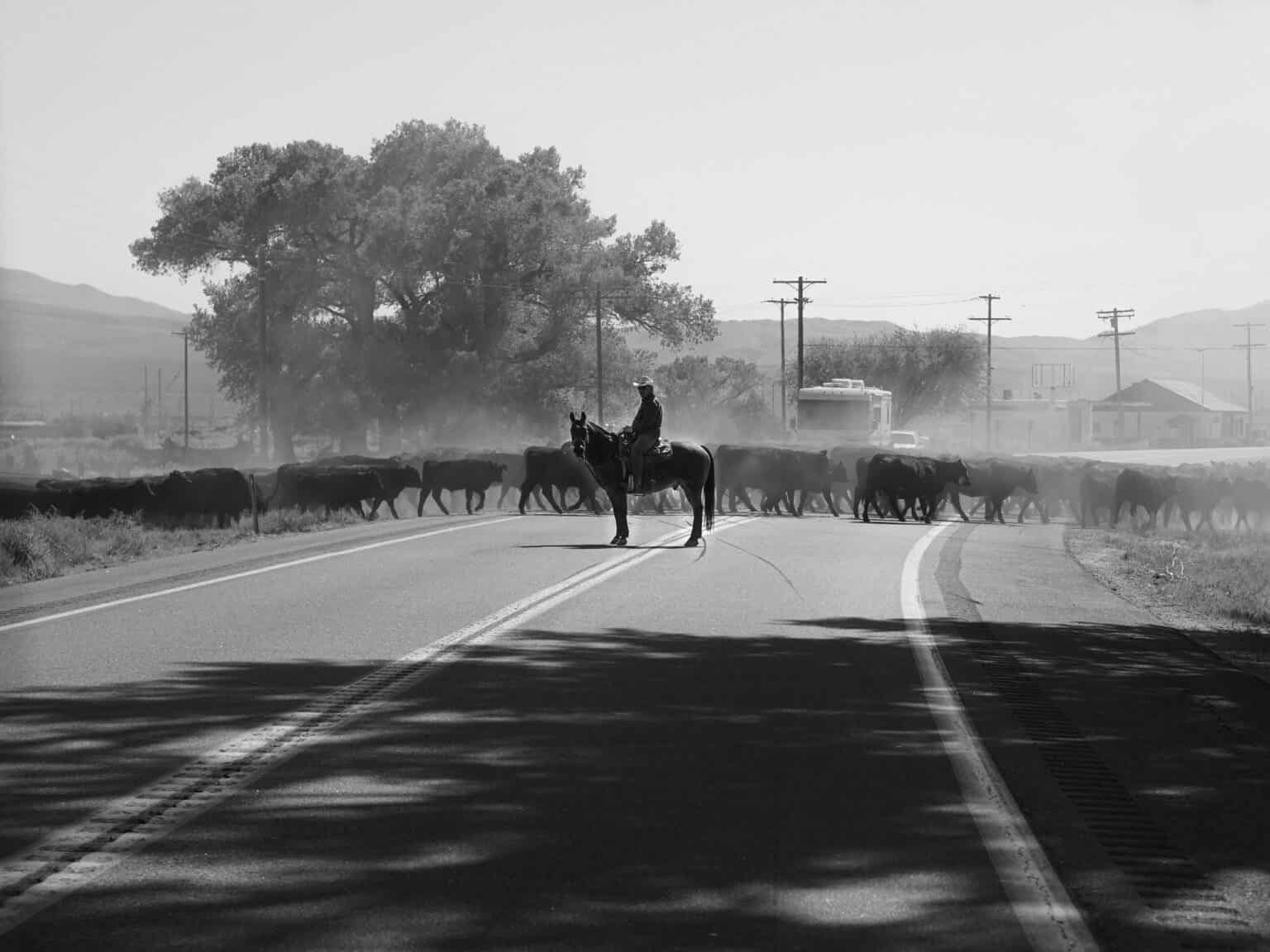
Where to find interesting stories? Quick answer: where things and people are on the move.

A 400km, 14.000mt offroad bikepacking route. Why did we think that was a good thing?
First episode of a short editing guide. Let's start with the necessary step - reducing the number of good pics.