Industry: a quick detour
Where to find interesting stories? Quick answer: where things and people are on the move.
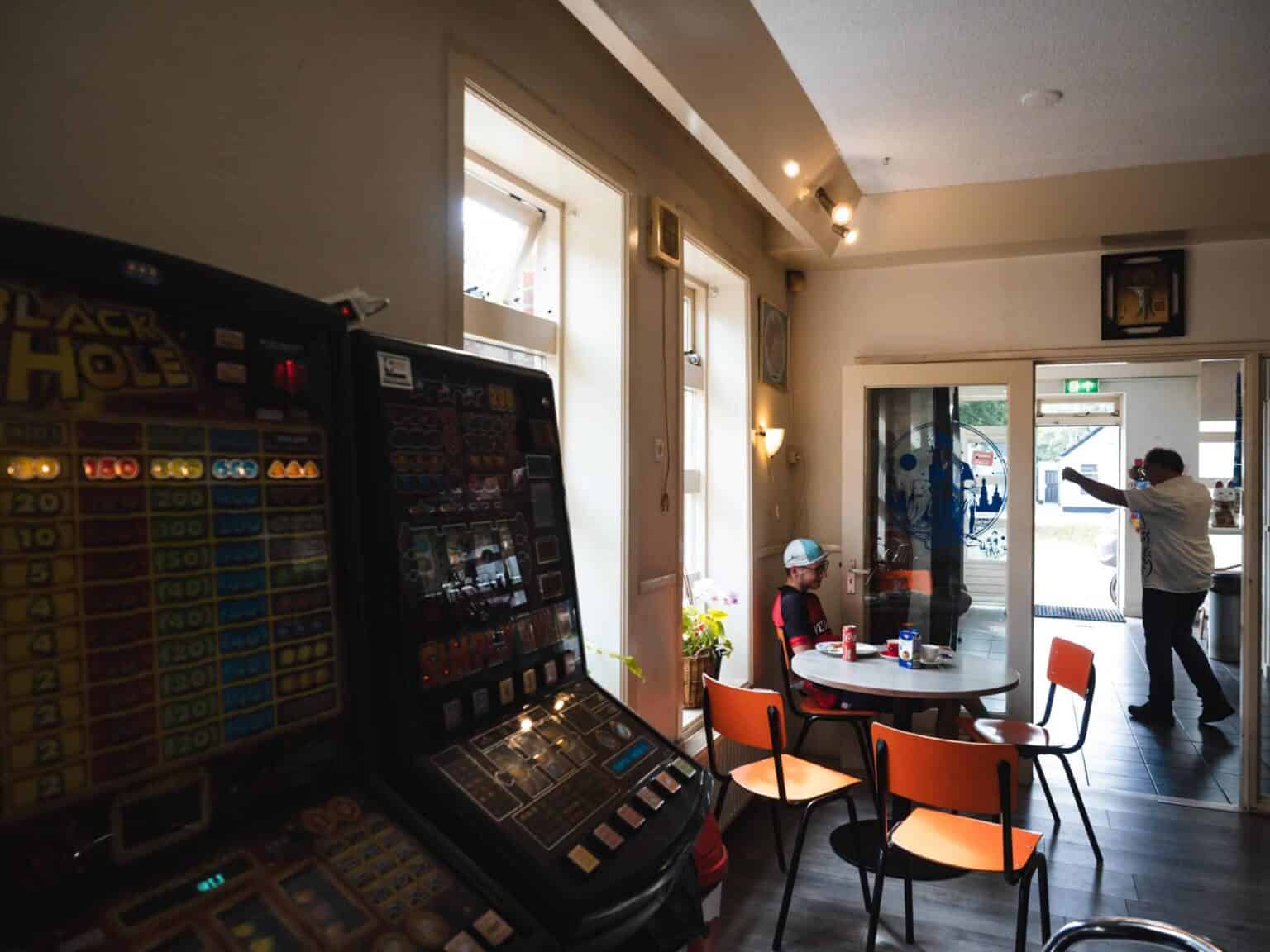
I felt that the discussion about Paul Fusco’s RFK Funeral train needed some counterweight, and this is the perfect reportage for it. Of course, it’s not only this: DeCarava’s work is great to explore the complicated relationship between Reality, Fiction, and the plausible. Indeed, this is a fascinating topic to me, and a recurring subject of conversation with my friends and colleagues. To be honest, every time I work with my camera in hand, I am puzzled by the intertwining of facts, fantasy, and storytelling.
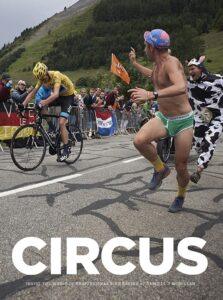
This is also a very relatable work for us on the bike, of course. Even though I didn’t plan for the opening to feature a bicycle, I swear: it’s only a very fortunate coincidence.
Back to the topic: The Sweet Flypaper of Life is a singular — perhaps unique — work whose text begins directly on the cover. Its title refers to life – yes, life – because it’s deadly, yet we are attracted to it and we run into it as hard as we can. I fell in love with the metaphor, for starters.
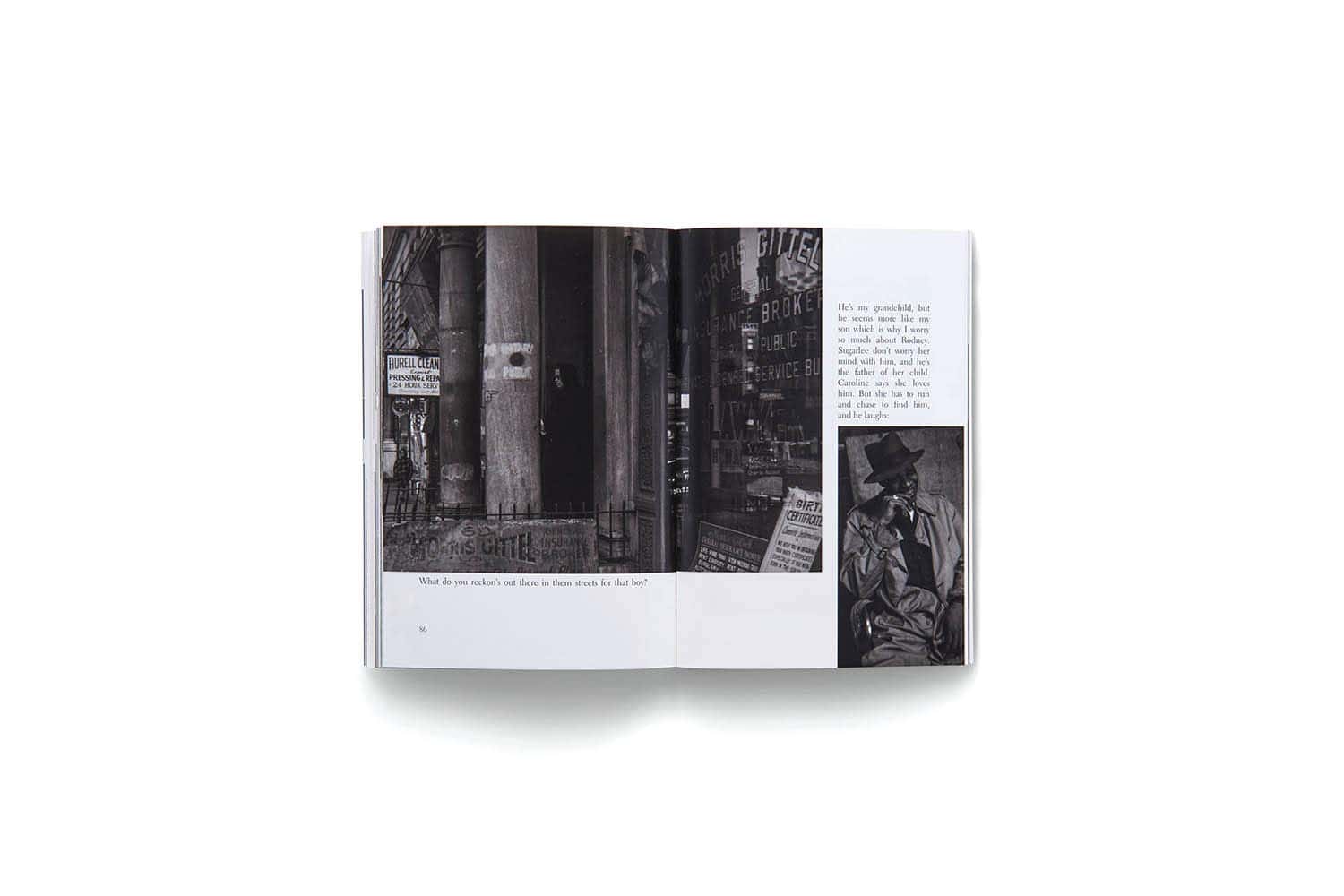
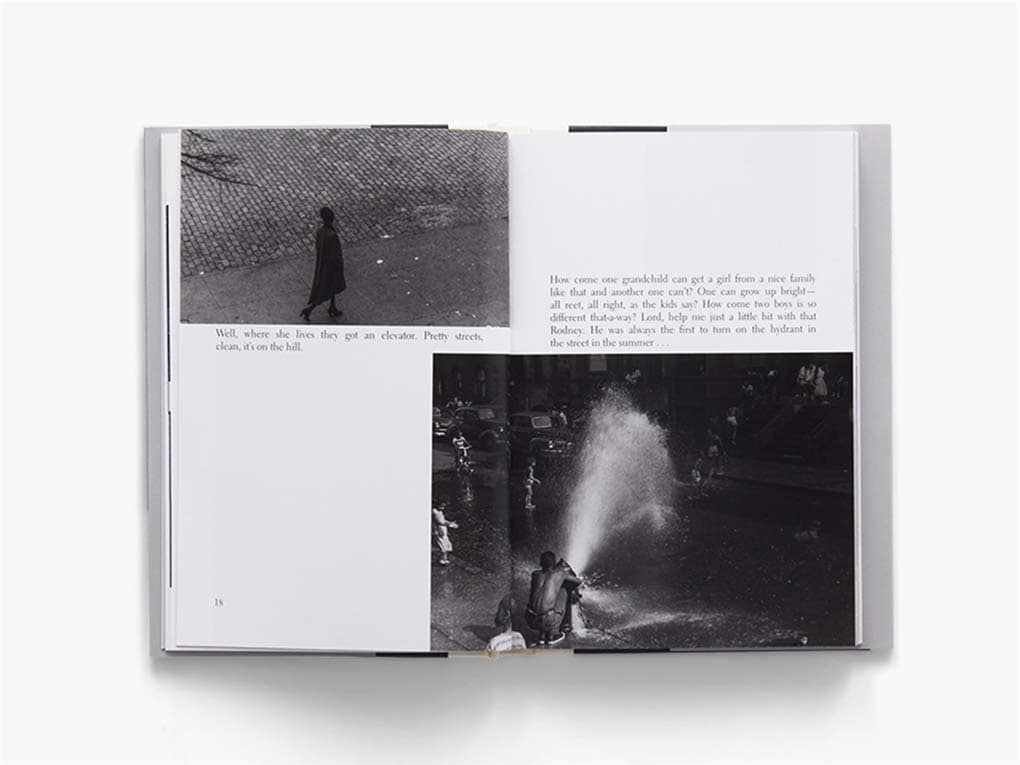
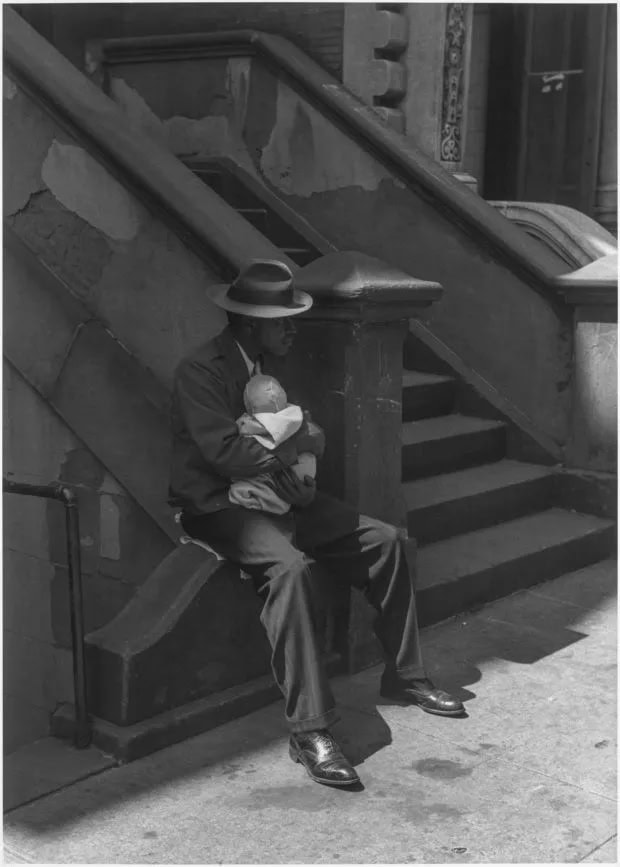
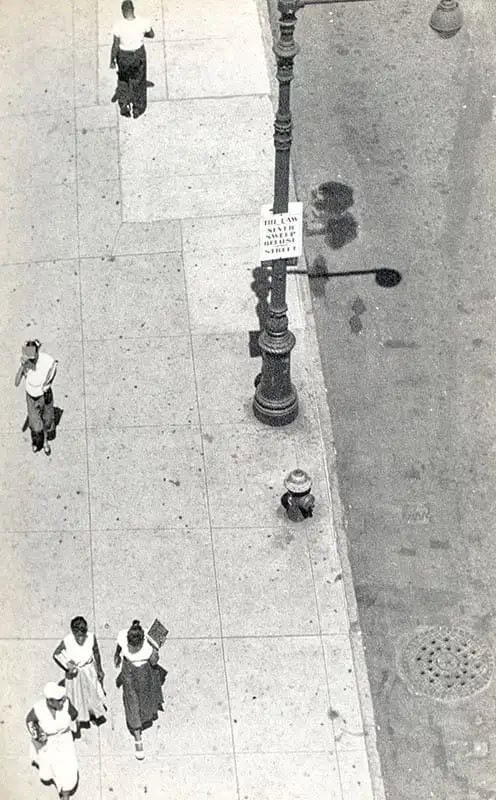
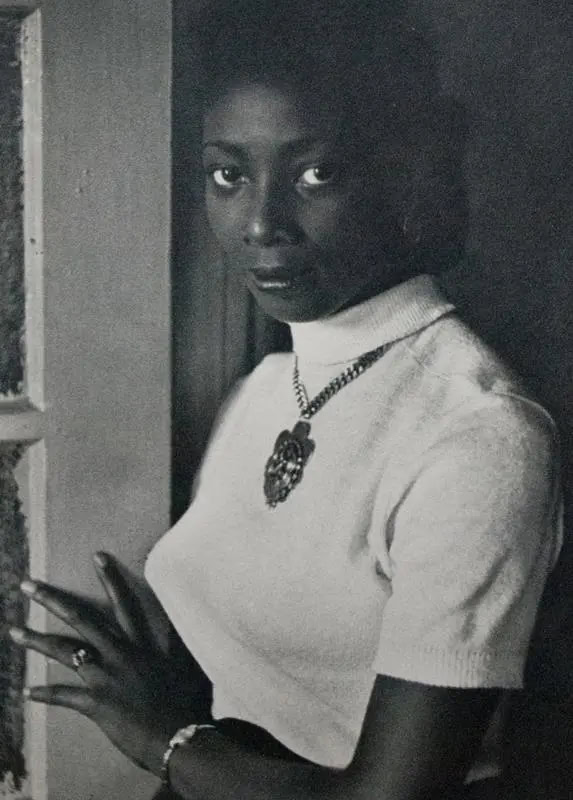
The book is a very small format, photo-wise; its 140 little pages are a mixture of black-and-white photographs and lines of a poem written by Langston Hughes, DeCarava’s friend. Together, words and images tell the story of ordinary people living ordinary lives in Harlem; it’s the story of a black family told by Sister Mary Bradley through a monologue: boys gathered around a jukebox, children playing around an open fire hydrant; riding the subway alone at night, workers on picket lines, artists in their studios, wise daughters, lazy nephews, more or less successful marriages, neighborhood life. The photographs are a mix of portraits and street scenes, something that could become a social reportage about daily life in Harlem across the 1940s and the 1950s.
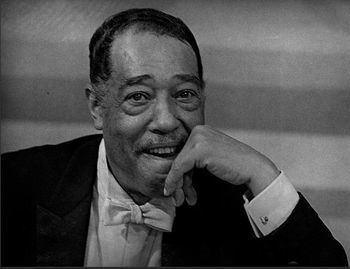
Roy DeCarava (1919–2009), renowned photographer of the New York jazz scene and the first African American to receive a Guggenheim Fellowship, documented daily life in his Harlem neighborhood during the 1940s and 1950s.
Langston Hughes (1901–1967), writer, journalist, poet, and another central figure of the Harlem Renaissance.
What makes this minor work a masterpiece is that DeCarava choose instead to build a novel: with this real photographs – something that genuinely document facts – with an invented poem. DeCarava’s vision — at least in this small work — is not political or social, but existential. He does not consider himself a photojournalist; he sees himself as an artist investigating human life. As he himself said:
“I’m not a documentarian, I never have been. I think of myself as poetic, a maker of visions, dreams, and a few nightmares.” *
* (To be clear, DeCarava was fully aware of the relationship between politics and photography, especially in relation to his African American identity, and he was active on many fronts; see the 1990 interview for Callaloo.)
Unlike the photographers of the Farm Security Administration, for example, DeCarava does not seek absolute objectivity, or pure description; in fact, he criticizes the very pursuit of it.
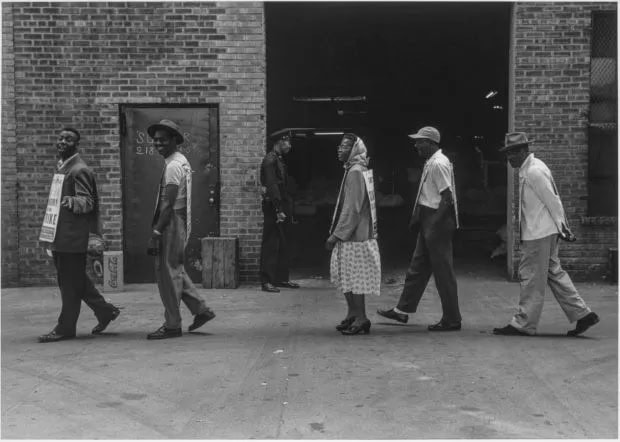
Sweet Flypaper of Life is an experiment towards this idea. DeCarava hands over his photographic archive — hundreds if not thousands, accumulated over the years — to his friend Langston Hughes, asking him to edit the images and write a story around them.
The result is a very personal narrative in which photographs and text support one another – a very ambiguous work, playing on the very concepts of reality and fiction. The words function as captions, but they also carry the story forward, while the images in turn explain the text. It is a perfect symbiosis that creates an atmosphere suspended between facts and fantasy.
The stories woven through those hundred pages are entirely plausible, because every photograph portrays neighbors and acquaintances; yet their sequence is subjective, and together they form a fictional story: based on reality, but not real. Potentially true stories, perfectly suited to the context, but that never actually happened.
The outcome of this combination is something totally different from their simple sum: objective reality changes according to arbitrary connections, thus becomesH subjective. So, the story of Sister Mary Bradley, which is not real but could have been, becomes a symbol – a universal story. When asked about this evocative quality of his work, DeCarava has no hesitation:
“Of course, my work is very spiritual. It is not about matter; matter is the instrument through which I express my spirituality. I take the tangible and present the intangible” – he seems to refer directly to this passage from real photos to plausible universality through fictional text. “This is the spirit of man, the spirit of many, many, many things, many moments. […] This is the grace of the human being: that we can transcend our bodily nature and become something else, something greater than ourselves.”
A symbol is, by nature, subjective: it is up to the reader to connect it to something, trace it back to a real experience; this way, each one of us completes it with a meaning. He insists on this point, arguing against a “descriptive” photography: pictures “have something of me in them. […] I try to put as much of myself into the photograph as possible, because that is the subject. It is not so much the object itself as my relationship to the subject.”
The risk here is that subjective becomes mute – perhaps the most feared danger in all photography. How many pics are dear to us, but don’t tell a thing to others? Did I hear somebody whispering wedding album?
How do the two avoid this? The magic depends on delicacy, awareness, sensitivity, and other human qualities; however, there are useful things we can learn and borrow.
First, DeCarava gives up his subjectivity to his friend, thus reducing the risk of being self-referential. As far as we know, Hughes might have discarded all the photos DeCarava liked best.
Second, DeCarava and Hughes guide us through a narrative: they choose one among the many possible, and a very specific one. They narrow the field for us, so that we are not lost in endless fantasy. We meet Sister Mary Bradley (not a woman), her family, her children, daughters-in-law, grandchildren, the commuter on the subway, the music they listen to: Rodney, Ellen, the painter neighboor, the songs, the streets. We are engaged because it is a story – one story. If the captions were merely descriptive, we would be lost after three pages.
Third, at the same time, the very particular is balanced with the universal — this is what produces the plausible (or the symbolic; perhaps two words for the same idea): the everyday life is ours, the street corner is where we used to meet friends after school. The story is full of hints, suggestions, even songs – things that open the story to the reader. With a single picture, we are free to interpret it and to attach a specific meaning. But put pictures together, and it becomes a narrative: the interpretations decrease, but we are more likely to be engaged, we can relate to rather than interpret.
To activate this symbolic mechanism, he cannot speak about the extraordinary, about conquest and victory; he speaks about the ordinary, about small things that are evocative for each of us:
“My work concerns what I consider essential: the sun, time, patience, waiting long enough. […] My work is not about strength, not about conquest. […] Many great works are made to overwhelm you. They are aggressive. They are beautiful works, if you like aggression. But they are made to take control, to dominate you. That is not satisfying to me. I want people to come because they want to, and leave because they want to.”
The images have grace, of course. They are beautiful, they are good, they work. But most are simple photographs, and also not perfect, blurred, too dark. There is a great deal to learn from this as well: there is no spectacular Steve McCurry composition and color contrast, no incredible Alex Webb layering, no decisive moment.
Now place this statement next to one by Camille J. MacMillan, a photographer of professional cycling and a veteran of the Tour de France and the six-day track races.
He too is not interested in conquest or strength; he prefers to focus on the small stories in the shadows: athletes changing behind a team van, or relaxing after the race.
“There’s more to cycling than the epic shot — the lone rider on a mountain pass, blah blah blah… Let’s go tell some real stories.”
Let’s go tell some real stories — or better, some plausible ones.
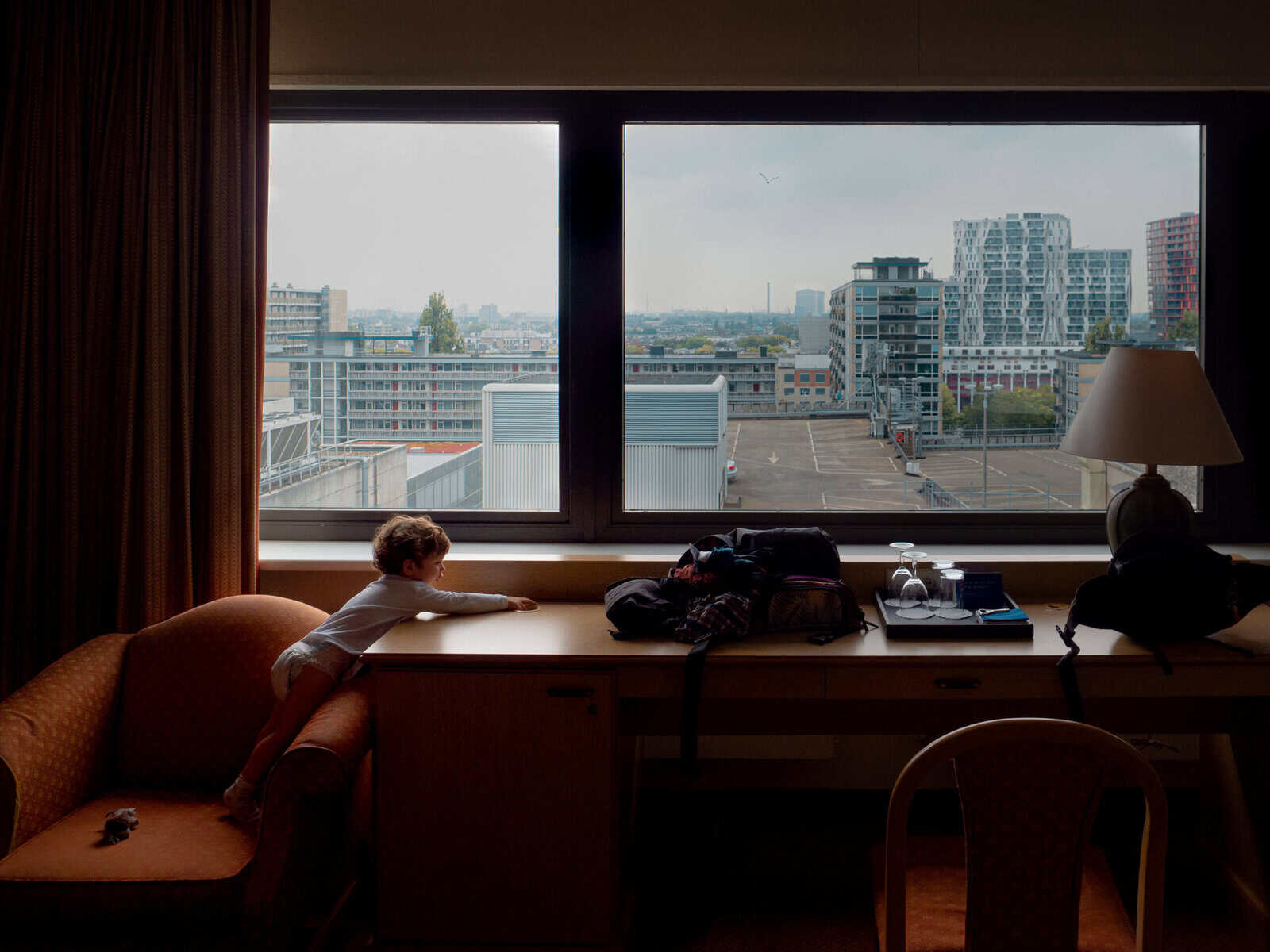
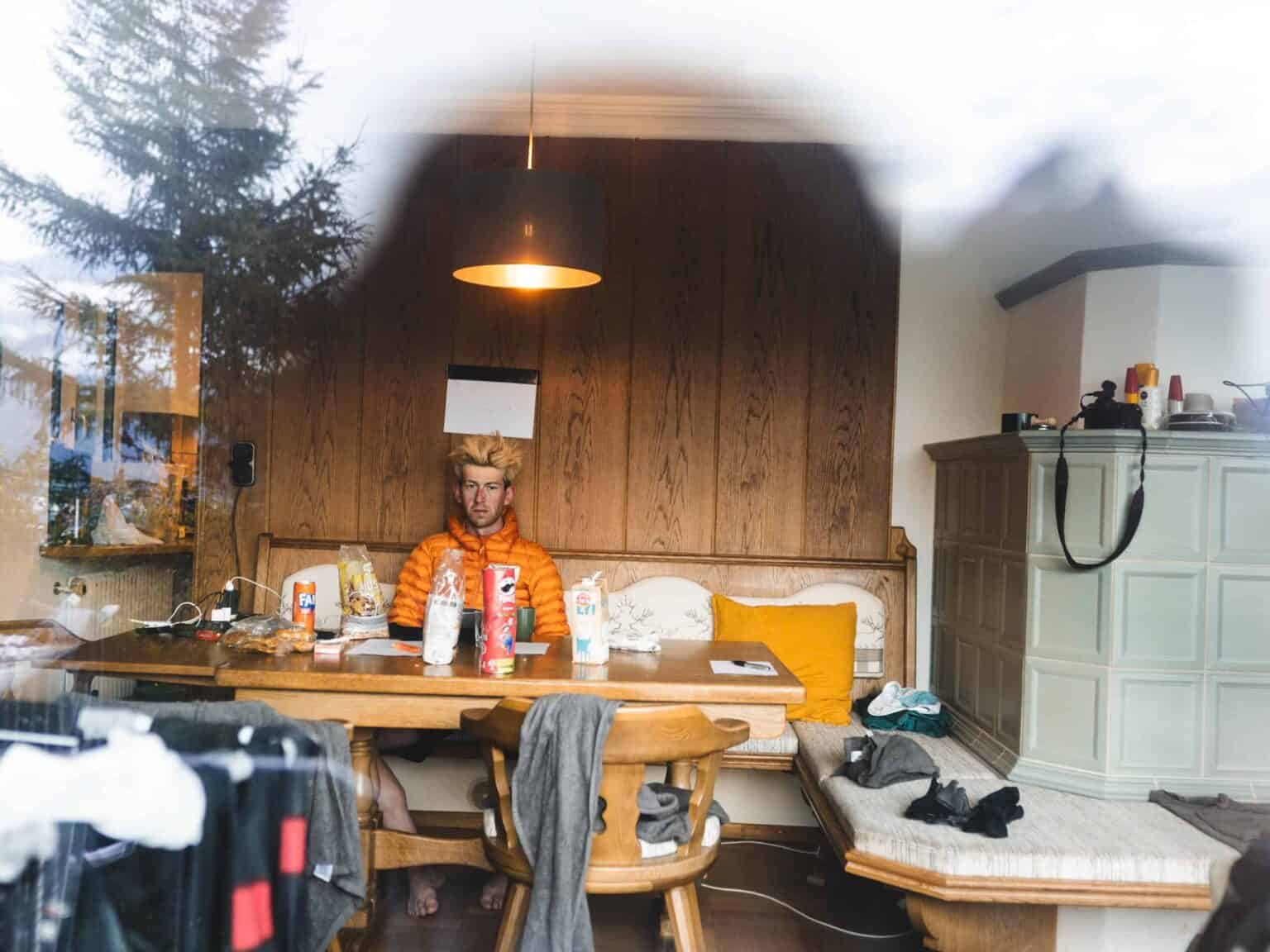
There’s a lot to think about, thanks to DeCarava and Hughes. But let’s try to go at the heart of his work as it concerns us as cyclists. As I said, I am faced with this intriguing subject every time I shoot. However, not always in the same way. During races and events, the main concern is about the plausibility of the single picture, as Inigo shows: I try to document a fact, but leave some room for interpretation, so that viewers can relate to that. Viewers usually like Inigo Hawkins’ photo because, they say, many things happen. It’s clear that something happened, but it’s unclear what. The emptiness of the room, the remnants on the table, and the external point of view (through the large window, with some reflections of the wood in front) nudge us towards one of several possible stories.
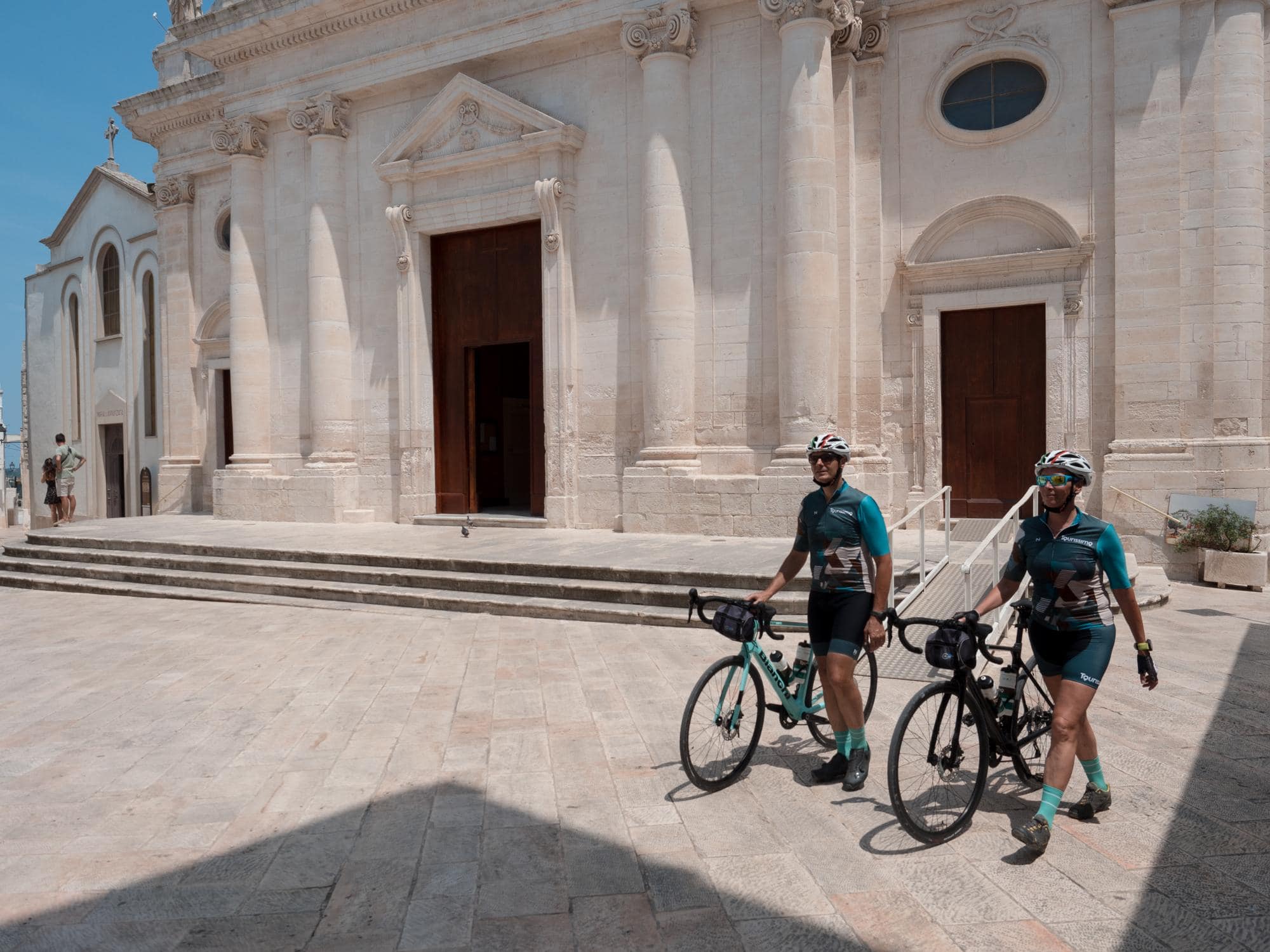
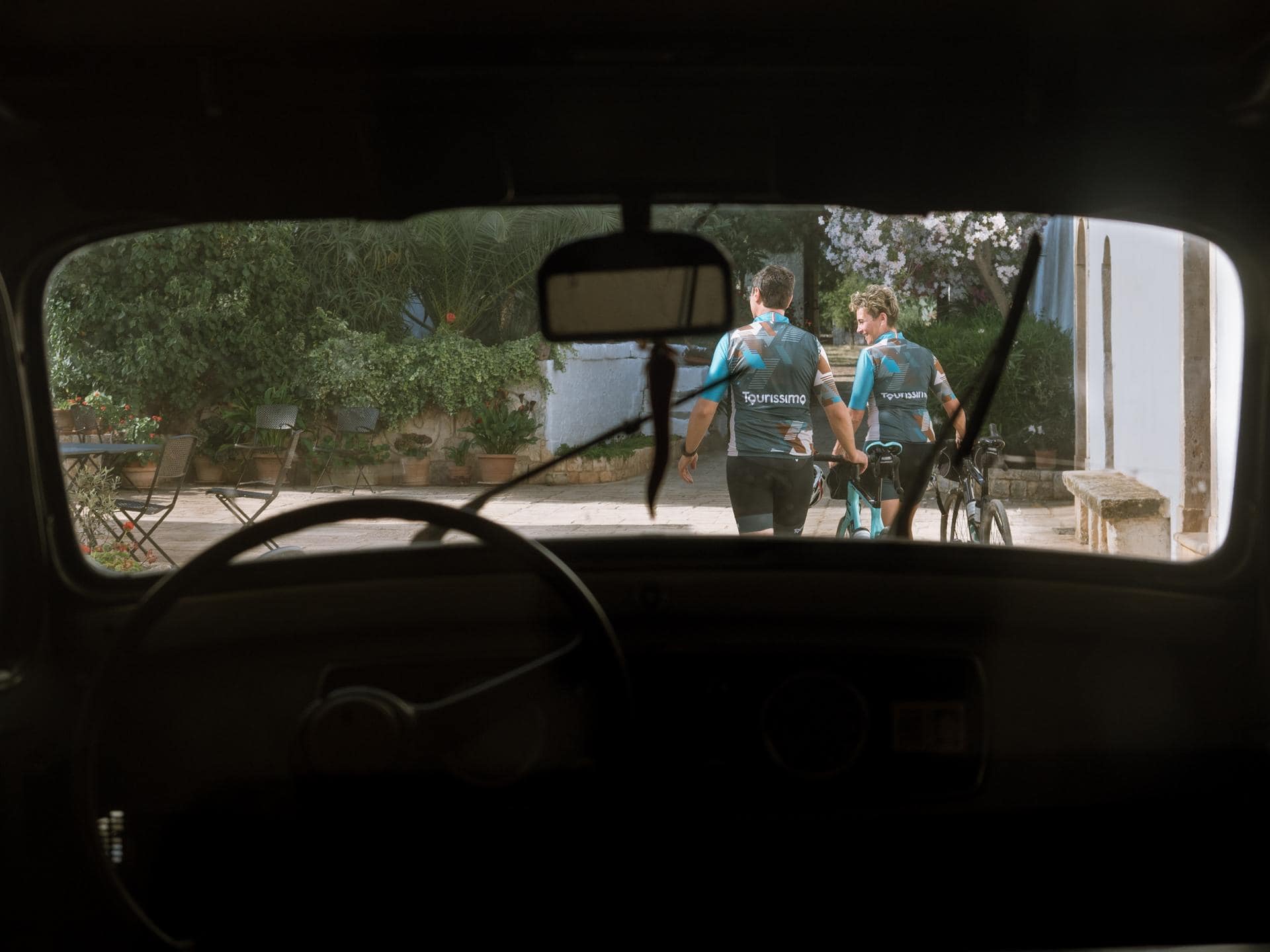
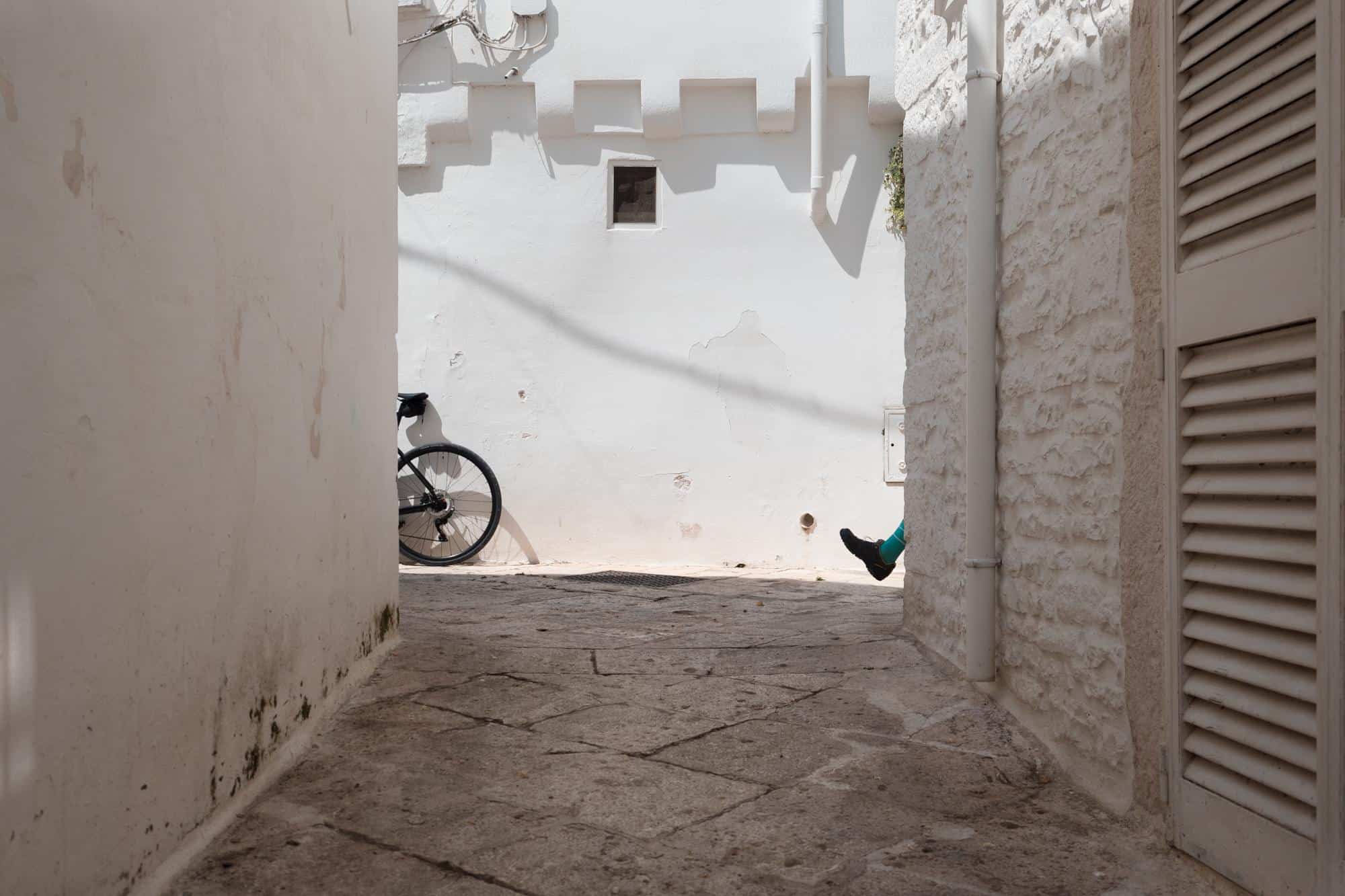
On the contrary, when the shooting is about territory promotion or tour operators, I focus more on the narrative, trying to build a story of a possible traveller/guest. As a result, I focus more on small situations, details, and anything useful to that plausible story we are making up.
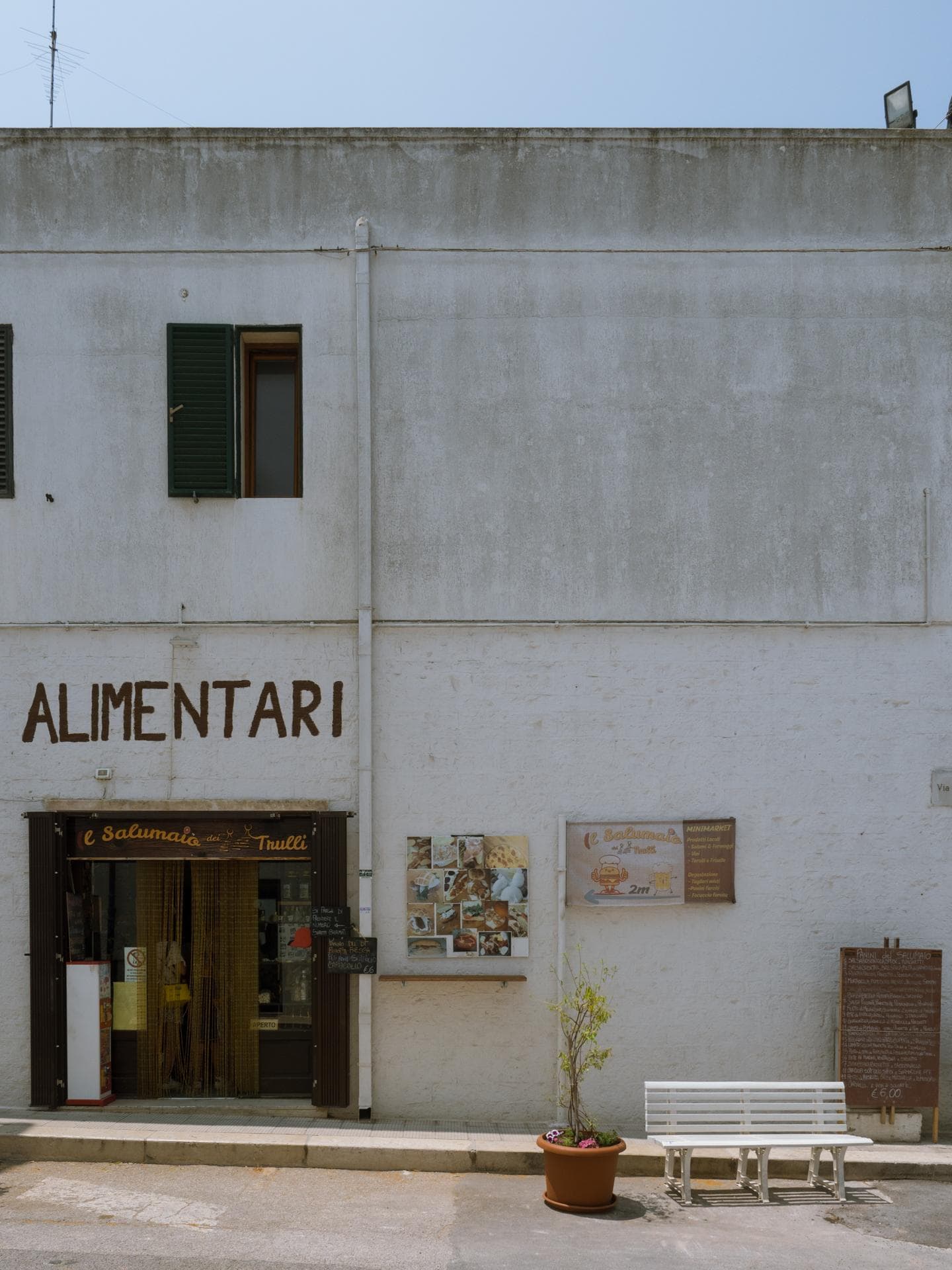
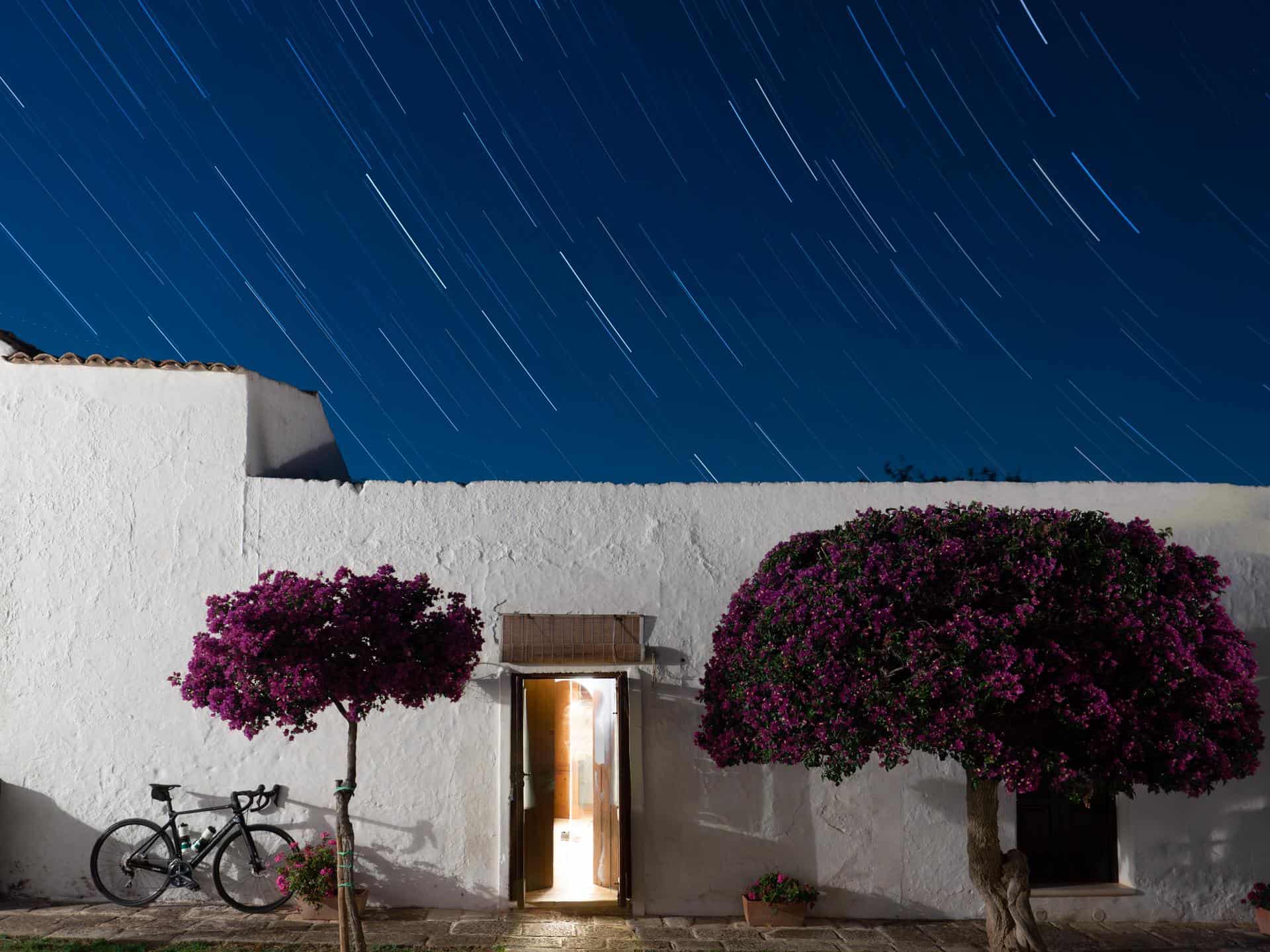
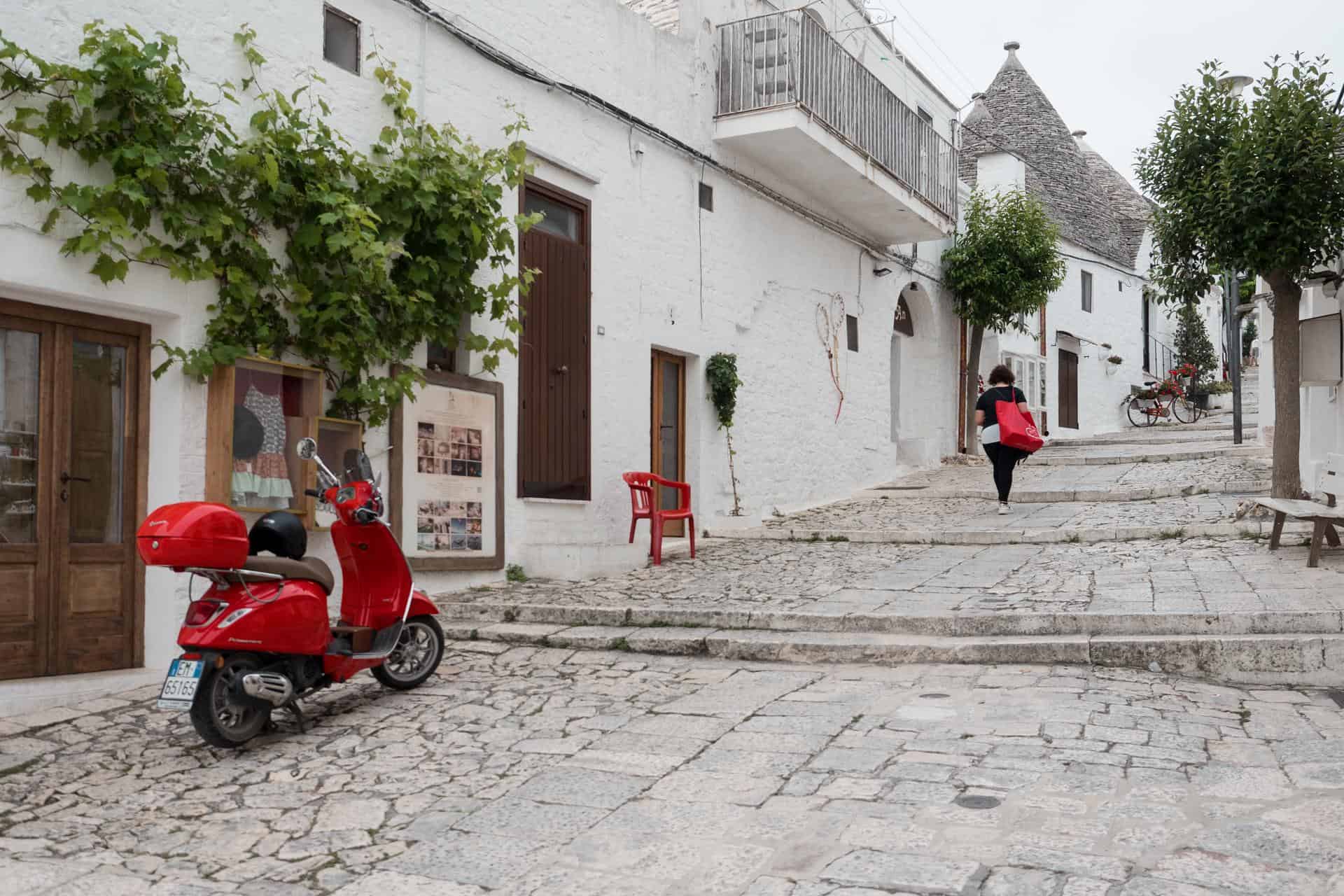
When I shoot for Tourissimo (see below), a tour operator whose target audience is people who enjoy Italian food and folklore, I try to catch (the food, obviously; and) the natural beauty of the everyday sights, rather than the majestic monuments: the idea of what Italy can be for an American cyclist.
In both cases, I am persuaded that this “plausible story” we build has nothing to do with a “lesser reality”, as if it were “the reportage I would have wanted to do, but I couldn’t accomplish”. It’s not a surrogate for a social documentary – it is something substantially different. More poetic, more symbolic, more universal. Actually, social reportages are incredible works, but they are limited to that situation by their own definition.
First, and very simply: the combination of text and photographs constructed in this way is a fascinating option for telling the story of a journey. Difficult, certainly, but fascinating. Let’s try and borrow it!
Third, the process and the project. DeCarava hands over his accumulated archive of photographs and asks someone else to give it meaning. There is no real project at the beginning; it emerges afterward, even years after. This gives us hope: we always hear “shoot with a project in mind”, but having a project is very hard. Hey, I’m travelling by bike, things just happen to me. What project? And we feel inadequate. Yet, we can also look at our archive in hindsight, and build a narrative that fits one part of our adventures. Most likely, we will discover unexpected threads running through our photos over time. Those recurring themes often reveal a great deal about us, about the way we perceive things, more than about the things themselves.
In the end, DeCarava’s question was spot on: how much of ourselves is in our pictures?
Where to find interesting stories? Quick answer: where things and people are on the move.
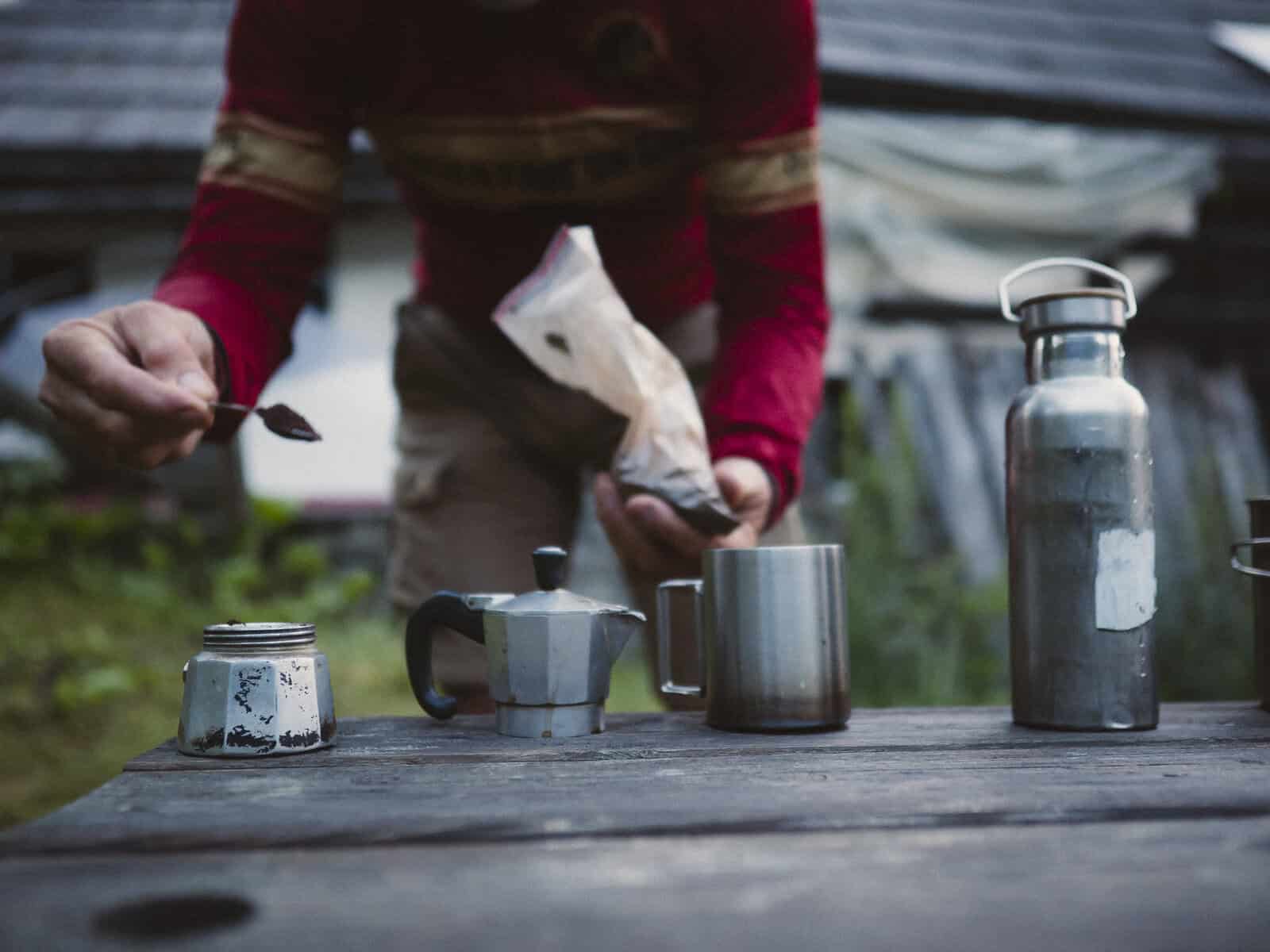
A 400km, 14.000mt offroad bikepacking route. Why did we think that was a good thing?
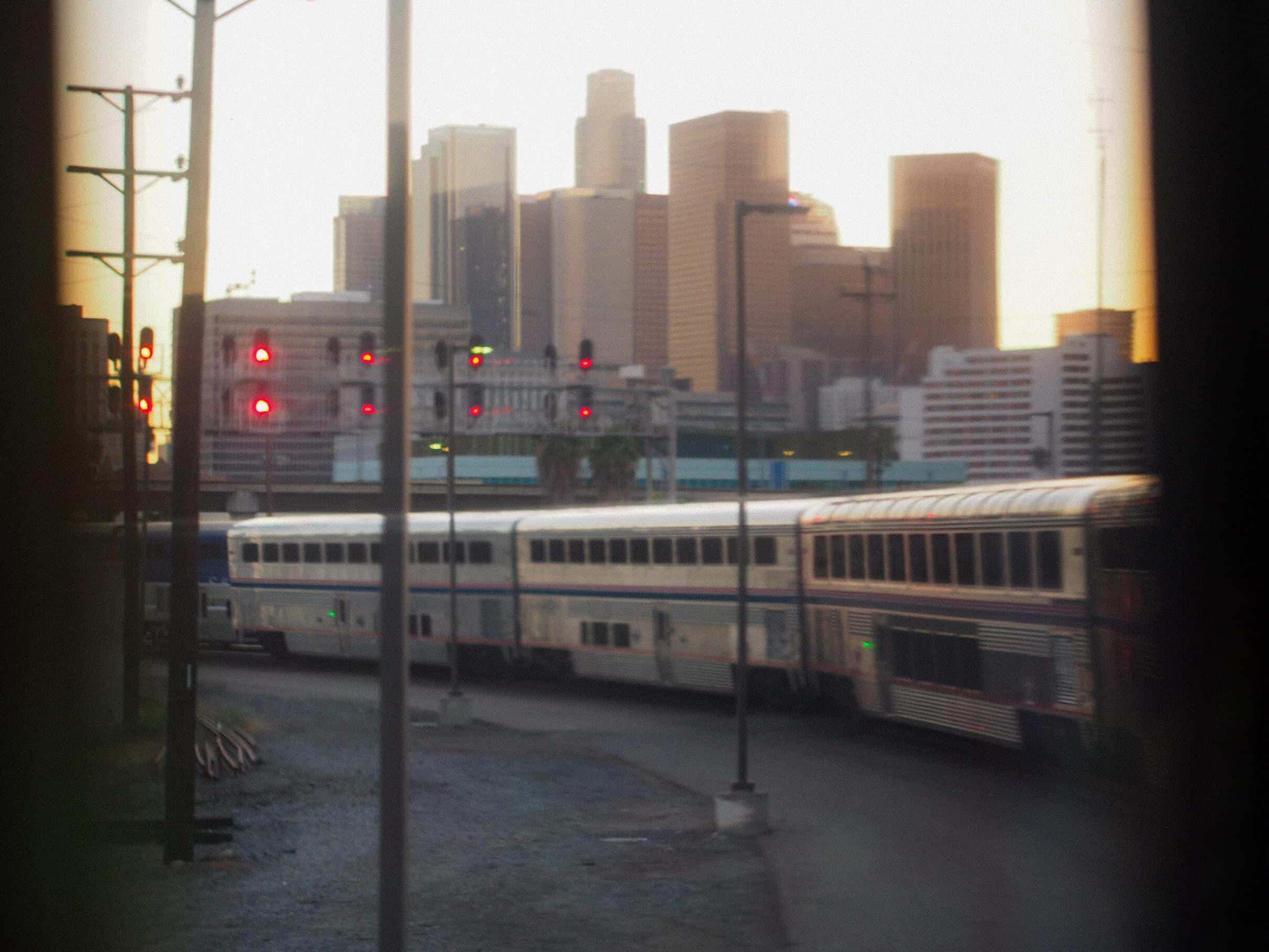
The italian saying is "fare di necessità virtù": a classic reportage and what it can teach us about cycling photography