Little vademecum for shooting while cycling. #1 – Editing.
First episode of a short editing guide. Let's start with the necessary step - reducing the number of good pics.
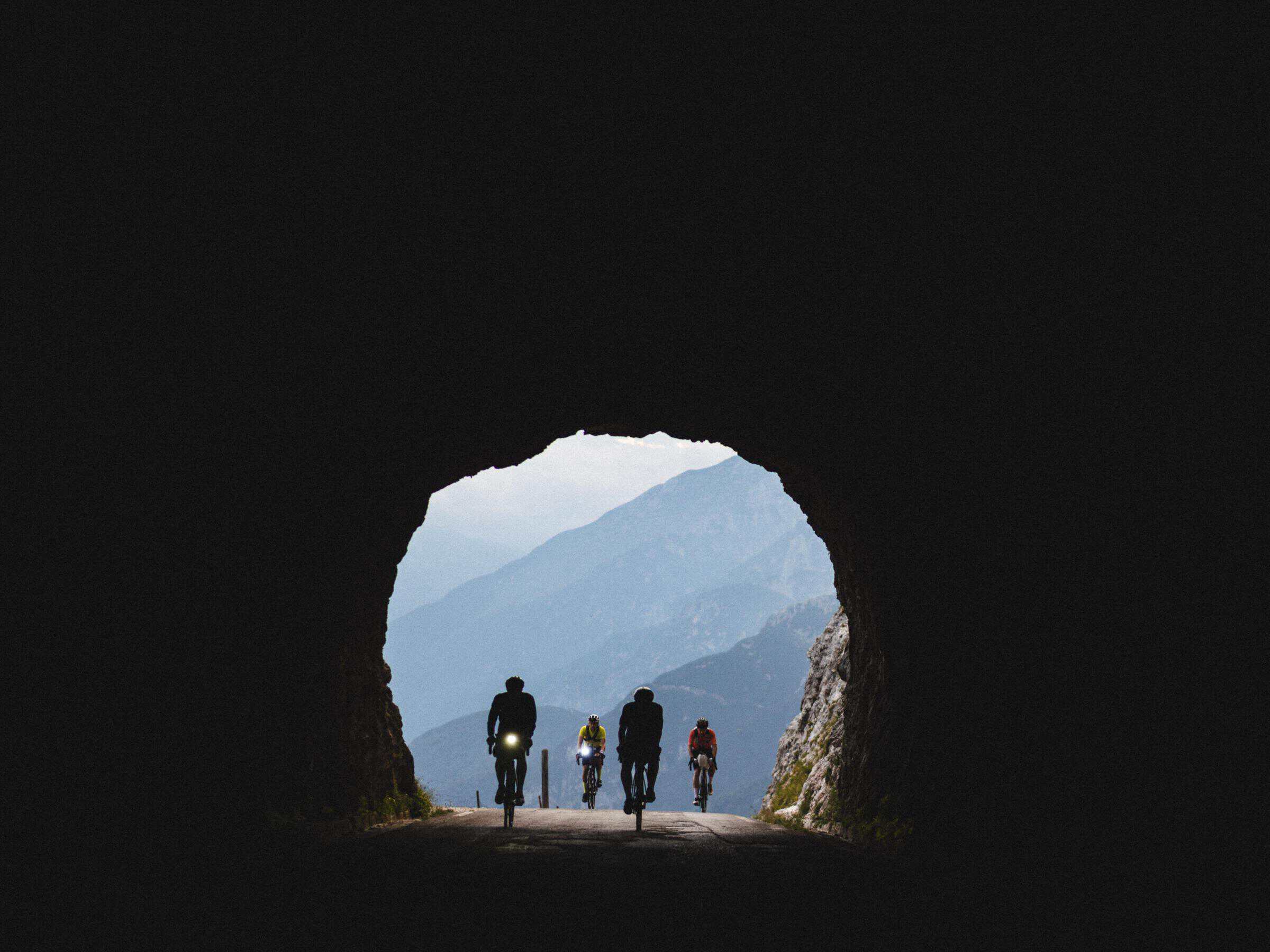
Finding riders is bloody hard, I think while we drive through Abruzzo with Ryan, around 10am. Coffee break, quick refill, toilet, then we keep rolling. It’s already hot, low 40s. Riders haven’t been lucky, with heatwaves following them in Spain and France, and a “normal” heat in Italy now. In our tiny car, we sweat since days, not unlike those who pedal.
It took me only one day to change my perspective. While facing my very first ultra coverage, I clearly underestimated the phase of chasing riders. I am not without experience, but finding 250 riders on a 500km race is NOT like finding 120 riders scattered over 4000km across different states. Oh, yes, and there is no fixed route. It’s a whole different thing.
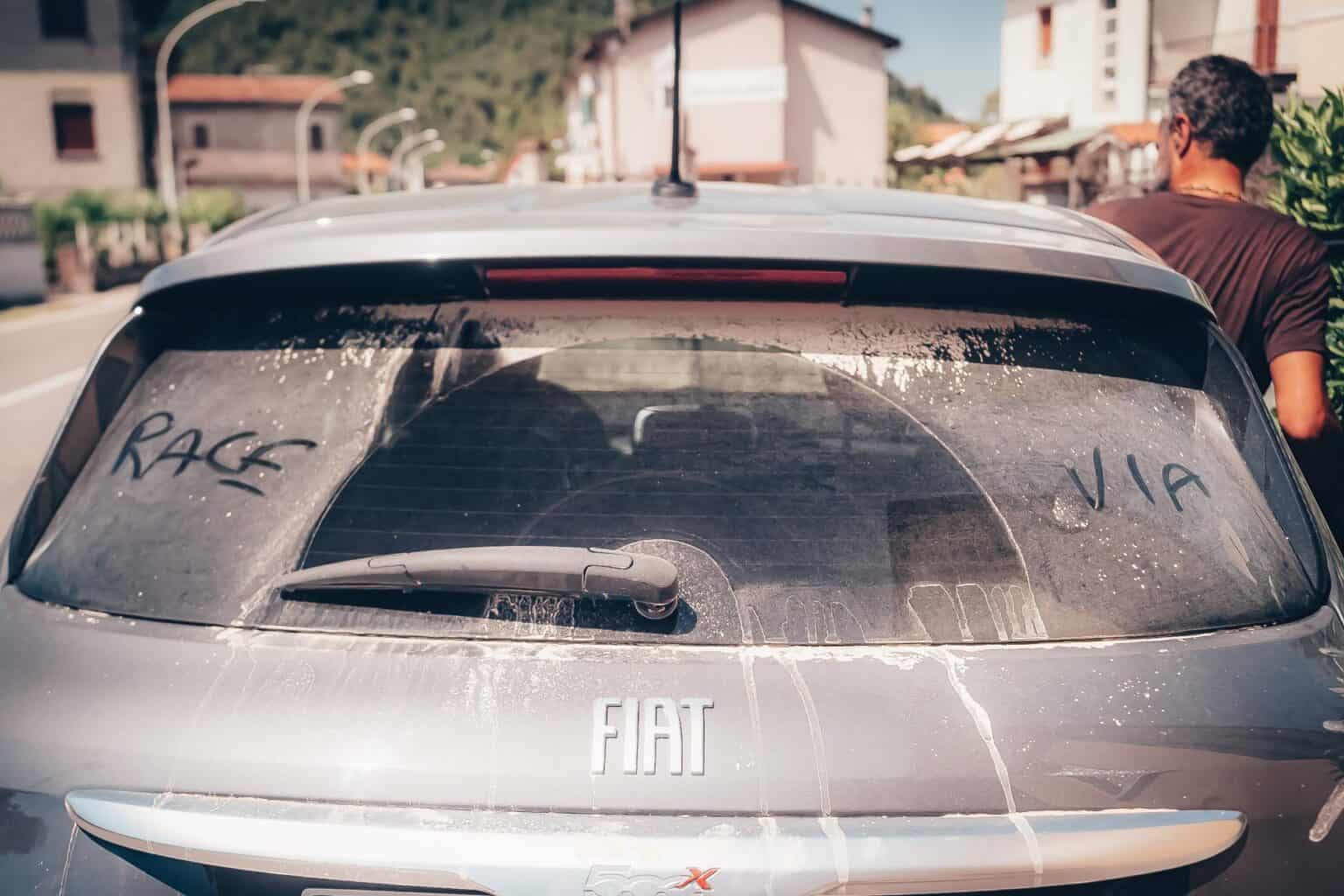
Generally speaking, the time you spend shooting is nothing compared to the time spent not shooting. Exploring the challenges of FOMO, we already said that an ultrarace is basically nowhere: indeed, you spend a lot of time looking for riders, and a very little time with your camera in hand.
On bad days you can end up with 2 or 3 riders covered, and it feels very bad. But that’s part of the game. You don’t have to think about one day, but the whole race. This should be your criteria to evaluate a day’s work. Still, when you miss a shooting, you feel all of it.
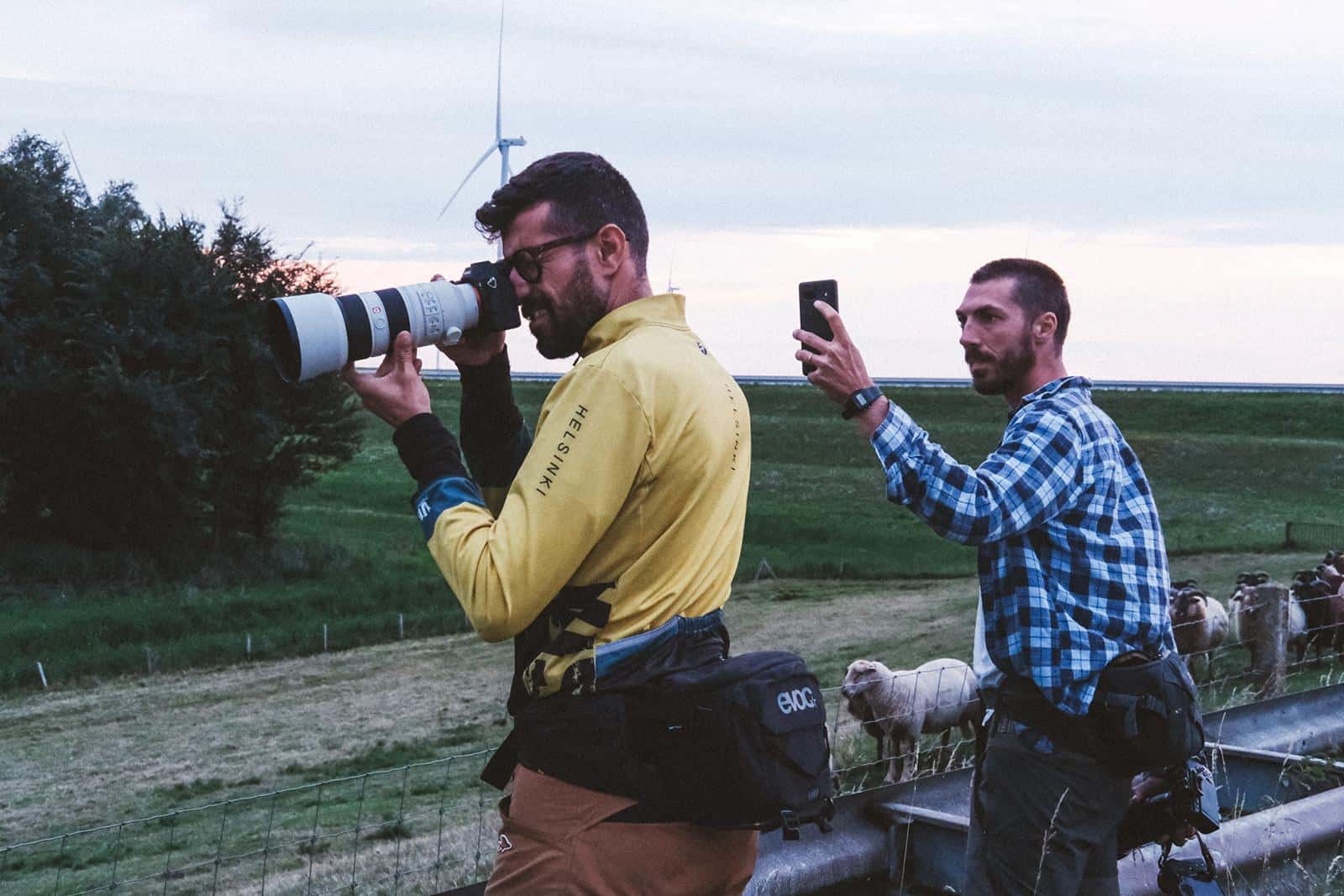
At times, you think a rider will come, but that never happens. You have a nice framing, maybe you drove some Kms to intercept him, and you come out with nothing. Part of the game. Most likely you will not even understand how that happened. During VIA II, we spent hours – literally 3 hours – looking for Adriano** in the Netherlands. Three guys with the head down on the tracker, camera in hand, wandering around a couple blocks. The dot was stopped somewhere near a restaurant, a park, a parking, and a farm. We found a horse and a chinese restaurant chef. The dot kept moving between those places – we searched all them, but nothing. Twice. At one point, the tracker showed him 20km farther, out of the blue, and out of our range. What a pity. We were mad.
Quite often, the tracker is not reliable — meaning the GPS signal itself is spotty:
On top of that, even a good GPS fix is useless without a phone signal to send it — and that’s its own lottery: remote areas, international (and sometimes limited) roaming, and so on.
This knowledge – in italian we say fare la tara, something like calibrate, or adjust something according to external parameters – comes with experience, and you learn to fill the gaps of this digital information. Still, as the episode at the cemetery during Zuri Escape shows, it leads to some mistakes.
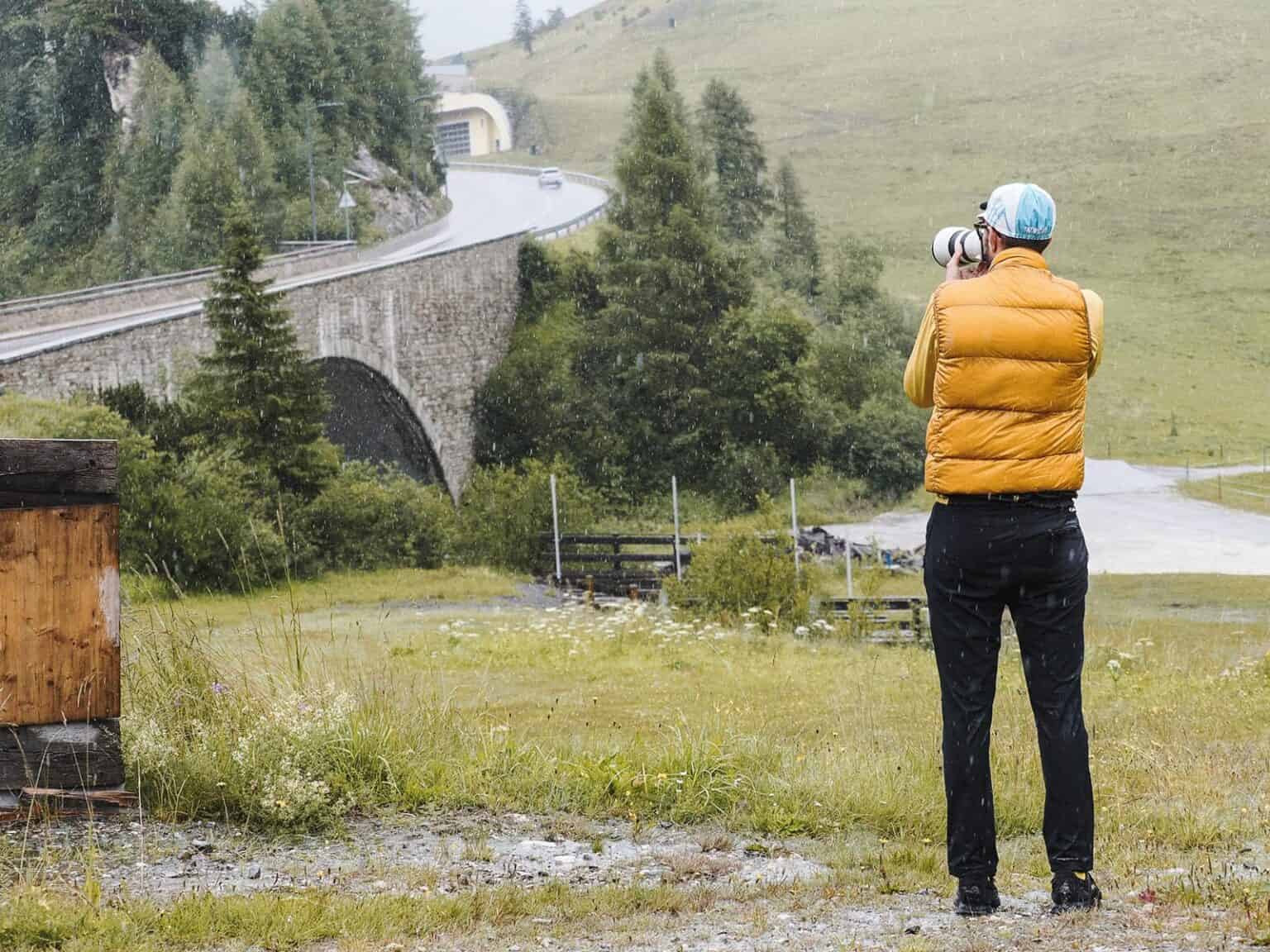
My biggest regret related to VIA chapter I has been not having found Rob Roy on the crossing of the Apennines, North to South. The day after leaving the Pianura Padana, we were in central Italy, following the first bunch of riders – roughly from the 3rd to the 12th.
Ryan and me are in the area, a bit south of Pistoia, the town where all the riders end up after coming down from the pass. We have a few hours to spare before another shooting more South, in Tuscany. We decide to go back a bit and wait for Krystian (cap145), one of the top riders.
We should be back to Pistoia exactly when he arrives from the pass. Unfortunately, he stops in a hotel in downtown before we can catch him. We can only park the car in front, double-check the tracker, and close that chapter: he will start riding again in the night, but we will be away at that time. So he’s out of reach.
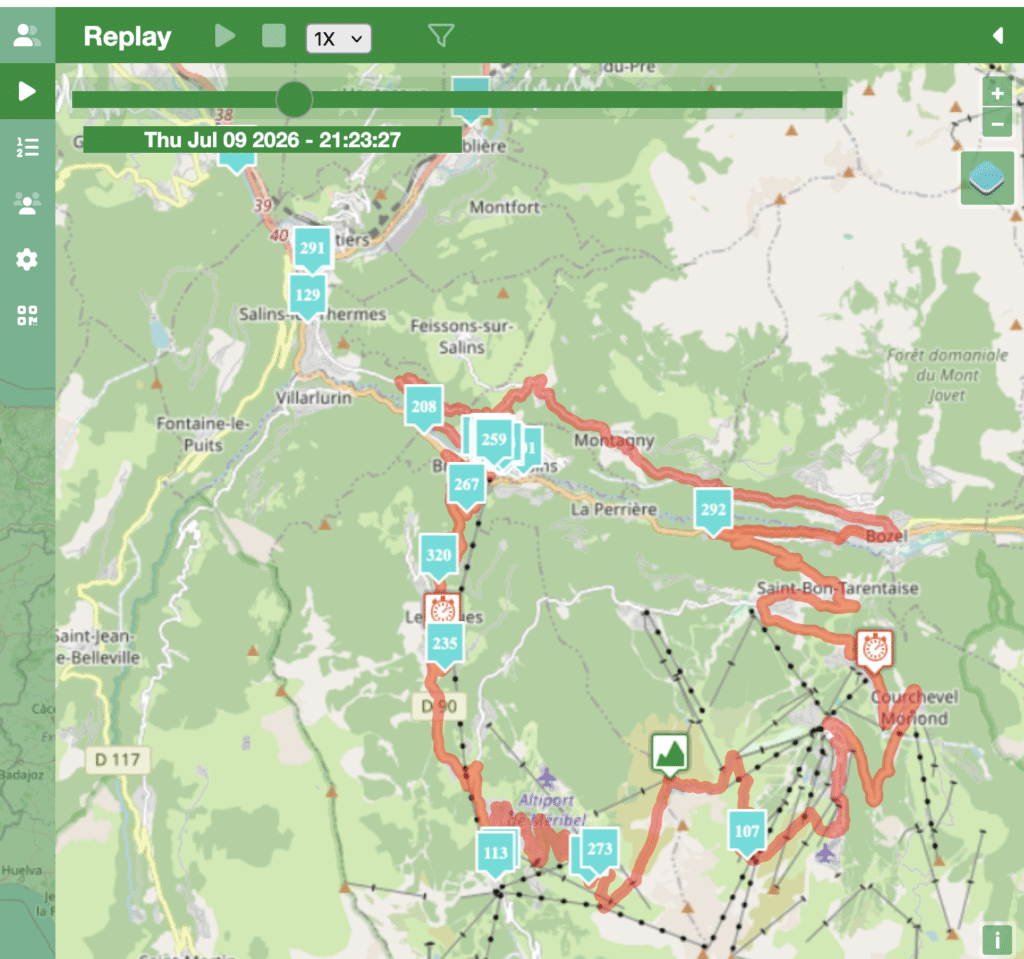
Thursday 21:30
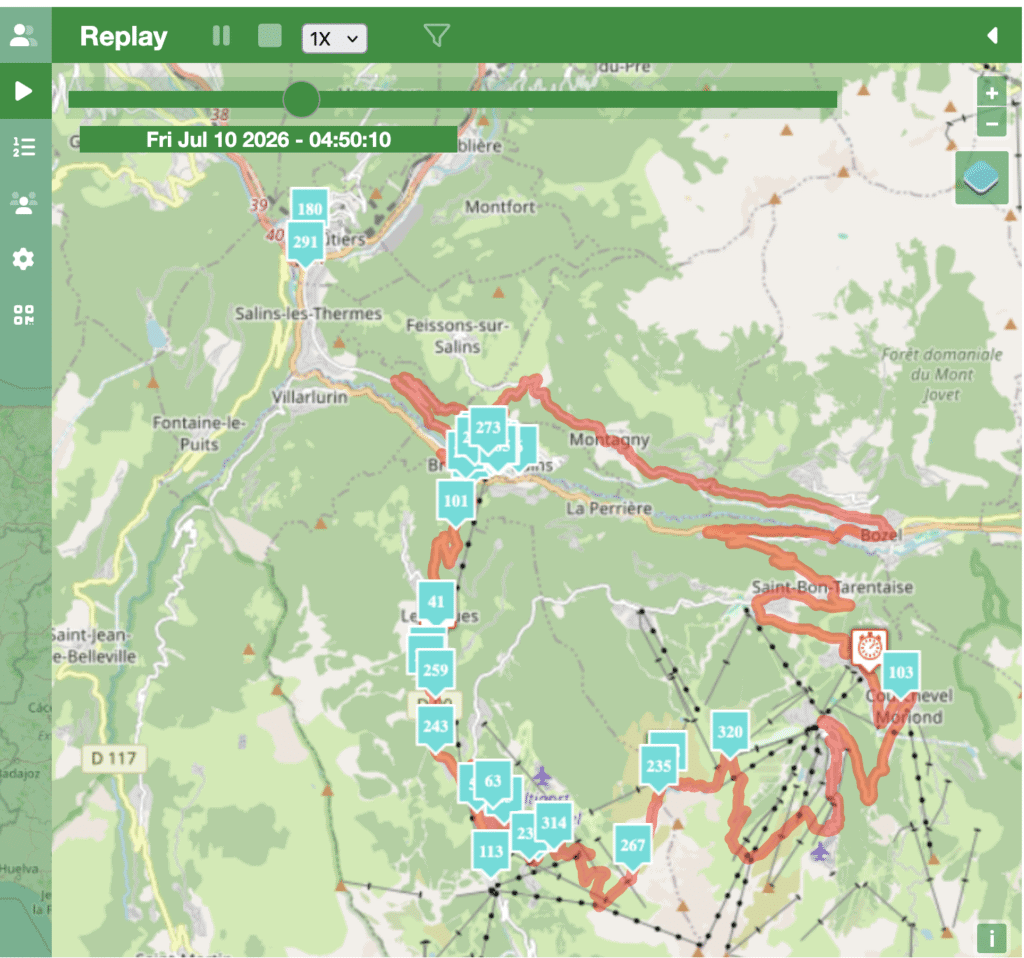
Friday 05:00
Anyway, other riders are crossing Vidiciatico, the mandatory checkpoint, so we have other chances to shoot something in the mountains.
Our next opportunity is Rob Roy, who follows the same route as Krystian. Instead of waiting for him in town, we go up to meet him in the mountains. The chase starts, we immediately dive in a thick forest north of Pistoia, on tiny roads. The dot is at a crossroad at about 1000m elevation and isn’t moving since half an hour. We guess, self-reassuringly, an afternoon nap.
At the crossroad, we can’t find him: there is a food truck, so the spot is perfect for a short break; but no trace of him. Yet the dot is there. Suddenly, we see it on a secondary road, down towards the city. Oh yes, in the woods, it doesn’t work well. We try to chase him, but out of nowhere we stumble into a crowded picnic area surrounded by trees and by traffic jams. We lose a lot of time stuck in traffic (hey guys, ride your bikes next time!). Then, downhill, he’s way faster than us. Plus, the tracker is still spotty, and following him in town is basically random. Frustrated for our second fail, we give up and prepare for the next shooting. Missed Krystian, missed Rob.
Later that evening, the organization tell us that up in that crossroad Rob Roy literally saved a life by complete chance: an old man was sitting on a wall, losing his balance and holding on for bare life about to fall into the void – Rob ran, pulled him away and escorted him home. What a story we missed!
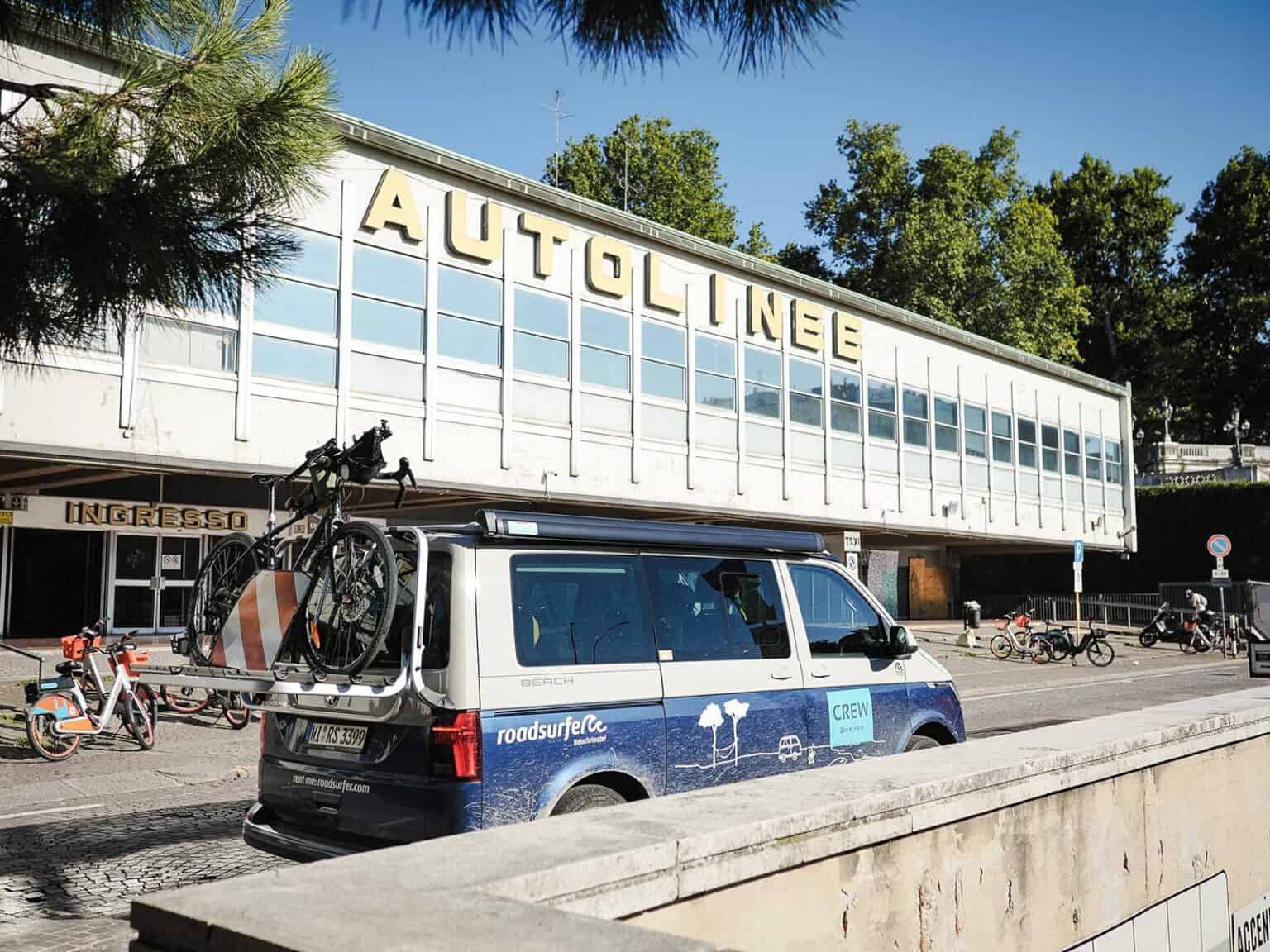
Like in a police game, shooting an ultra involves a lot of stakeouts.
At first, my waiting is for the entire race to reach Italy, where my assignment starts. I must cover the second half of VIA, from the French border to the finish in Giovinazzo. Struck by heatwaves first in Spain then in France, the pack is late, and the timetable is delayed by 24hrs. I am impatient and I feel useless: while my colleagues are either chasing stories on the road or taking portraits at the first Refuge, I can only double-check my equipment while keeping an obsessive eye to the dots and to the organization chat. Like a dormant spy, I wait for the signal to engage.
When Adam, the leader, chooses the hike-a-bike to the mandatory “gate” at Colle del Nivolet (2.700m altitude) instead of coming to the Velodrome before climbing the road pass, this means some extra hours before I engage: a cruel punishment. He is very fast, covering more than 400k per day; yet the dot is unbearably slow.
Eventually, he gets to the trail. Time to start working… which means another set of wait-and-see procedures starts. I pick up Ryan at the Velodrome and we climb to the Nivolet, constantly checking on Adam’s progress. In the valley, the GPS is not reliable, we can only guess his speed on the hike-a-bike. Plus, after the hiking section there are two options: a military road, smoother but requiring some extra climbing; and a flowy single track, lower but a bit rougher. Even on the very summit, we could miss him by choosing the wrong track. When we reach the big, wooden cross signaling the end of the climb, the tracker is mute. Is he already behind us? Did we really miss him on a summit? Even if the calculations seem reasonable, our worry increases rapidly; the powerless waiting makes it harder. Do we have a plan B?
You can guess how relieved we feel when the tracker updates and show Adam at the beginning of the hiking trail.
The following days, we play this stakeout game with the other riders. As soon as you engage, at every shooting, a real investigation takes place. The tracker provides the general information, but is useless without many other pieces of the puzzle: what is the refuelling logistics of the rider? When did he stop for sleeping last time? What’s his sleeping habit? Do we know whether he had a mechanical? What kind of food does he/she prefer? What kind of road is he/she more likely to ride, based on the background?
Watching the dots gives you the 80% of the information. But without the other 20% the shooting doesn’t happen, so it’s pretty useless without this groundwork. Which is a proper investigation, made of joining clues, guessing motives and patterns, gathering information from whatever source you find. You try to gather information, make calculations, guess, and wait for the rider at some spot.
There’s suspense and stress as you approach your target, hoping your deduction is right. There’s relief when you see the silhouette of the rider coming to you, and frustration when you realize he is past you or he chose another route. There’s an immense satisfaction when you trap the rider – you know you’re in the right place, and you can work the scene.
The soundtrack is Tick of the clock, by Chromatics. Or some Hitchcock soundrack if you’re into the classics. In these moments you feel all the responsibility you have towards the organization and the riders. There is frustration when you don’t find anybody, but the first shooting on Nivolet is an encouraging start.
A special kind of satisfaction is when you spot a stopped dot, and you try to catch it before it goes away. You try hard to understand the reason of the stop, and you calculate in consequence. The tracker can tell you if it’s some food place, or some shelter to sleep. But it cannot tell you if it’s a mechanical or other exceptional situation. After a while, you spot anomalies at once.
So, when we see Gosia’s dot at a crossroad between a Strada Statale and a local road in Veneto, with no shops around, at 11PM, we know something’s happening. Her and Joanna are battling for the first place since the start, and they both stopped for a brake issue in Bologna. We push on our VW Westphalia to reach her as quickly as possible, even ignoring Matt, who’s coming straight toward us from the opposite direction. We will catch him afterwards, if possible (spoiler, we will).
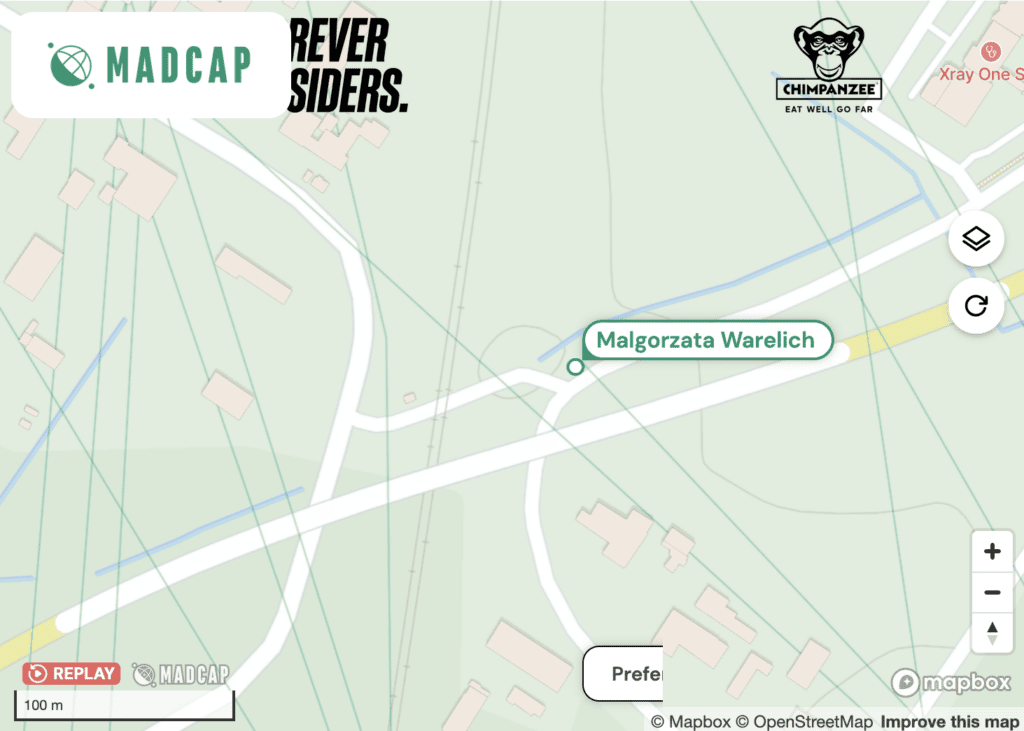
23:30, Gosia stopped. No shops, no shelter. Why there?
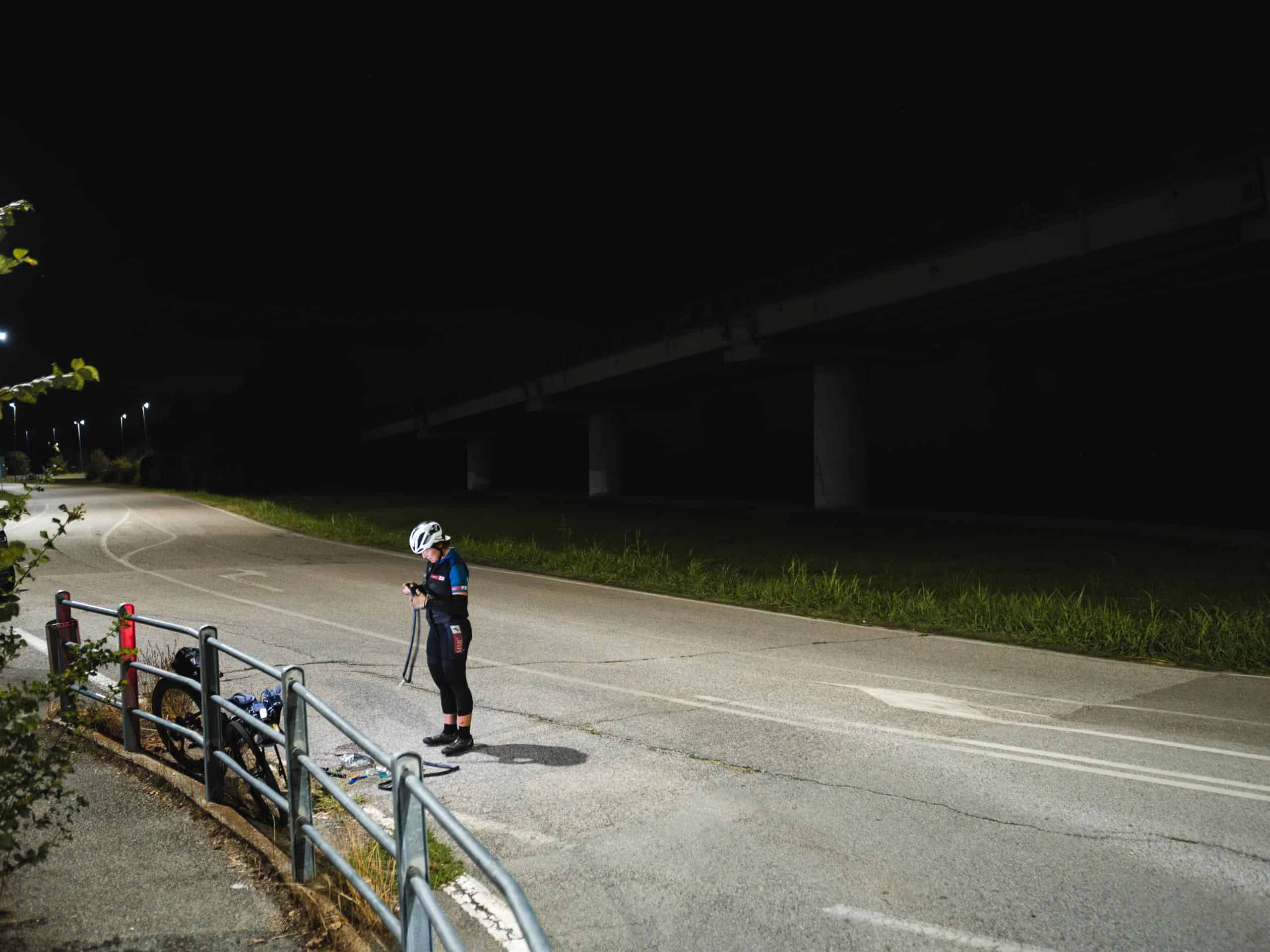
As we approach the dot, we don’t see her immediately: but then her silhouette appears, sitting down side-by-side with the bike, almost in the middle of the road. The wheel is off. She had a puncture – the 10th or so that day – and is out of tubes, out of patches, out of solutions. So we park the van, we start shooting. At first, we are silent, no interference. Then we start asking questions, half in English, half Italian, some German words, and a few Polish bonuses. She’s in good mood, as usual. Abenteuer, adventure, she keeps telling us.
Her story ends up happily – see the reflections about interference (link) – and our shooting even more so: to give absolute closure to that day, we catch her riding towards the fireworks of a local celebration.
Not every catch comes from detective work. Satisfaction also comes from unexpected situations. In Freiburg we are just passing by, it’s a transfer between the second refuge in St. Gallen and the last real climb of VIA second chapter, Grand Ballon in France. It wouldn’t deserve a detour if we weren’t there anyway.
Among the few riders that are also crossing the town we spot Rafael Ospino, a dear friend of mine – we met during Chapter I, and I know how he rides. Even though we had already a couple shootings with him, we decide to stop for a chat while he – we assume – eats near the station. The location is poor, the light is poor, so it’s more about saying hello.
He tells us he wasn’t mentally in good shape for the last couple days, and only that day he was feeling better. At one point he shows us his talisman, related to a family history going on from generations, before taking off to France. A small yet moving personal moment that would have well been worth a detour.
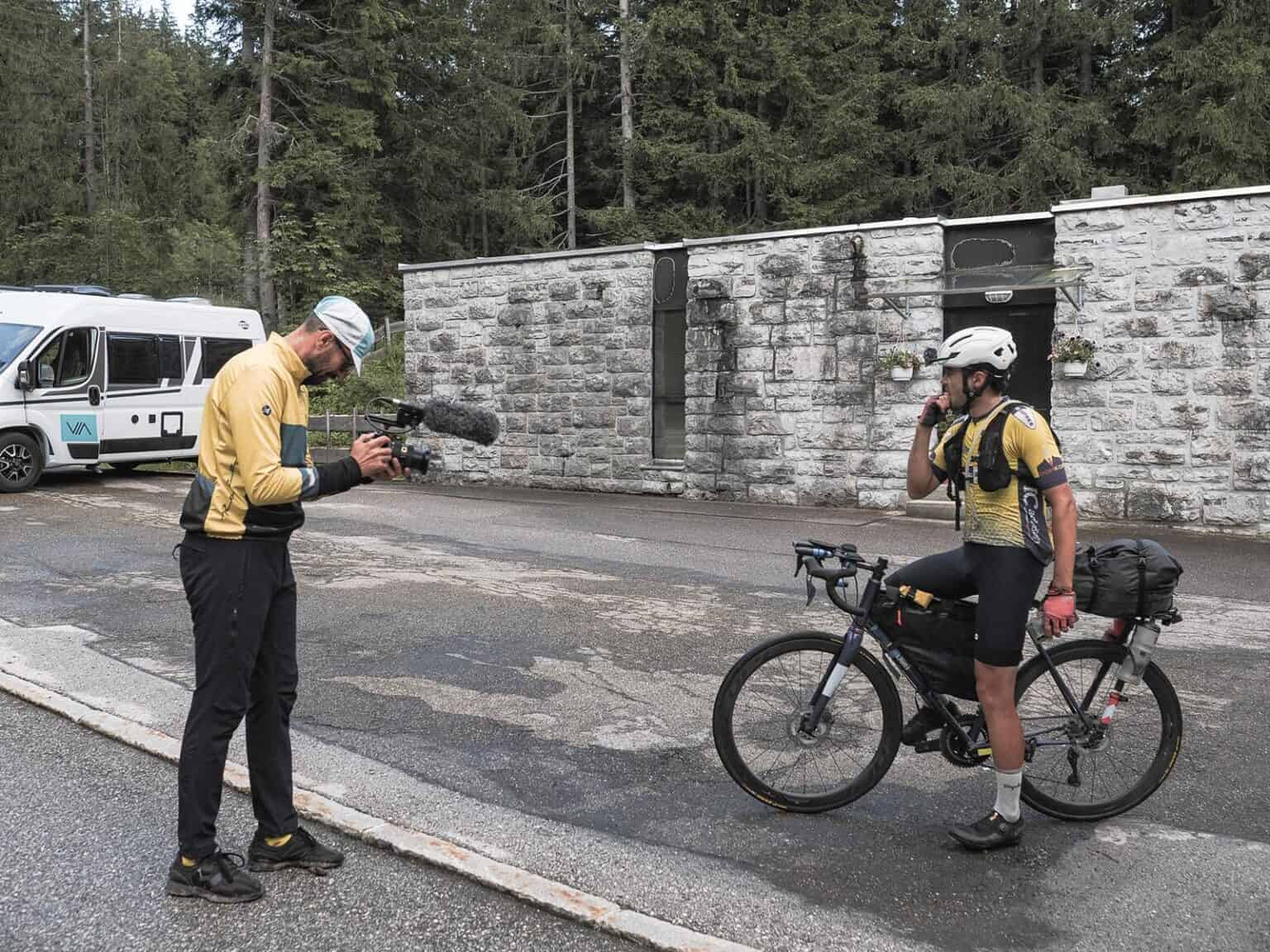
As in any proper investigation, the team work is crucial. You are in constant contact with the rest of the media team, the organisation, and the dotwatchers. To make it work, everyone has to feed information regularly. The tracking map shows you dots on the move, but only information tells you how they move and where they will be.
Information is gathered, slowly but steadily – She stopped this morning at a grocery, he always sleeps in public parks, he won’t stop for a while ‘cause he’s chasing this guy. The ultracycling community is not exactly huge, so there’s always someone in the organization acquainted with the rider. This is precious – unless you know the rider yourself – to understand his/her behavior, which is crucial: if the rider is vegan, for example, the range of places for refill is way narrower. Joanna is a night rider, so we can count on this when we make our plans. Gert Jan is a connoisseur of Italy, so we’ll look for him in the pasticcerie and cafés in the city center rather than gas stations. Everyone loves gelato, so when you see a gelateria, you know you can stop and riders will come to you sooner or later.
Indeed, you talk with local shopkeepers, asking if they saw this rider, exactly like a police movie.
Other intel comes from rider themselves. Even though small bits, you see them, you understand how they feel. This helps evaluating more accurately how the rider will perform, making it easier to find him next time. Day after day, your understanding of the “big picture” becomes clearer, and your accuracy increases.
The pieces come together, and with a bit of luck you find what you look for, and the shooting can happen. But as you see, it’s only the last phase of a complex process, the classical tip of the iceberg.
Sometimes, it’s exciting, because we all love investigating; other times, it’s boring as hell. For example, when you must keep an alarm every 30min to check if the rider stops for a nap or keeps riding.
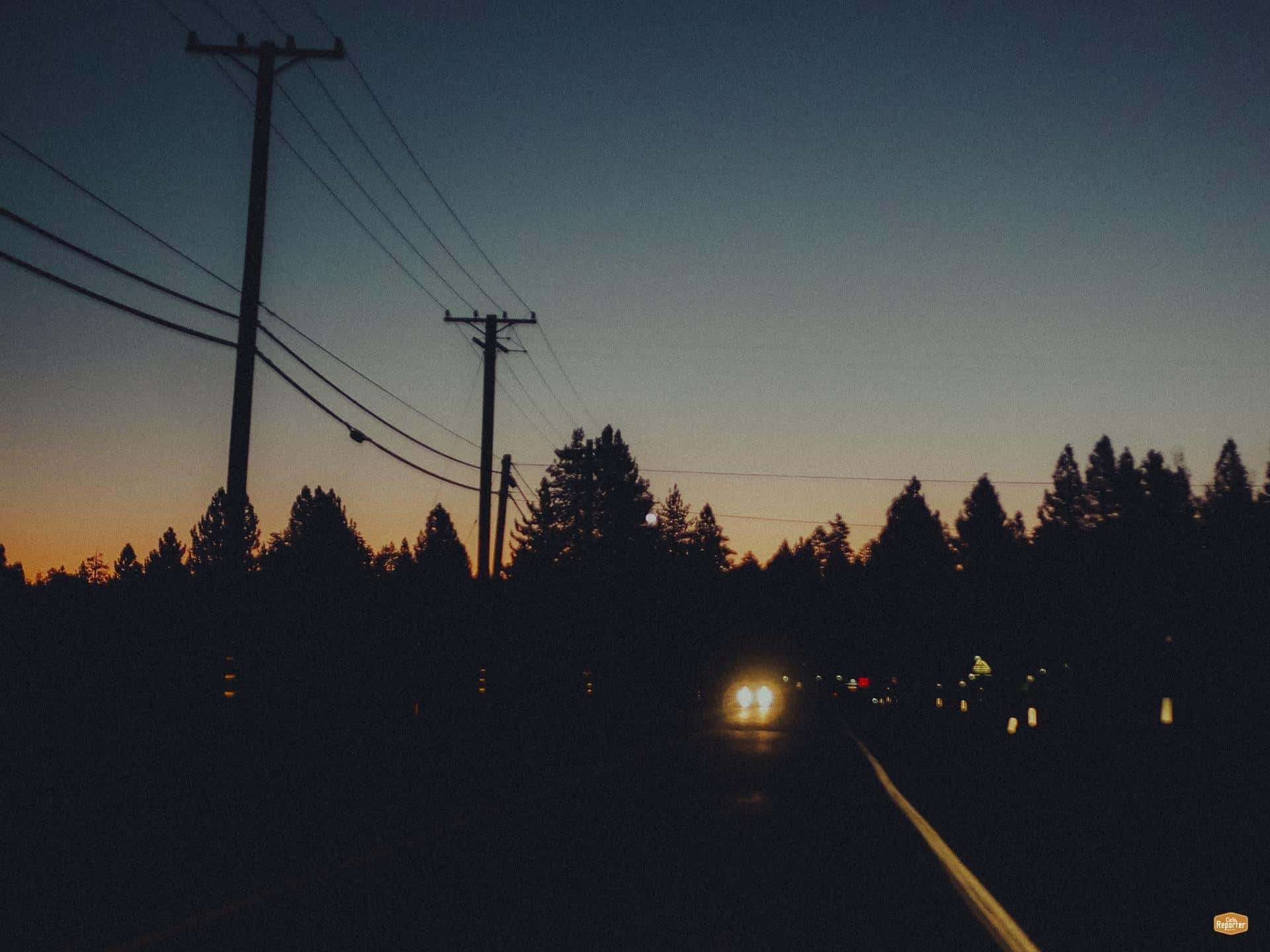
(foto)Waiting night during VIA II, at the border between Austria and Slovenia. In the van, Francesco waits for Bruno and Adam to finish the race and send the celebration post on social media. Marco and I check on the nearby riders to see if they keep riding in the night or stop for a nap.
And, some other times, all this conjecturing is totally useless, and you have to simply go with the flow, or with your gut, or whatever, and things will happen around you. There are moments where serendipity is the only way, and you learn to see them. There are so many factors in place that luck has also an important role. But maybe it’s not only luck, it’s instinct.
I don’t really know, but oh God, I love this game, perhaps more than the shooting itself. And sometimes more than riding myself.
First episode of a short editing guide. Let's start with the necessary step - reducing the number of good pics.
The italian saying is "fare di necessità virtù": a classic reportage and what it can teach us about cycling photography
A book of simple pictures (and four simple ideas) showing us how memory works.