From taking to making: the missing step in “shoot with intent”
Can intention be trained? Fontana’s red exercise, Meyerowitz’s Empire State Building, and a French situation
Can intention be trained? Fontana’s red exercise, Meyerowitz’s Empire State Building, and a French situation
Youtube is rich in photography videos telling you to “photograph with intention” or wanting you to “shoot with intent”.
Many interesting posts as well explain this intention thing, always with useful insights. For Nick Bennett shooting with intention means not shooting bursts, waiting for the right moment instead. On Petapixel, Jordan Mcchesney promises that shooting with intention will help you framing the right image, cleaning the frame, using the right light, setting the camera properly, and so on. Rick Berk at Digital Photo School writes that you should “Make sure your images say what you meant to say. Be sure your intent is clear.” Which sounds reasonable – you have to know how to use ISO, aperture, shutter speed, and other secondary parameters to create the image you have in mind.
I think that in Italian it’s called previsualizzare, seeing the image you want before you actually see it. Damiano and Roberto often talk about this precious skill, and rightly so.
Léa Gundermann, understands the intention as made of 4 layers, or actually 4 actions:
How to disagree with all this? Impossible, of course. But I have a problem with all of these definitions: they tell what “shooting with intention” is, or what it provides, but none tells how to reach this attitude. My problem here is How do I reach this intention if I start from… well, taking pictures a bit randomly?
To put it otherwise: how do we go from a “taking photograph” to “making photographs”? From a purely passive/registration/documenting attitude from an active/creative one?
That’s the difference Marc Bloch notices in his masterpiece “The historian’s craft”. Describing the challenges of the job, he wonders whether history is “an attempt at reproduction or an attempt at analysys”. Which is exactly the difference between passive and active. He digs deeper:
“There are two ways of being impartial: that of the scientist and that of the judge. They have a common root in their honest submission to the truth. The scholar records the experience which may, perhaps, upset his most cherished theories. The good judge [...] questions witnesses with no other concern than to know the facts, whatever they may be. For both this is an obligation of conscience which is never questioned. However, there comes a moment when their paths divide. When the scholar has observed and explained, his task is finished. It yet remains for the judge to pass sentence. If, imposing silence on his personal inclination, he pronounces it according to the law, he will be deemed impartial. And he will be impartial in a judicial sense, not in a scientific sense.”
John Doe Tweet
Here lies, I think, the whole thing: it’s helpful if we stop to think photography as “recording” reality, and start instead thinking about photography as “analysing” – or judging, which is the same. As susan sontag writes, there is no “unintentional” photography (ch.2).
In order to show intention, in this piece I talk about one classic exercise, one historical case, and one personal case where I started shooting randomly, and then it evolved into shooting with intent.
In all of these, constraints are key. We already saw how well they can help us while we discussed Paul Fusco and his memorable Funeral Train. Now we see how self-induced constraints should help us about intention.
All together, I hope that these 3 parts, or layers, or whatever we can call them, will help you understand how to manage intention. How to reach it, actually.
When in doubt, check the classics. It always works, in my experience – during PhD, while teaching in high school, and of course in photography as well.. And so I did, going back to Franco Fontana’s “lezioni di fotografia”, and I wasn’t disappointed.
I must admit, manuals are not my favorite place, I prefer browsing actual works rather than tutorials – by far. However, classics are for one reason – they are the exception that confirms the rule. You read them twice, five times, and you’ll still learn something new.
Fontana’s “red exercise” is very simple: take the color red, and shoot it. But not as an attribute of a subject – as a subject itself instead. Make it what gives a meaning to a frame. That’s what he says.
The idea is to shoot photos where “the images loses their meaning if we remove the red, because red is the coordinator, the director of the scene”. Also, beware – no need to shoot “nice pictures, or pictures you like. Aesthetic research and our eye’s satisfaction” are not the goal here.
It’s about acquiring the mental process. Repeat until you find it. “When you’ll be at your 12th or 13th picture, you will see red everywhere, because you’ll have found it. You won’t need to look for it anymore. […] You will notice tiny details, like a clothes peg out of a window at 5th floor, or a small red leaf in the midsts of a yellow foliage in autumn”. From then on, “you will start to create photographs where red has a meaning, because you’ll have it inside you”.
Before the exercice, you look for red. After the exercise, you find red, because you already know what you’re looking for. Done. Of course you can do this with any color, or even black or white. Red is easy to start with simply because it’s the strongest color. Blue and green are harder, because you can look for them in the sky or in the trees – but that’s not really finding.
Fontana ends with a metaphor that recalls Marc Bloch’ distinction between the scientist and the judge: “The photographer doesn’ walk around like a tourist, but walks to find what he has inside, like a pilgrim.” A judge rather than a scientist.
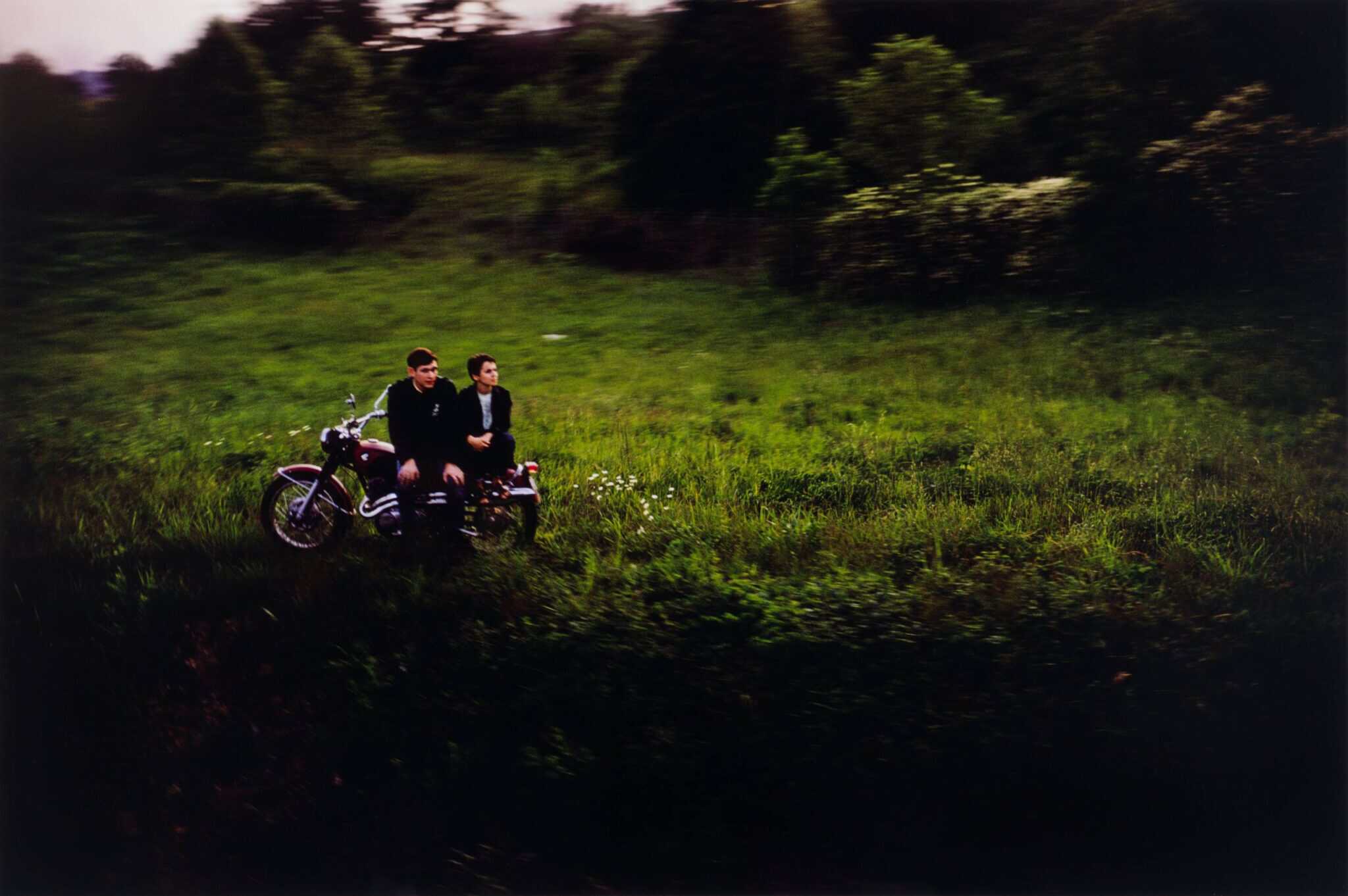
The proximity of the two authors is deeper than we think. Indeed, Block concludes his reasoning talking about photography:
“Understanding, however, is by no means a passive disposition. For there to be a science, two things will always be necessary: a subject matter, a reality, but also a human being. […] A mere photograph — assuming the very idea of a mechanically complete reproduction makes any sense — would be unreadable.”
Red is already out there, it just need someone to have a meaning.
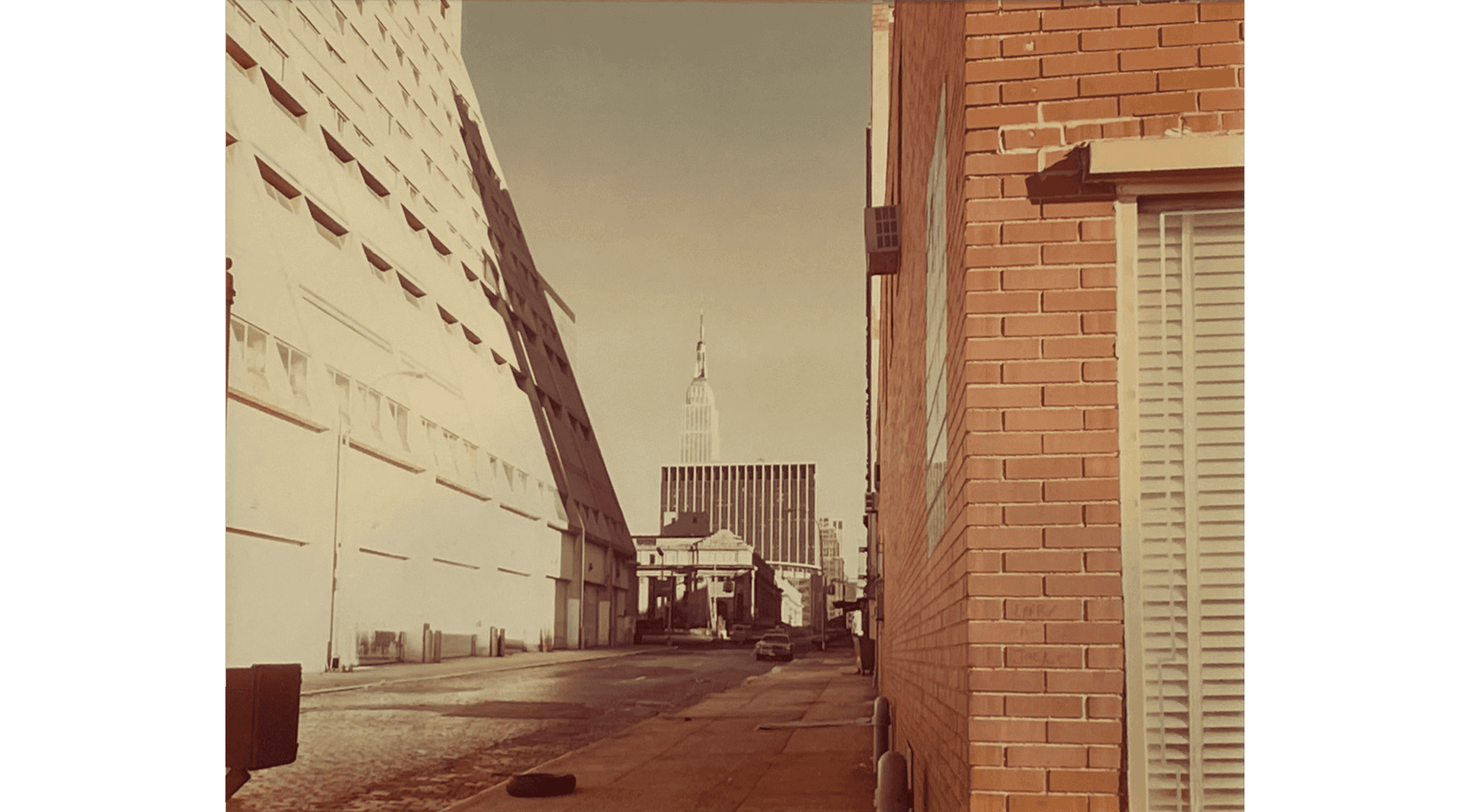
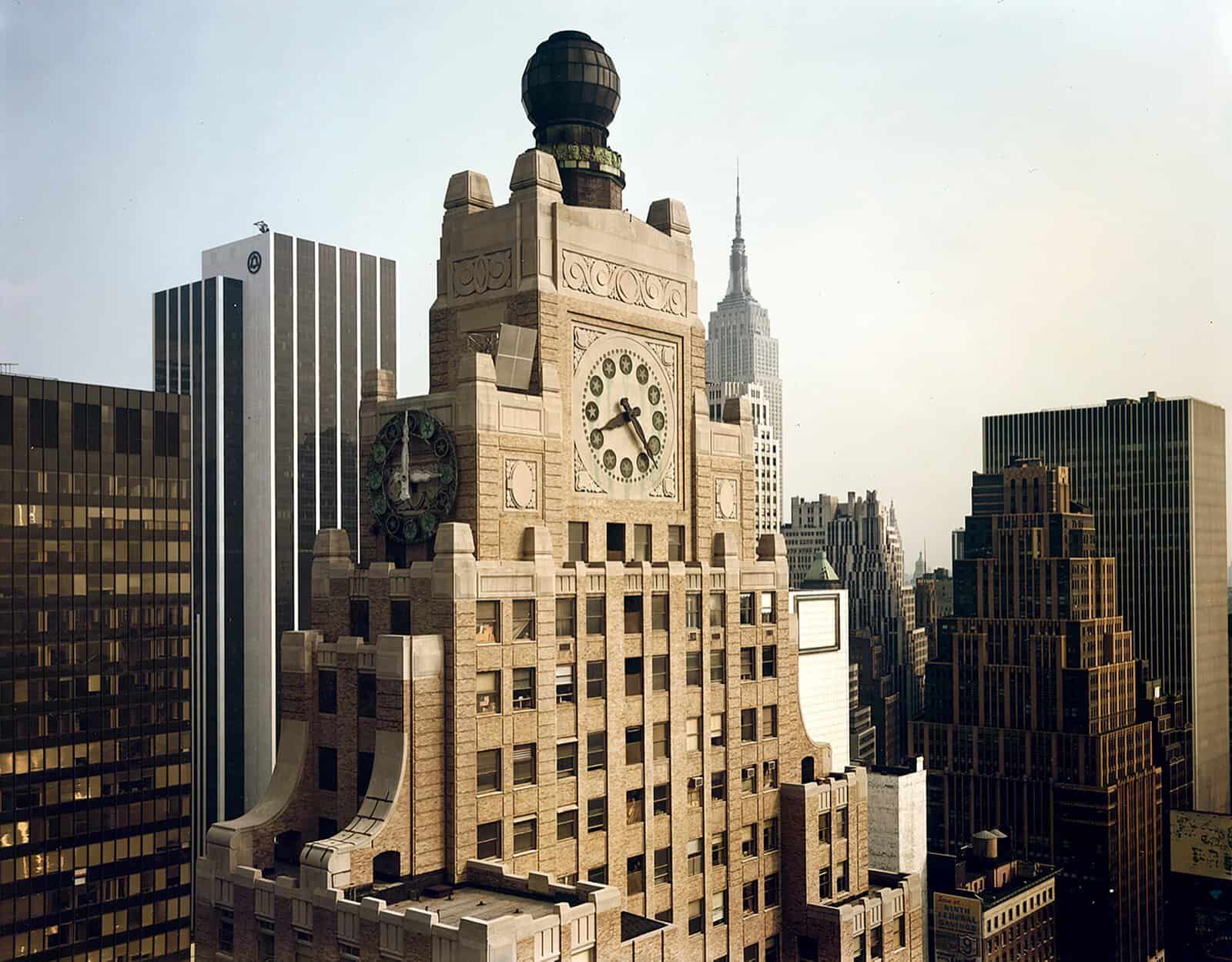
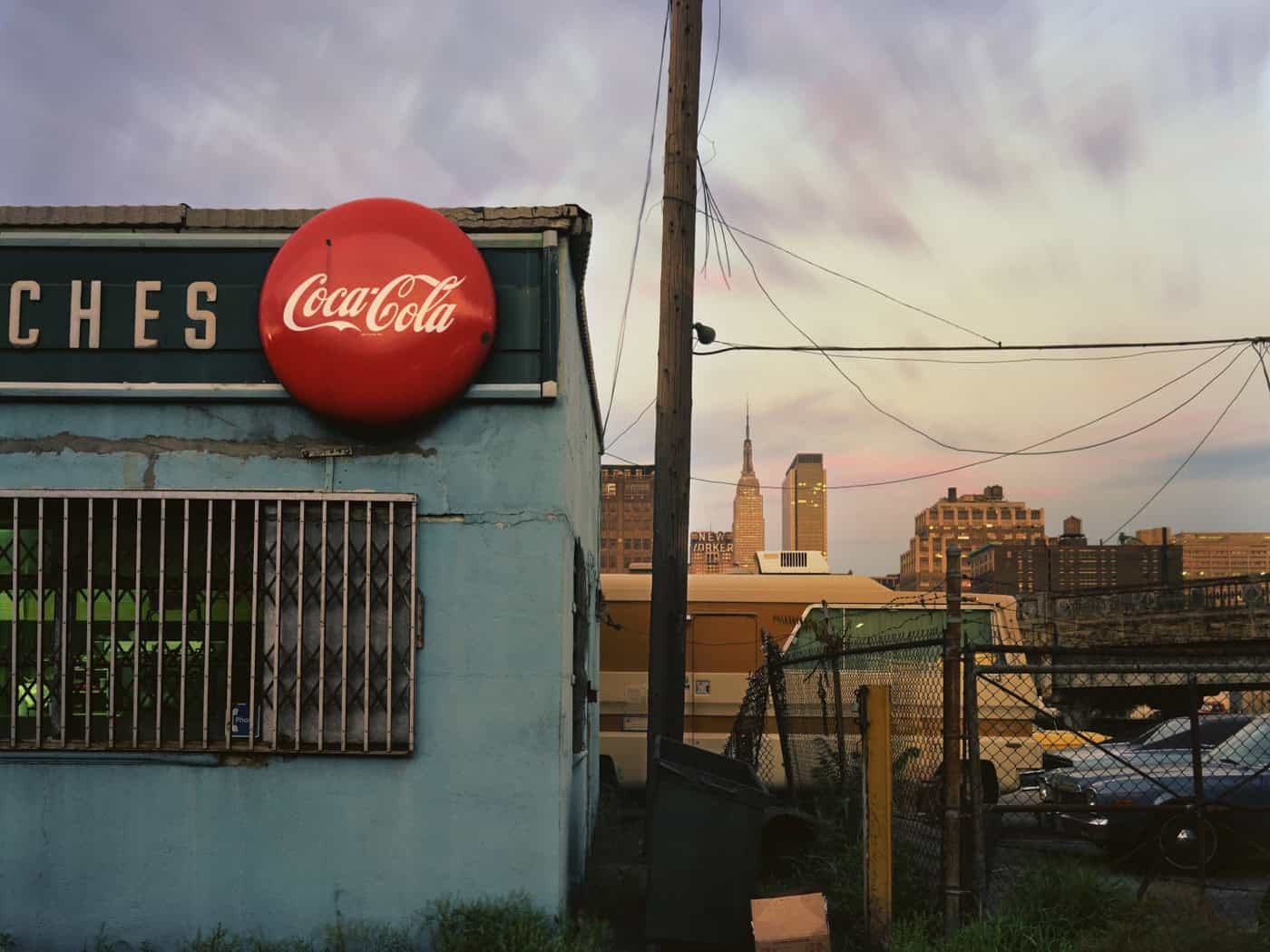
This need for an active attitude, made of choice and judgement, and not simply passive recording, is beautifully clear in Joel Meyerowitz’s works about cities. He’s obviously nailed Fontana’s red exercise, no need to say.
The concept is the same, but this time the red color is replaced by another subject, the Empire State Building: “Perhaps the greatest icon of the twentieth century. With it was born the term ‘Skyscraper”, tells Meyerowitz about his Empire State series. Interestingly, he has a similar approach to Fontana:
“What happens when one uses a nominal subject, such as the Empire State Building, as a lever to lift a hidden, larger subject onto the plane of visibility? These photographs are the answers”. Replace nominal subject with red, and you have it.
“I wanted to see if, as in Hokusai's prints of Mt. Fuji, there might be a connection between the humble daily lives of the inhabitants and this majestic form”. So, the building is what gives a meaning to all shots. In every picture of the set, the New York’s iconic building is there. Hidden, reflected, distorted, barely visible or in plain sight, but there. Without it, they would be only standard pictures of urban landscapes. Documents, not stories.
J. Meyerowitz
This way, the building is the glue of these pics, both individually and as a series. And of course it’s not a series about the Empire State building, as the red exercise is not about the red. It’s rather about the world and the life happening around it; and, for what concerns us, it’s about exercising.
Of course, the strength of this work lies in the “series”: the pictures support each other, and this is a big difference compared to Fontana, which asks for repetition just because it’s part of the drill. Here, instead, the Empire State Building is the silent watchman of city life, which takes place in every single photograph and all of them.
Also what happens in Hokusai’s series about Mt Fuji, which inspired Meyerowitz. Indeed, the photographer used the same mechanism in St Louis, using its iconic Arch as a lever to explore the city’s environment: a clear and intentional attitude.
Now the practical case. Born by absolute chance, then becomed intentional. Passive at first, then active.
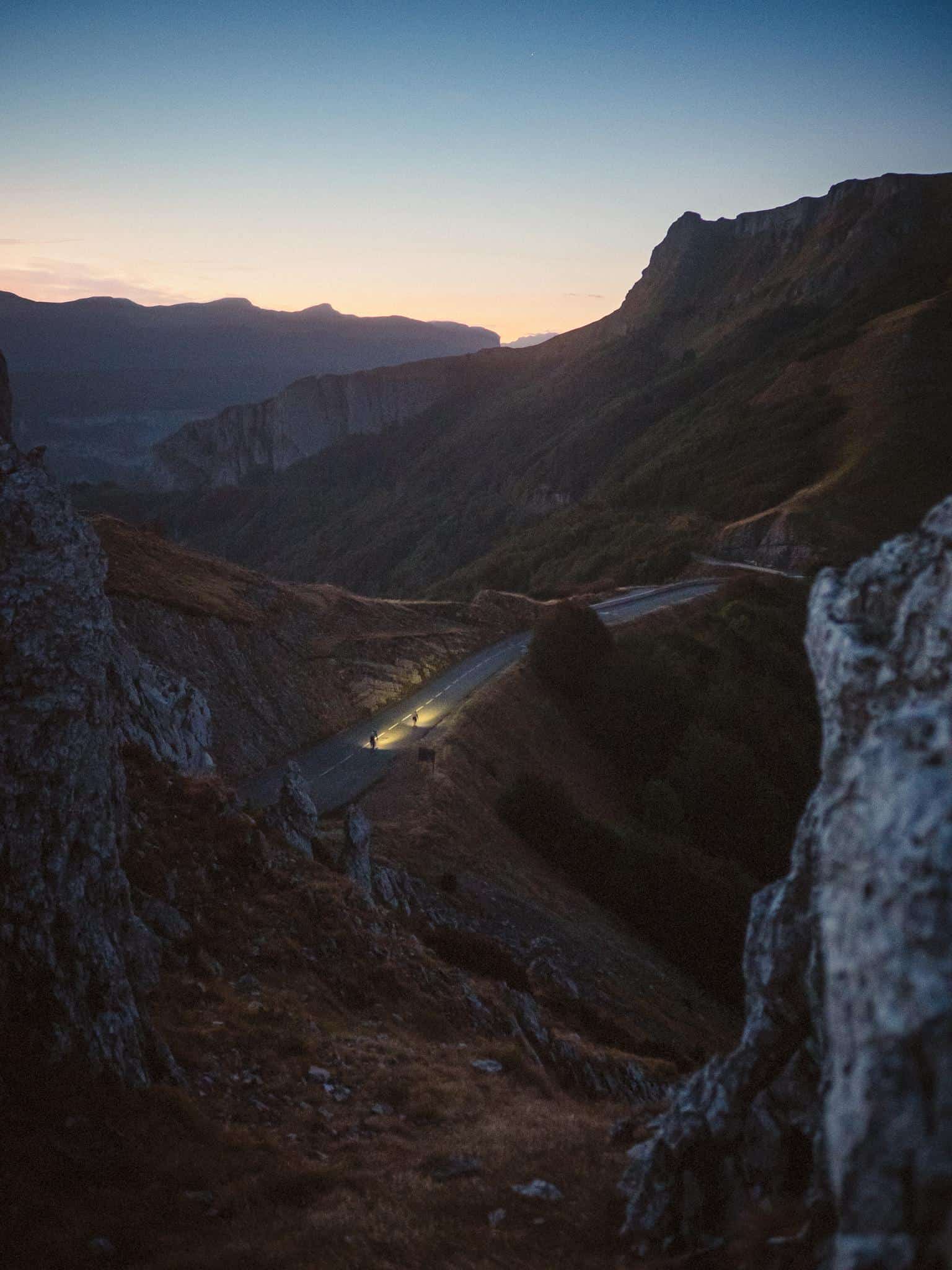
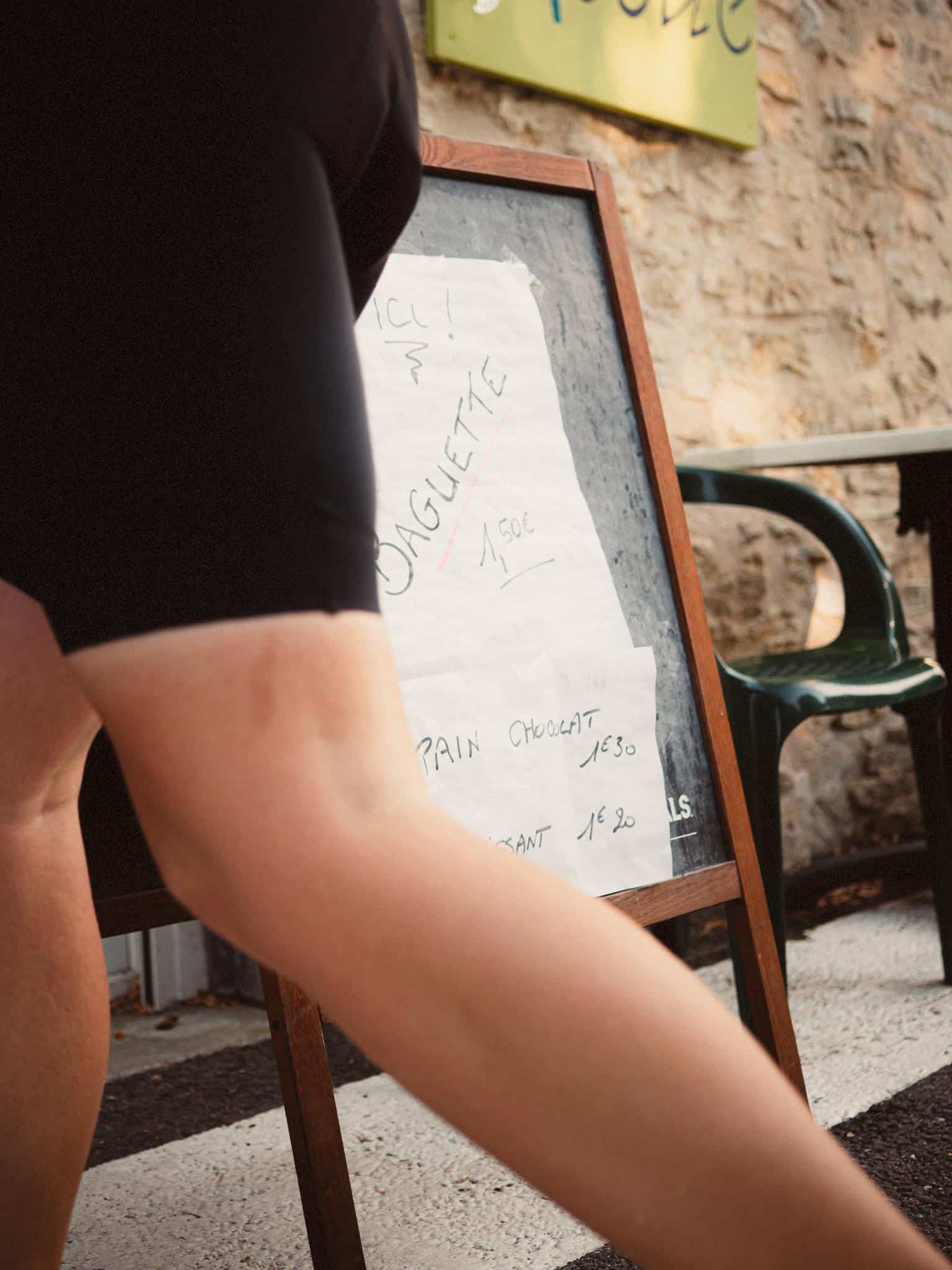
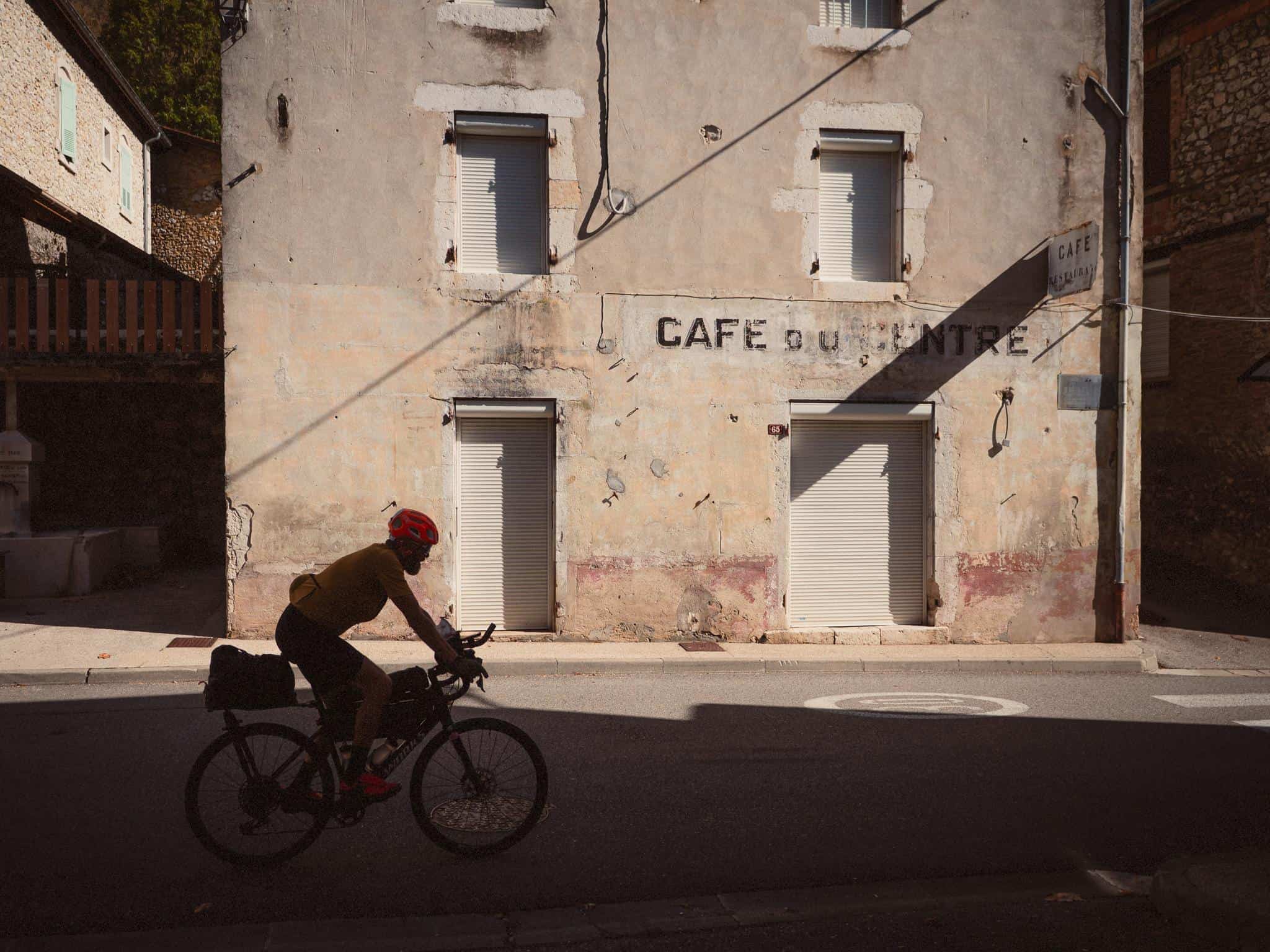
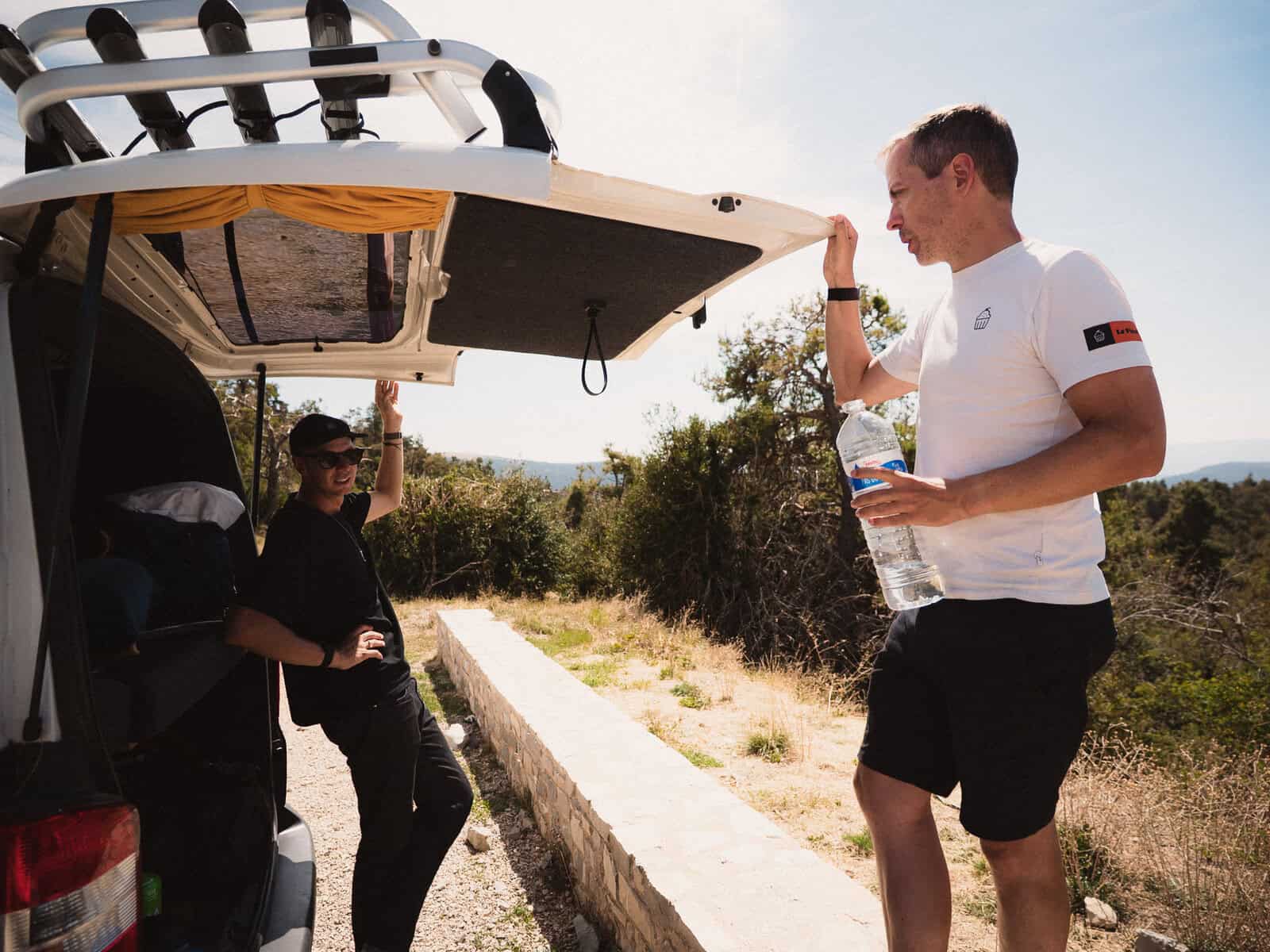
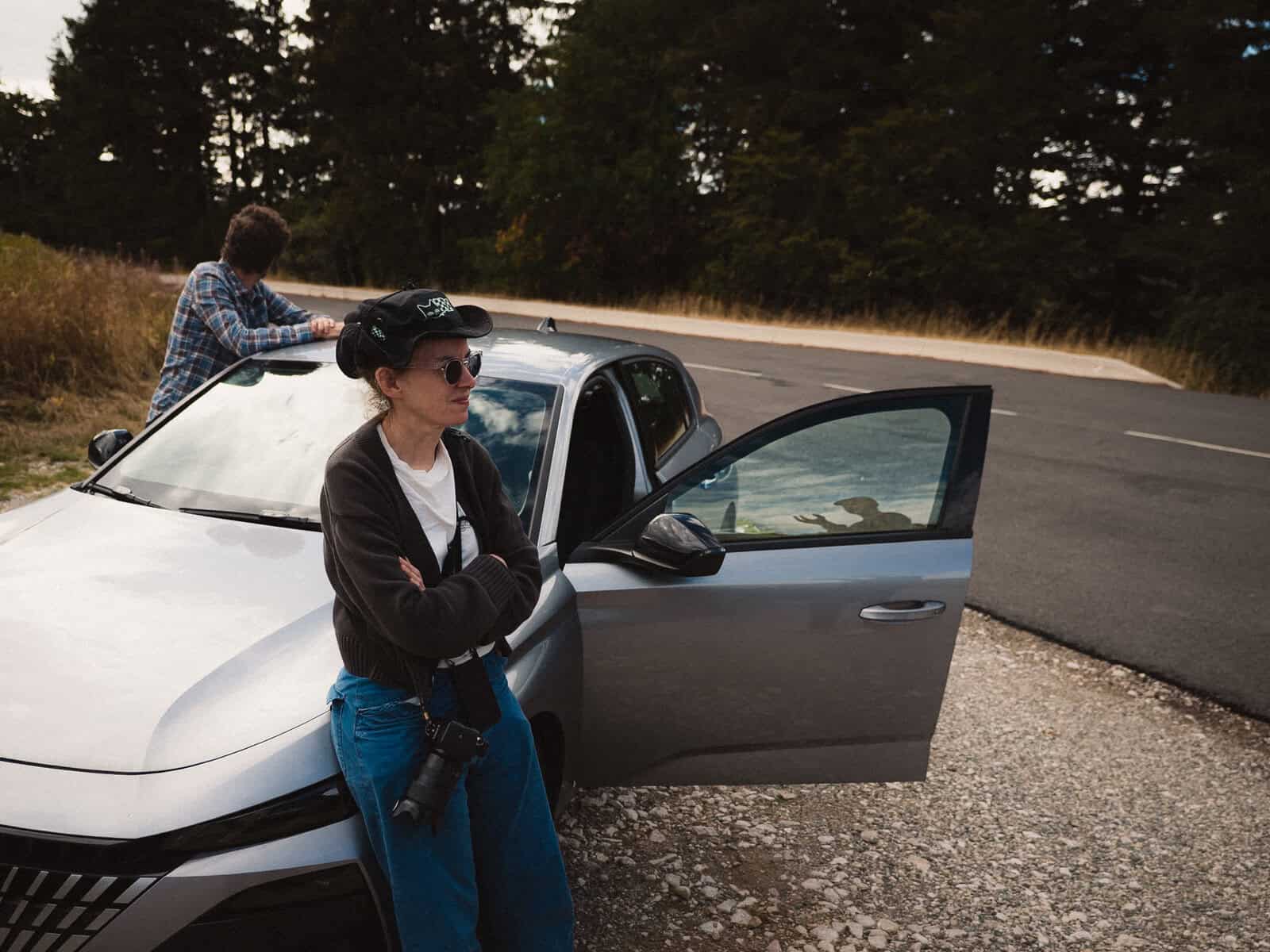
I was shooting Pain au Chocolat, the latest ultracycling event by The Cake Movement. In the middle of France, between deserts and canyons and old stone villages and kind artists and farmers, following a few invited riders. 1000km for them, but Sophie, Lucas, Dominik and I drove a lot more than that to find and tell all the flavors of these undiscovered regions in full summer. The shootings were nice. Lots of interesting situations, good shots, and happy riders.
After a night spent at a flying cake stop on top of a mountain, with a Ventoux landscape, I was late and had to transfer to catch the first riders again.
Driving far from the riders on a burning state road in order to cut short the route, I usually call friends to have company on the road.
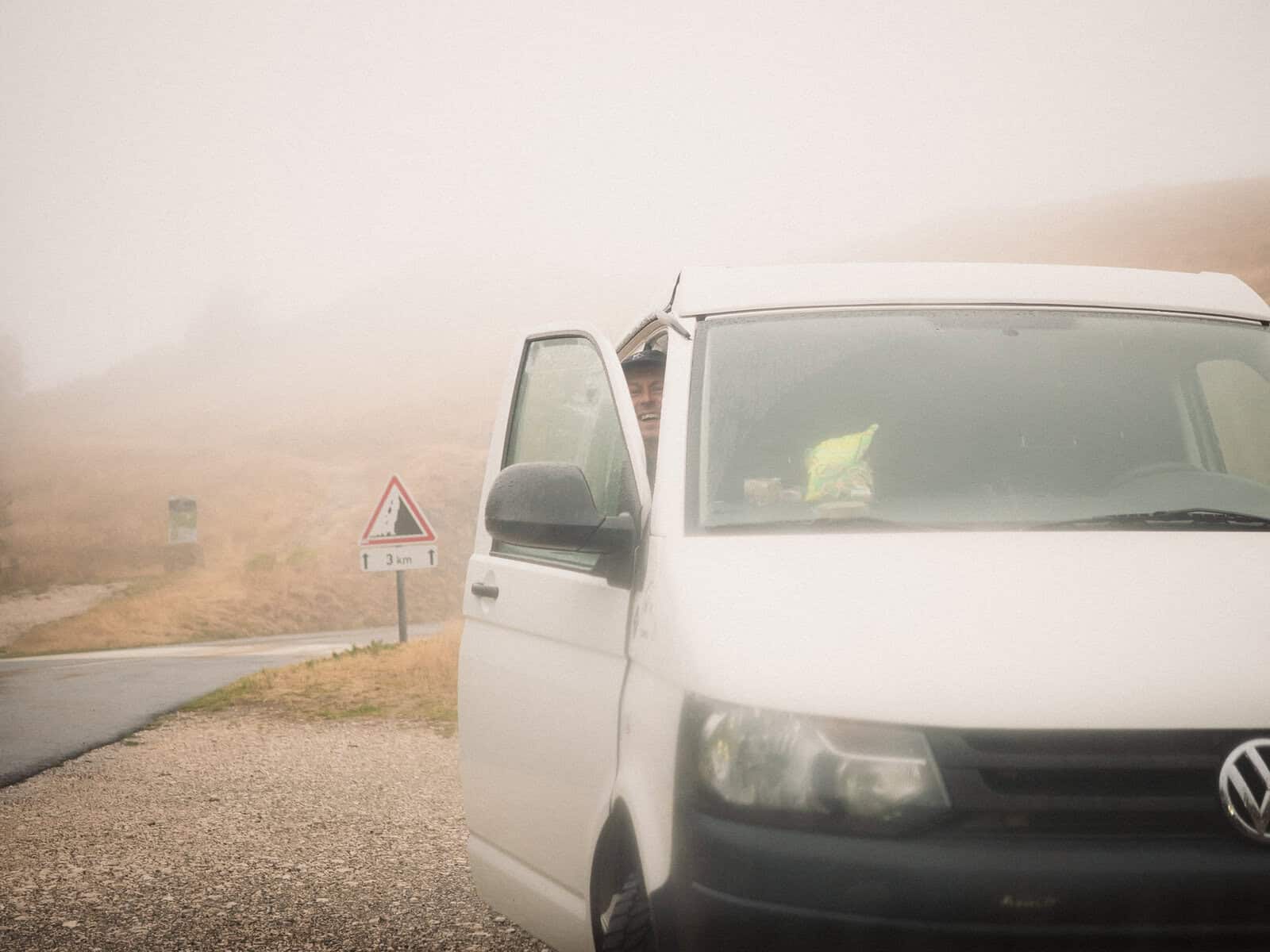
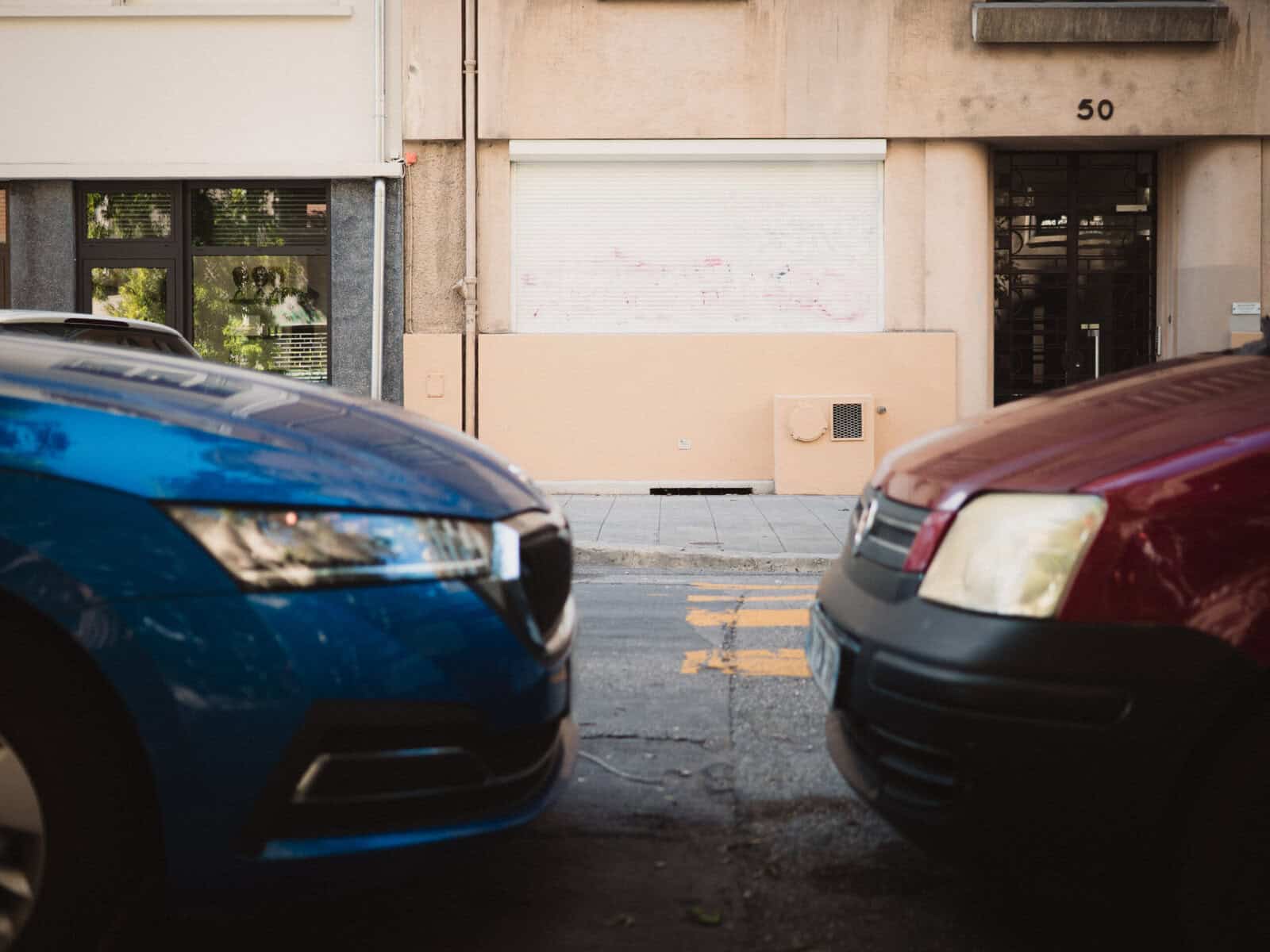
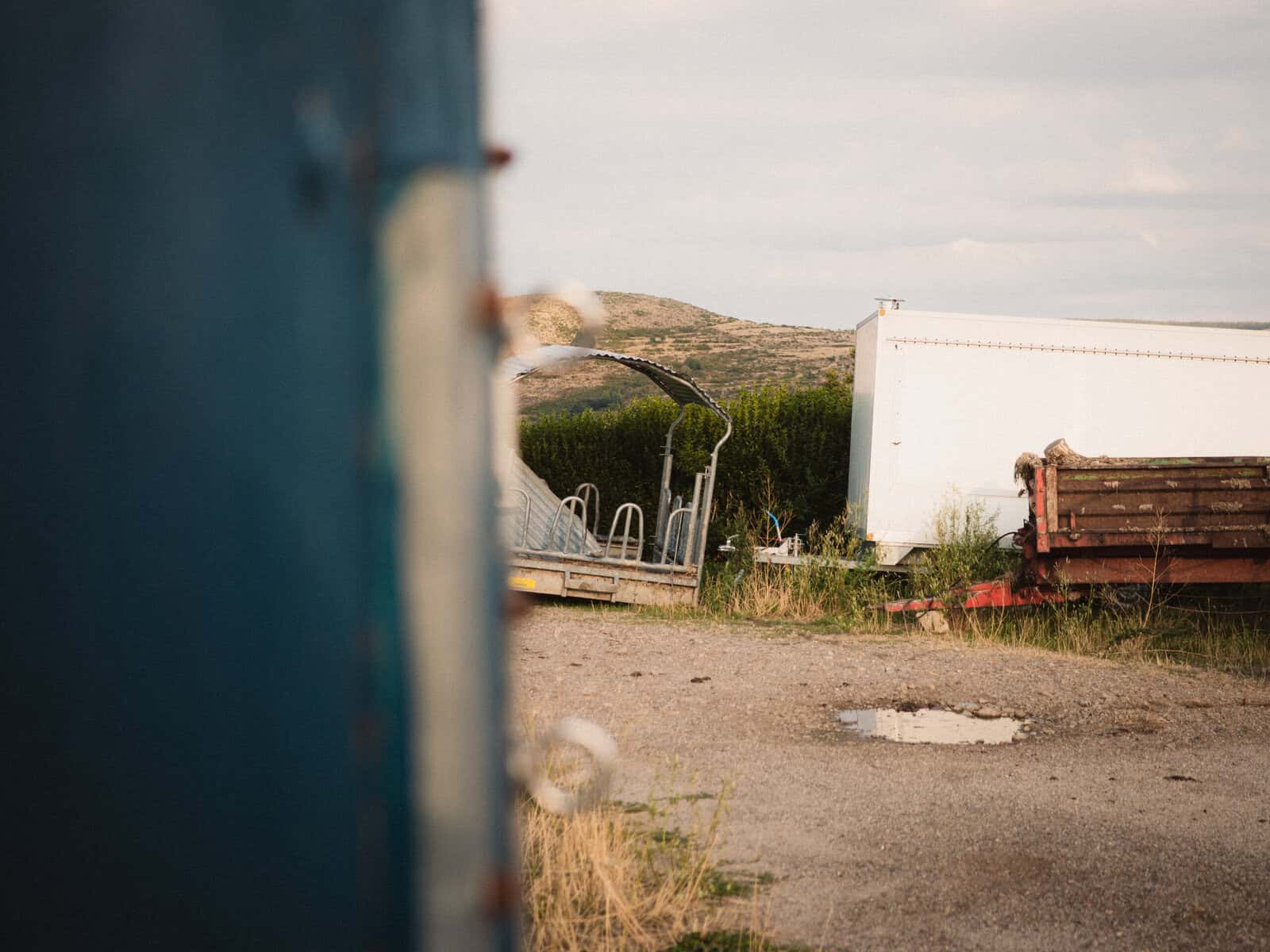
So I’m on this national road, talking to Luigi, while I suddenly see a scene. Not a beautiful one: just three cars, blue, silver, and red, parked in a field amidst a couple olive trees. Probably people having a break at the food truck over the field, but they could be abandoned as well.
I drive by, thinking about the scene. I have to stop. We say goodbye in a hurry (Luigi is a photographer, he understands the unpoliteness in these situations), I stop the car on the side of the road, a bit of italian parking.
Just in case, I walk back and shoot a couple pics, first at front, than at back. Just in case.
One day later, I am still driving, this time down the gorges du Tarn, and I see some bed sheets drying near a house. Red and blue, laying on a rack. It’s not easy to stop the car in the narrow canyon road, BUT.
As quickly as possible I shoot two frames, one portrait, one landscape. I don’t know what exactly, but something is coming out from this.
Chatting with Domi later that evening, I send him the daily selection then I hesitate to add these two. Don’t make much sense among riders and landscape. Whatever – he will not judge me from these two frames, so I press send, without much explanation: “I hope to see more flags, have to rely on French people patriotism” I joke.
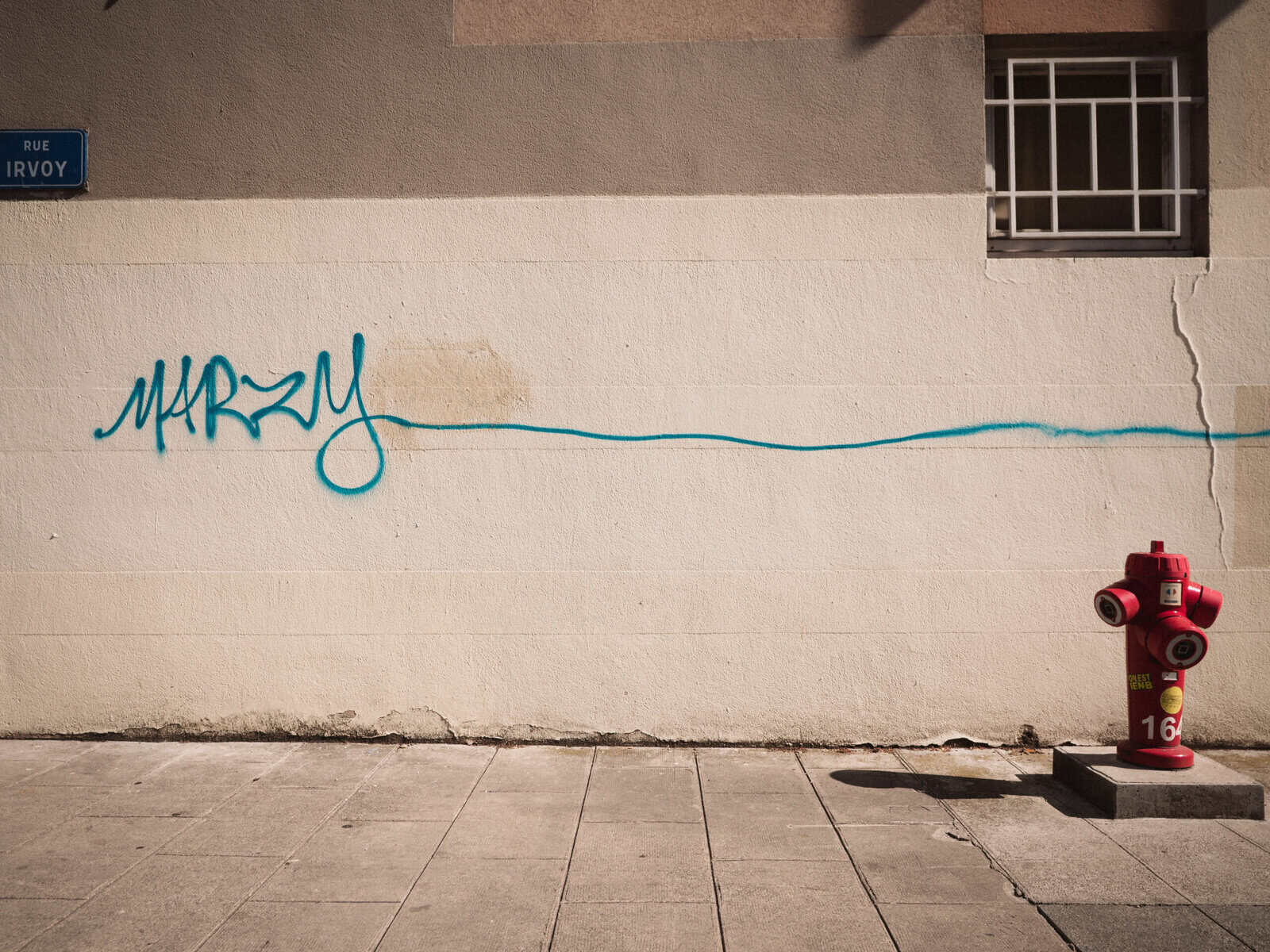
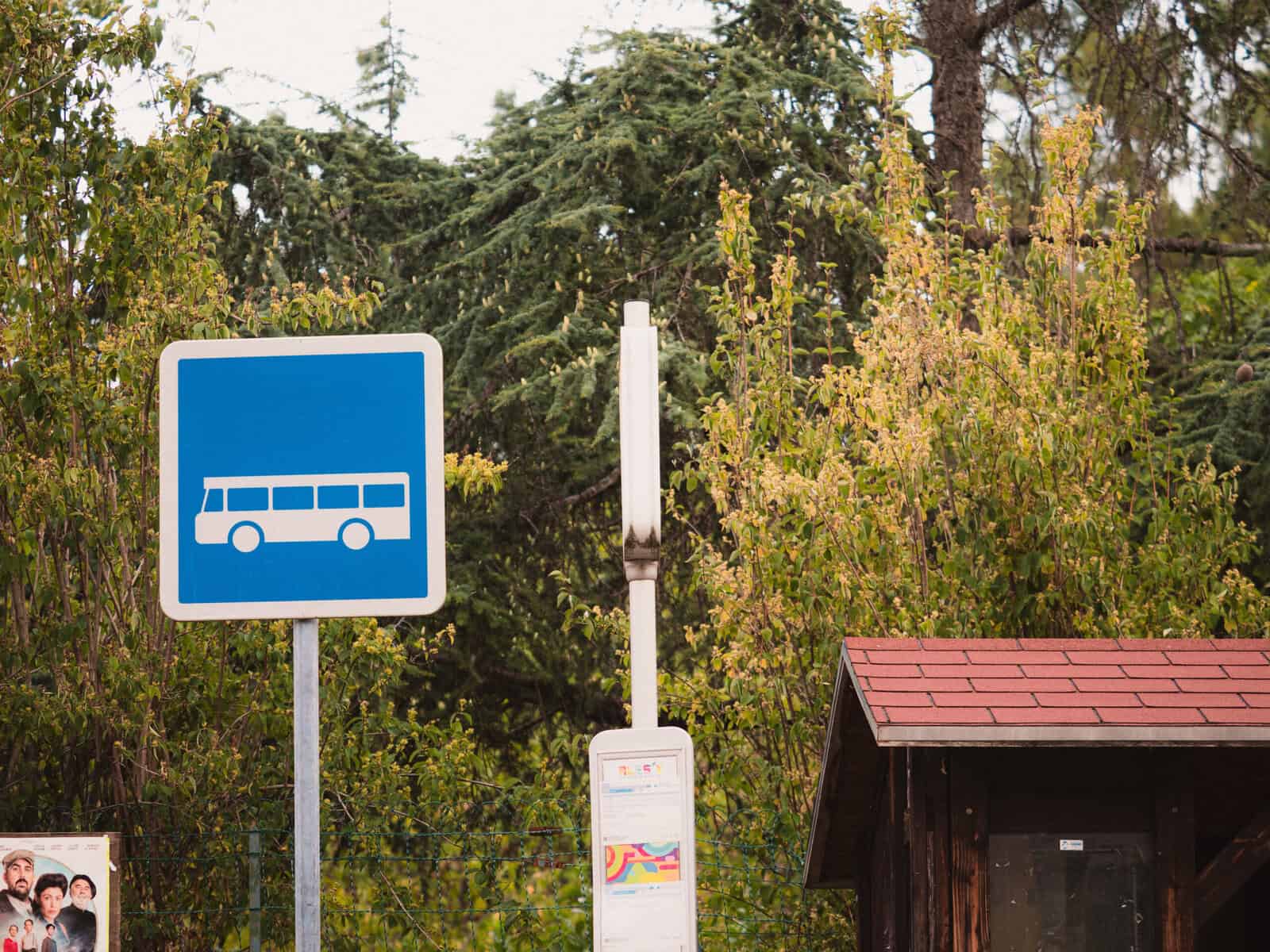
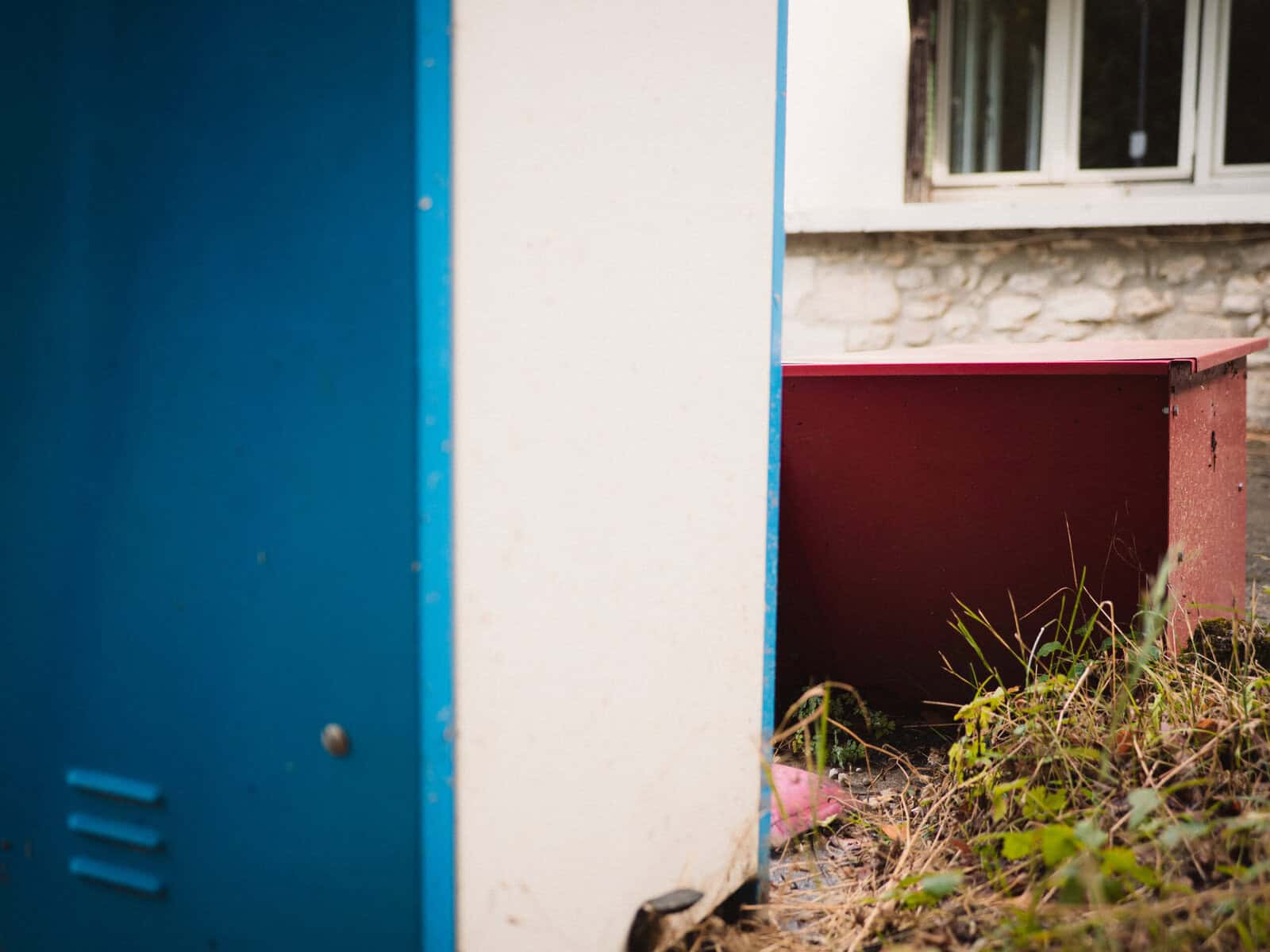
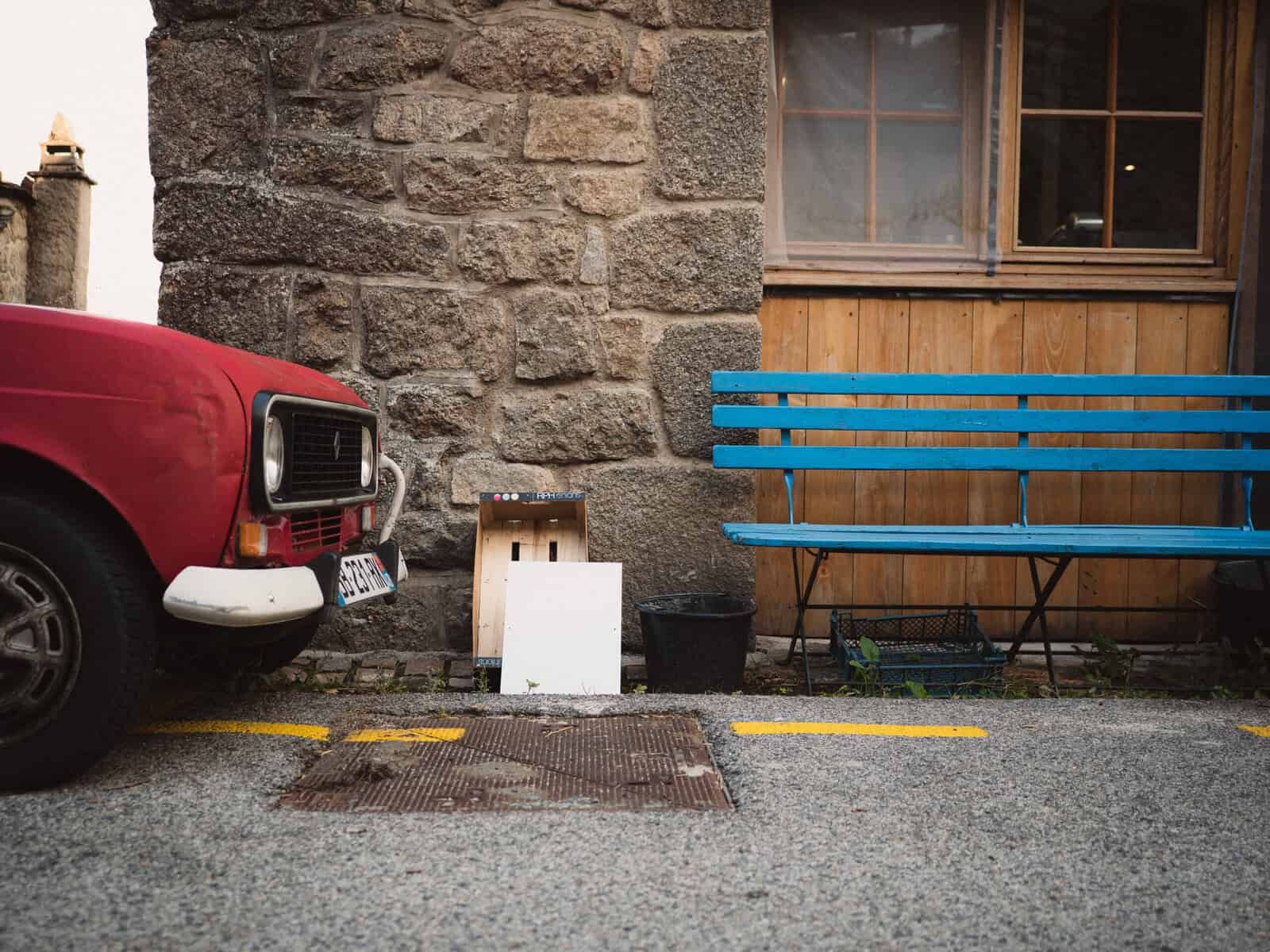
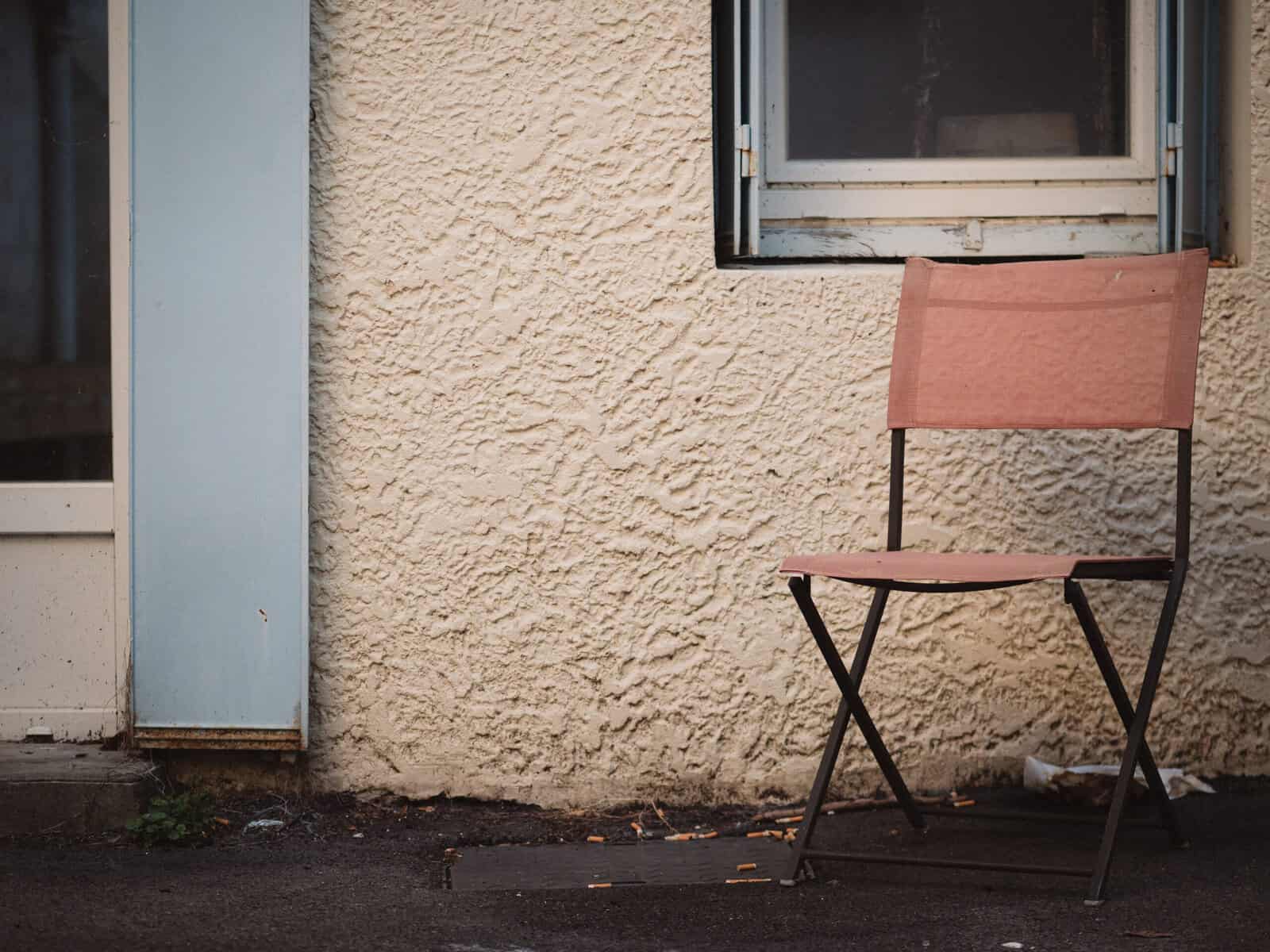
Since that afternoon, my attitude is different: on the side of the much-needed ultracycling shootings, I am on the look for red/white/blue patterns everywhere. I am actively doing that. Every time I see some red anything, I look for blue stuff around. Every time I spot a bit of blue, I search for red. White doesn’t worry me, since it’s the easiest among the three.
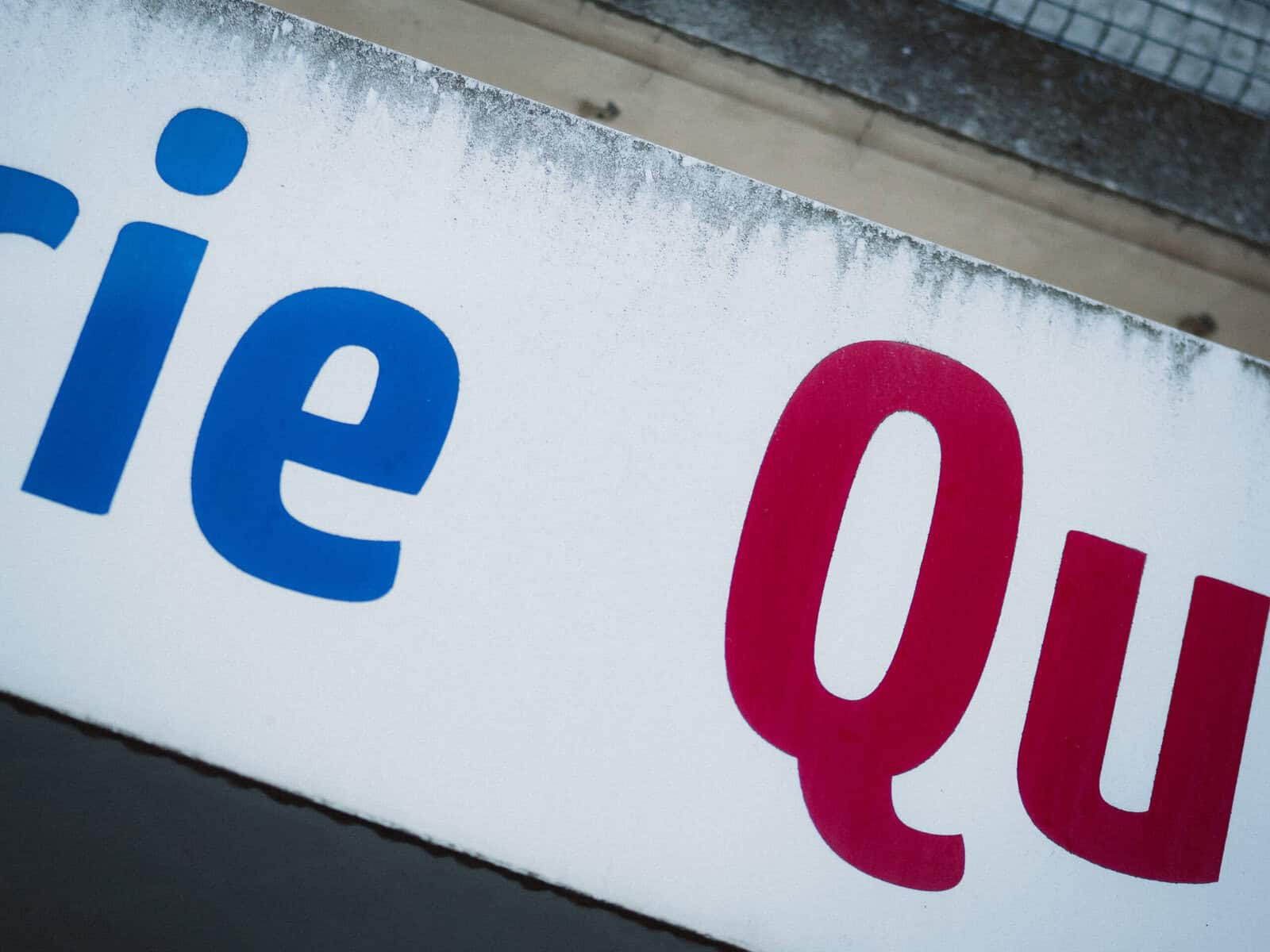
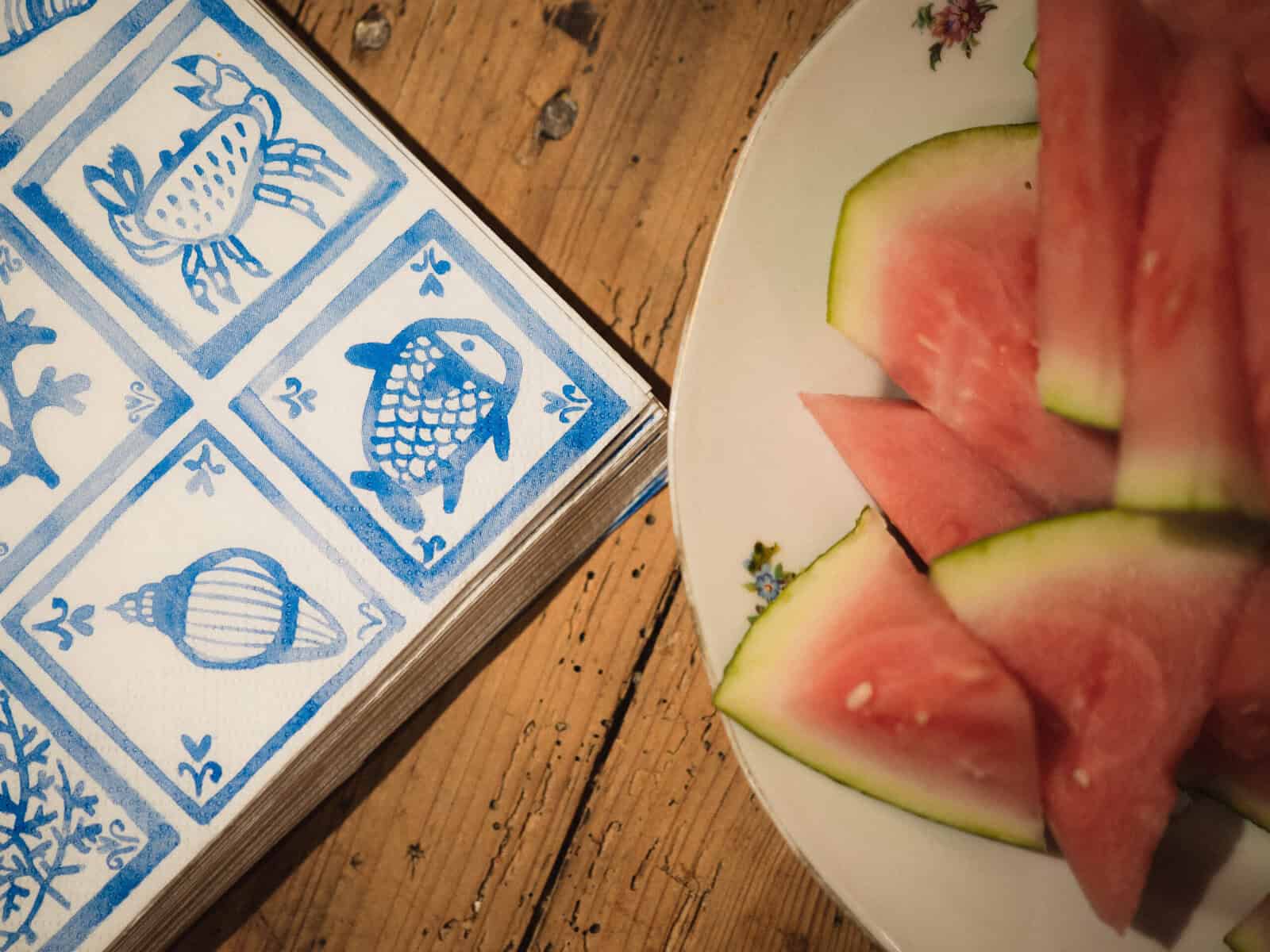
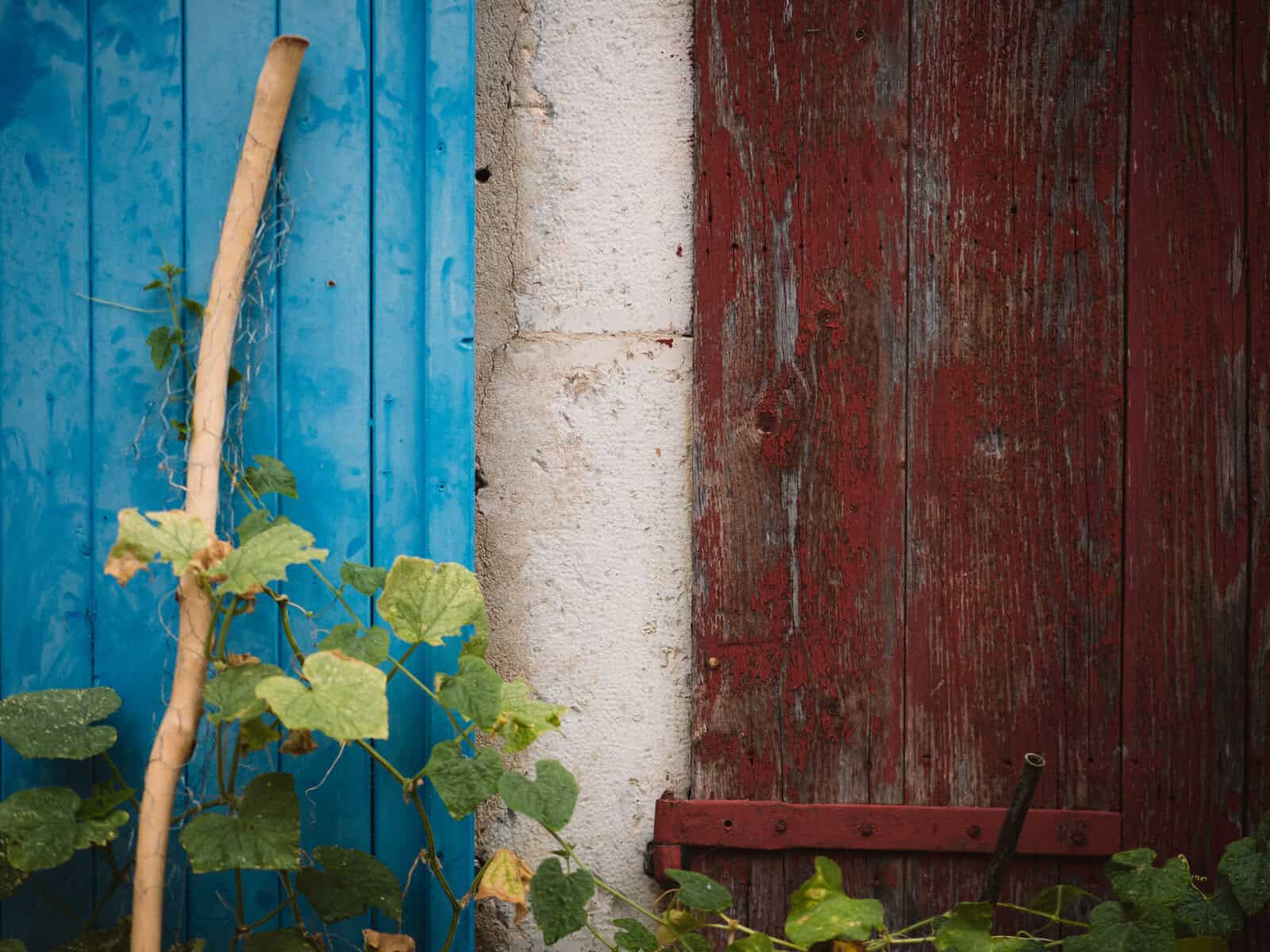
Over the rest of the route, I find several situations; some of them are self-evident, such the very first cases of parked car and laundry. The blue/red windows on a white wall belong to this “easy” kind.
In other cases, I have to work a bit more, but that’s precisely what matters: I stopped to simply “take” photos, I am now “making” them. This is the difference between the two first (parked car and laundry :
What starts random can end up making perfect sense. Sometimes, things happen before you can give them a meaning; doing that in hindsight is not a bad thing. After all, this is what happened to Roy DeCarava, and it ended up in a wonderfully poetic book mixing visual and literary content in a unique way.
So: if you have a clear project, that’s great. If you don’t, and you just enjoy shooting, a project might come up later.
Litmus test of having reached this famous “intention”: if you can tell whether a photograph is right or wrong, you’re there already. Only if you have a criteria, i.e. a constraint, you can know if that specific picture serves the purpose or not.
An easy trick to “create” intention is repetition, even if you’re shooting meaningless items. Shoot one street sign, it’s useless. Shoot two, it becomes something. Keep shooting, it could become a project – therefore an intentional shooting. The “red” exercices proposed by Fontana, even though it’s about learning color, is also about this process.
And, when you keep repeating this process for a while, you’ll probably see a project emerge in a semi-natural way, without even noticing.
Can intention be trained? Fontana’s red exercise, Meyerowitz’s Empire State Building, and a French situation
Where to find interesting stories? Quick answer: where things and people are on the move.
A 400km, 14.000mt offroad bikepacking route. Why did we think that was a good thing?
The italian saying is "fare di necessità virtù": a classic reportage and what it can teach us about cycling photography
First episode of a short editing guide. Let's start with the necessary step - reducing the number of good pics.
The italian saying is "fare di necessità virtù": a classic reportage and what it can teach us about cycling photography
Some context: how I shoot, what I shoot Qui c'è la versione in italiano della recensione! Some preliminary remarks are necessary: I am talking about…