Industry: a quick detour
Where to find interesting stories? Quick answer: where things and people are on the move.
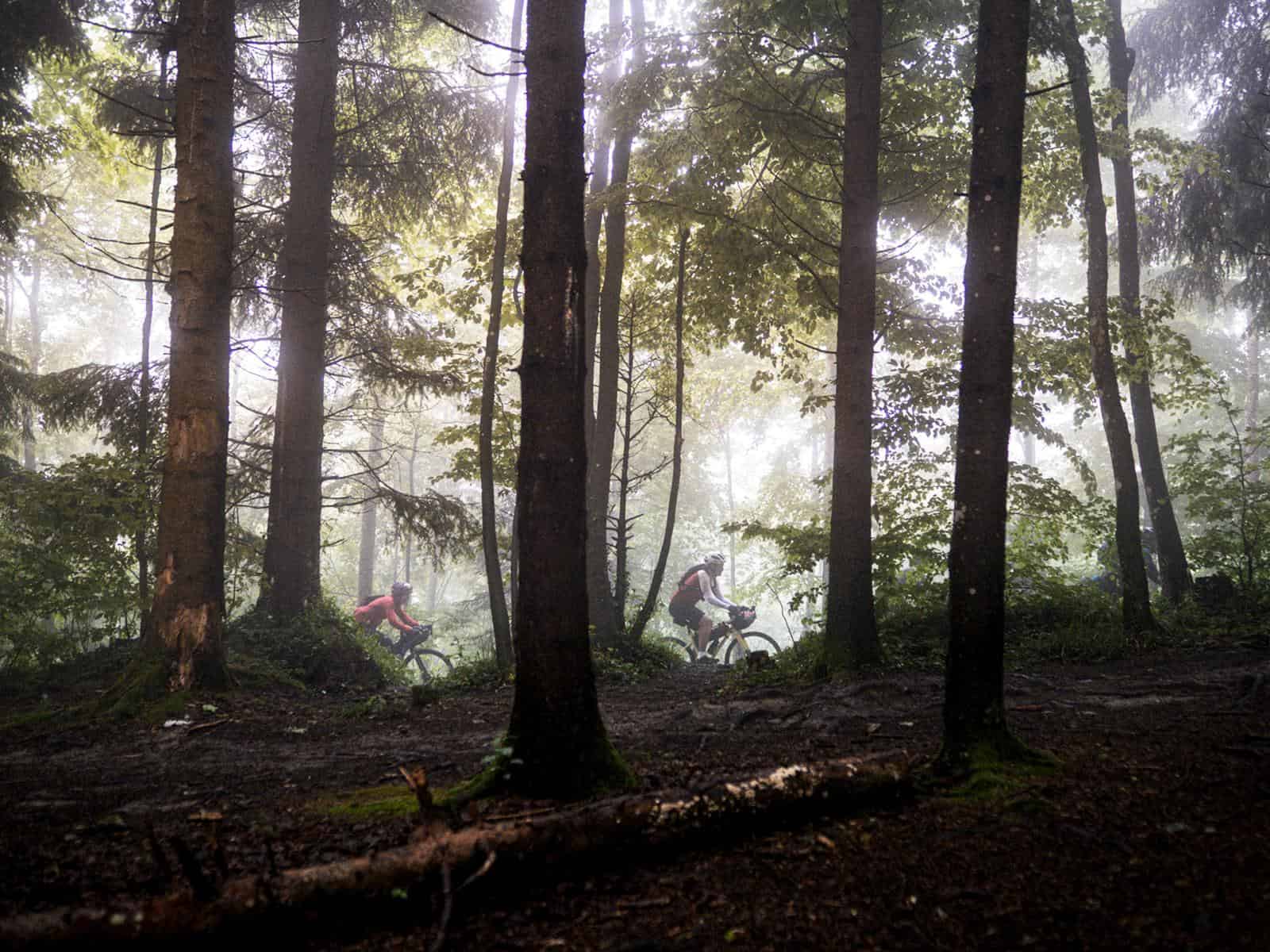
When things aren’t easy to begin with, but the team makes them easy through sheer competence and willingness to help, the work goes great — even starting off already a bit worn out after a long stretch of intense jobs. That’s exactly how it was with Züri Escape.
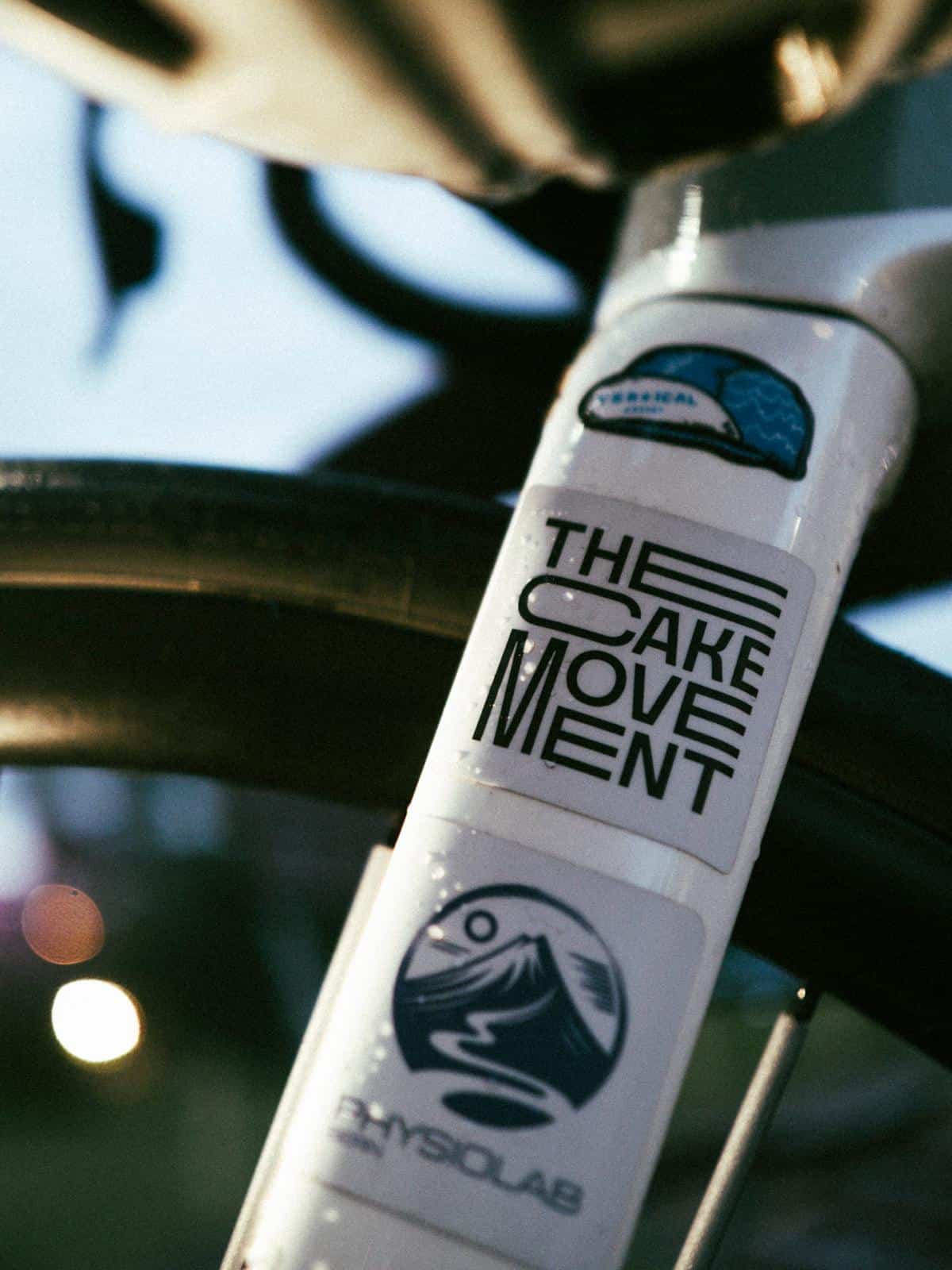
Dominik and Fabian created The Cake Movement to bring together gravel events that range from competitive to laid-back, but are all thoroughly convivial.
Back in October 2024 I’d covered Dead Ends & Dolci, run by Dominik and Stefano, and it had been a wonderful discovery (I wrote about it for Alvento 36 and for Bikeitalia). That was the first event of a wonderful collaboration that will continue very soon with Pain au Chocolat – the only pain we like, a 1.000km road race with optional party pace. While writing this, I am in the middle of the route survey.
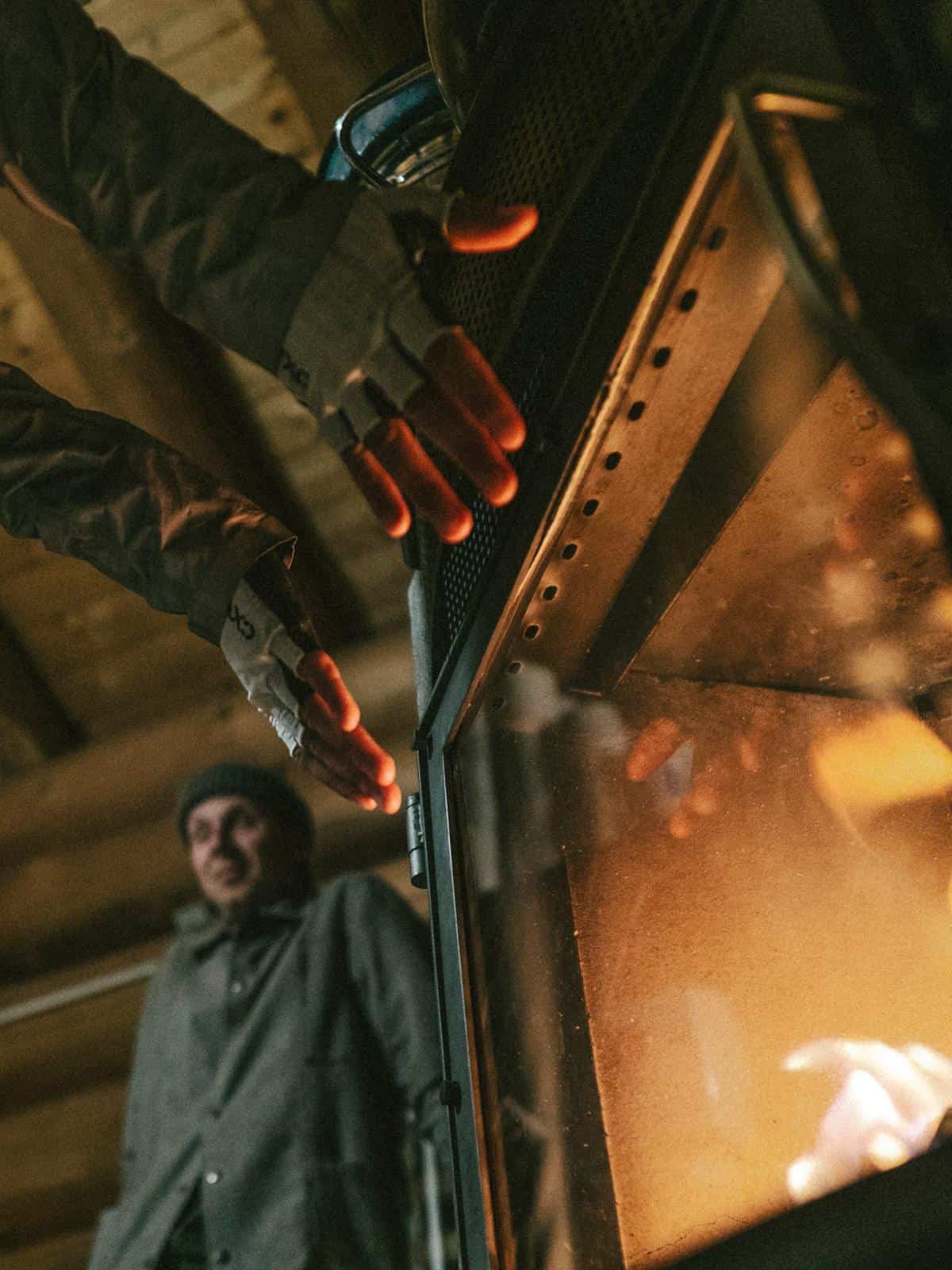
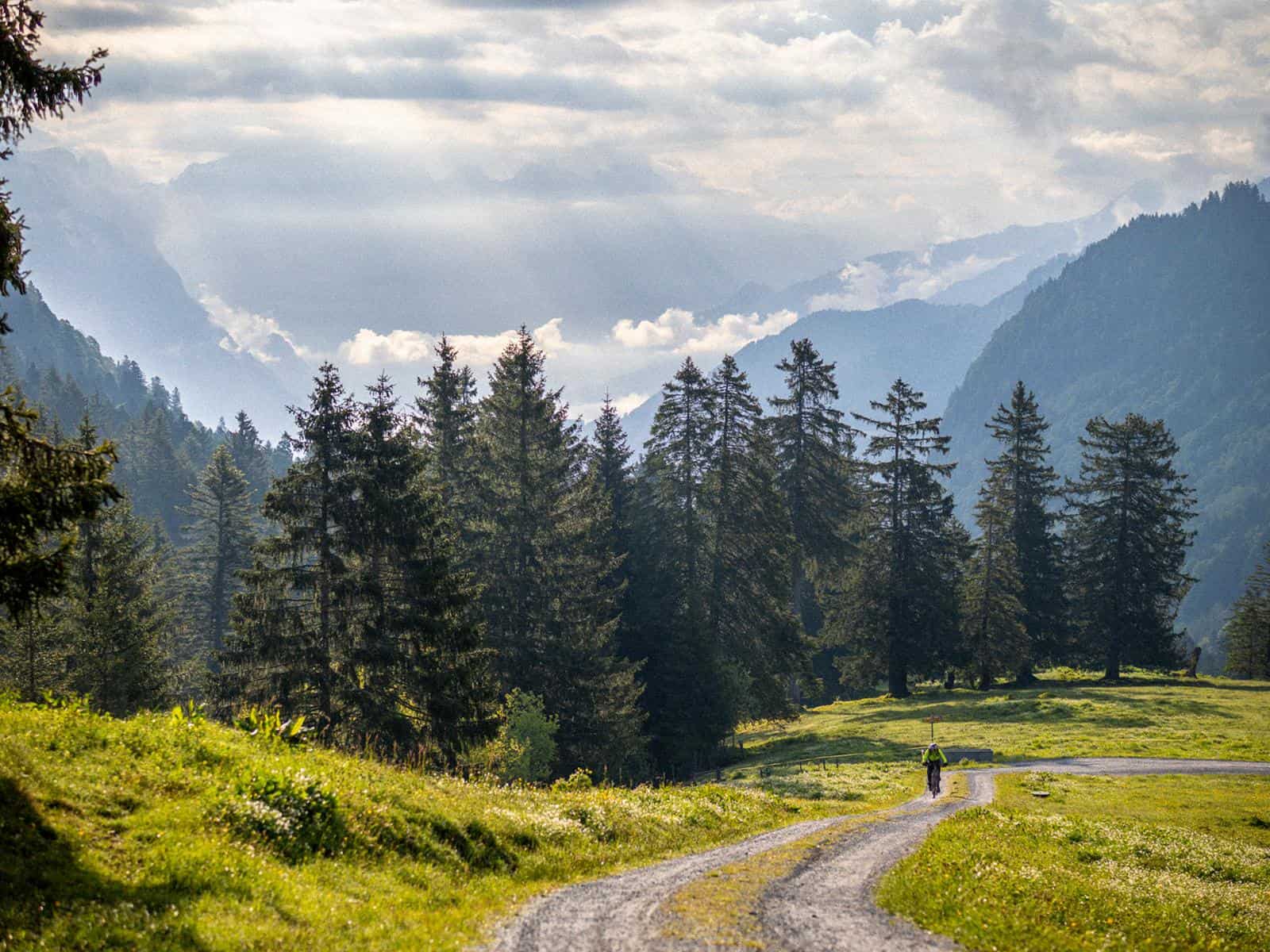
The night between Saturday and Sunday I sleep at CP2, the mountain hut run masterfully by Larissa, Luca, and Christof. As Jennifer put it perfectly: it’s hard to reach the checkpoint, but even harder to leave it.
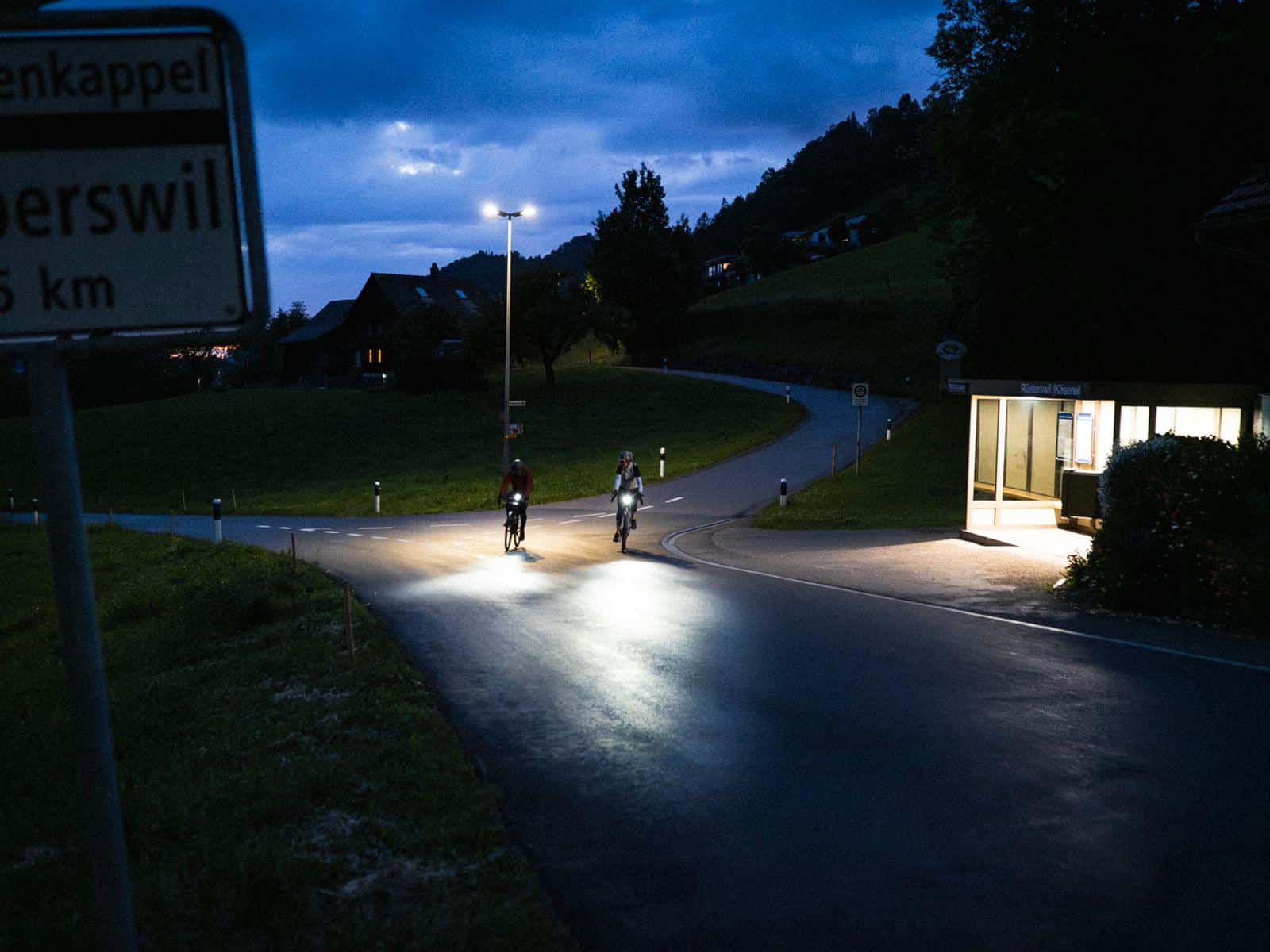
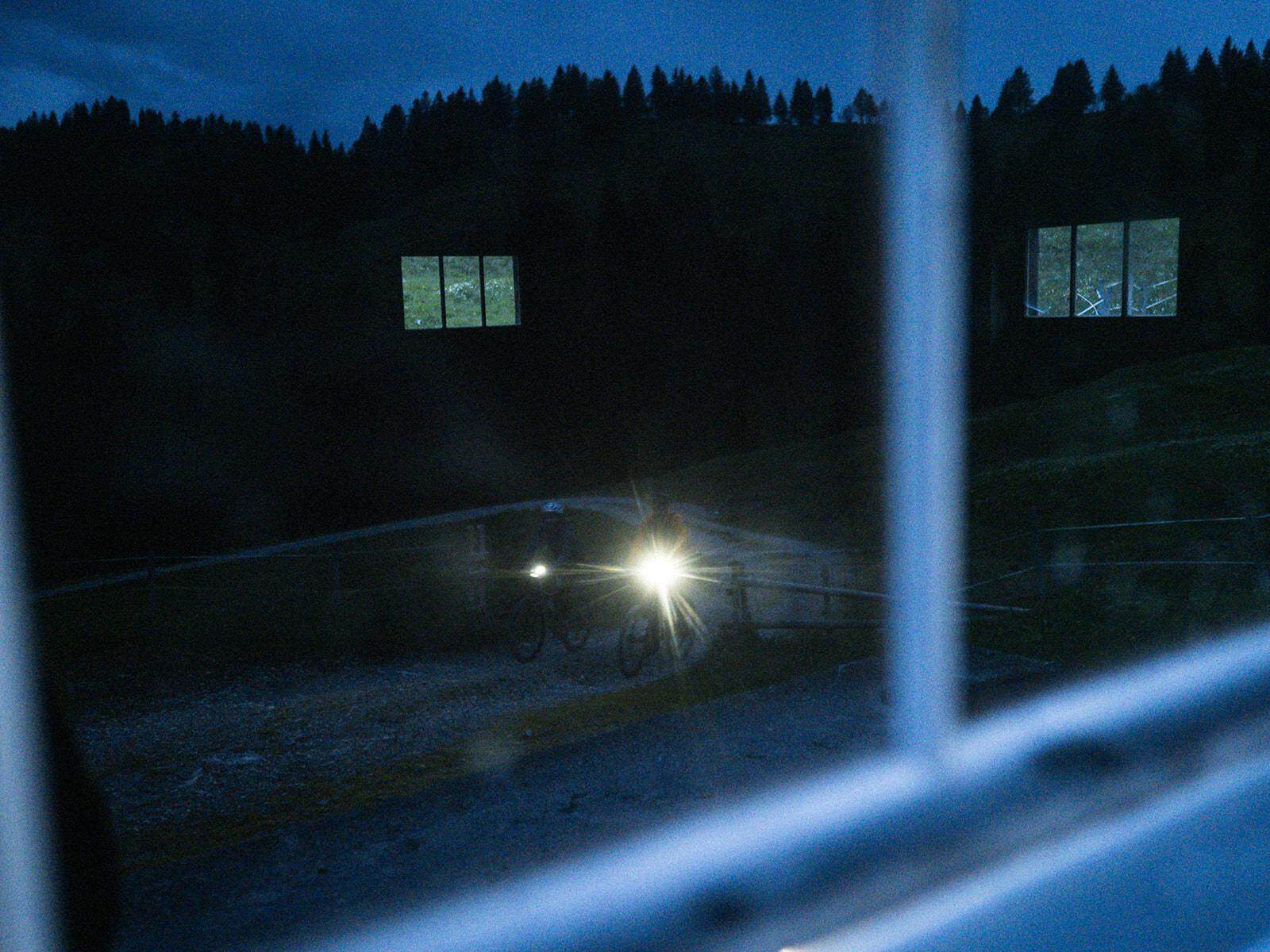
I decide to rest there a few hours and wake up before dawn, hoping to find some riders sleeping somewhere interesting. At 4:40am I jump in the car and start heading down. There’s no signal at the hut, so I have no idea how the race has evolved overnight — my decision to sleep wasn’t based on fresh information, just on the plain fact that I needed some rest after 18 hours of work.
The moment I stop, the tracker shows two riders near the church in Siebnen, one of the countless small towns around here. Judging by the tracker, they might be in the cemetery — not bad at all. I’m about an hour’s drive away, and on the way I pass through and catch Alice just long enough for a quick photo. Then it’s flat out again toward the small village of Siebnen, as the sky starts to lighten. Bedo Hamza, whom I already caught the night before up in the mountains, rides past — a genuinely nice guy, but since I already have plenty of shots of him, chasing him again is out of the question — not with a cemetery as the alternative.
I’m in Reichenberg now, still missing Büttikon and Schübelbach, then that’s it. Speed limits: 80 outside town, 50 inside. Up, up, up. One red light could make all the difference — they could leave at any moment. As soon as I get into town I see that both Alicia (riding solo) and Alessandro and Ivo (riding as a pair) are sleeping nearby, but it’s not clear whether they’re in a public park or the hotel next to it. I park at random in the empty square and run to check.
After a quick look I give up on them — never mind, they’re probably in the hotel. Damn it, I’m betting everything on Lisa and Julia in the cemetery, as bad as that might sound out loud.
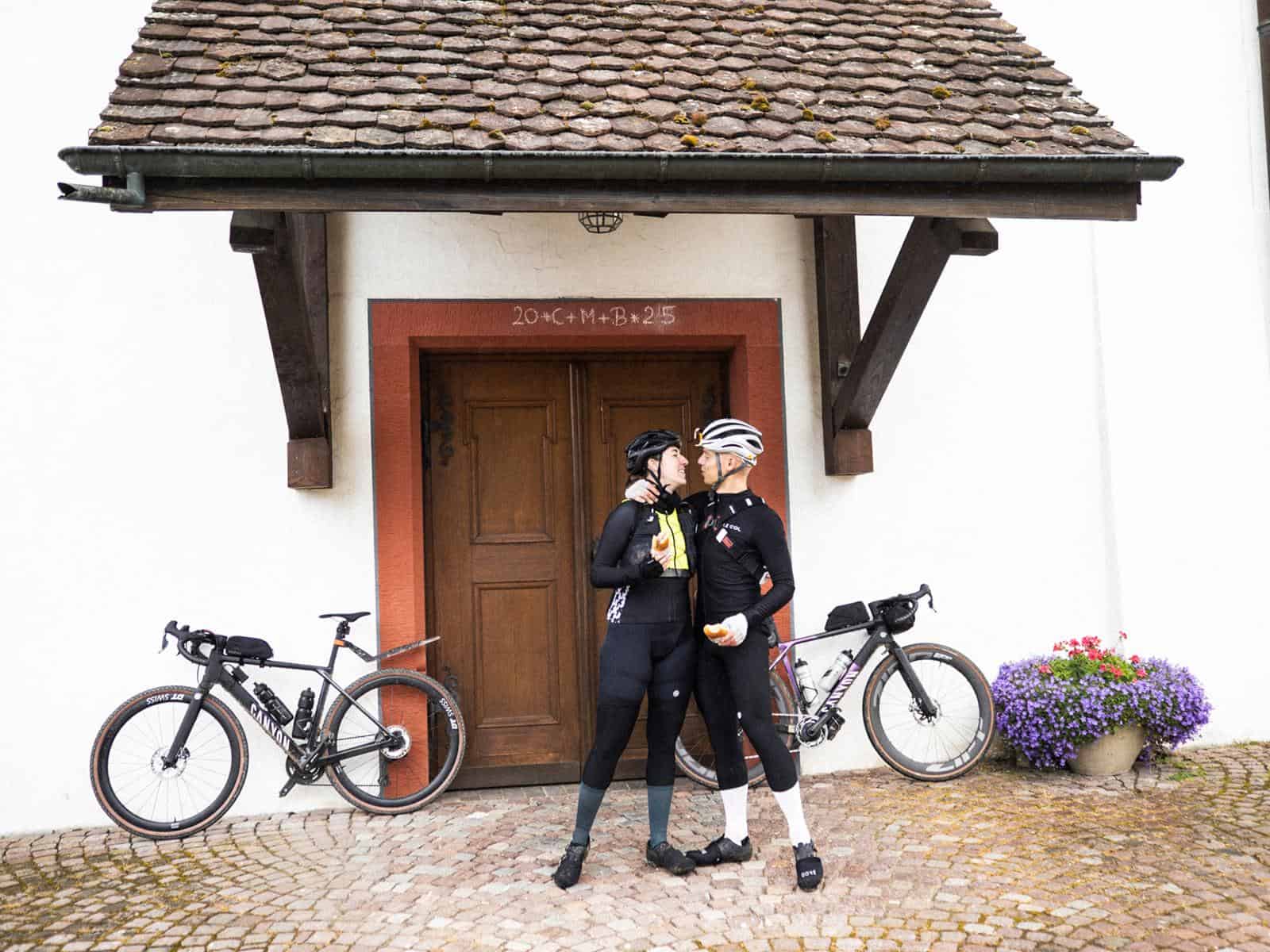
It’s nearly 6am: on a Sunday, the town is deserted even by Swiss standards. I park in front of the church, closing the door softly so as not to wake the two riders — or maybe just for luck. I open the little gate into the graveyard, which wraps around two sides of the building.
Everything is silent, and it starts to rain. I don’t want to wake or scare anyone. I’m practically shaking with anticipation, walking slowly over the paving stones, looking for any sign of human life. Nothing. A slightly creepy scene, honestly, for anyone watching from a window nearby. I pick up the pace, peek behind headstones, check an open garage, try under a covered walkway. Camera in one hand, phone with the tracker in the other. Nothing. So I retrace the last few hours of the race to figure out what I missed: the dots stopped here late last night, then went grey — last update more than four hours ago. So they switched off the little tracker box, and maybe forgot to turn it back on when they left.
I make another pass, this time outside the fence too — maybe there’s a covered area, or somewhere even quieter than the cemetery itself. Still nothing. What now? If they’ve already left, can I catch up with them? I check bakery opening times to intercept them at breakfast, but on a Sunday everything’s shuttered. One last pass, just to be sure, and then I let it go.
It’s well known that when you’re riding, the hardest day is the third: the initial burst of energy is gone, the excitement of the adventure has already worn off, and at the same time your body hasn’t yet adapted to the rhythm of a long tour or an ultra.
When it comes to photographing three-day events, though — trails like Züri Escape — the hardest day is the second. On two-day events, the start and finish set the rhythm: you have to photograph those two fixed points and everything else naturally falls in around them.
Here, no — the second day sits right in the middle: you can do absolutely anything from dawn to dusk. Riders are spread on the route, far apart. But it’s also the crucial day, the one where you have to pull out the real substance of the coverage. Dominik’s trust — his only instruction being “just do what you do” — doesn’t exactly help here. Without fixed points, it’s that very freedom that causes the anguish: try to chase every rider, and you risk catching none of them — see the example below. Freedom-induced anguish can be paralyzing, and it becomes hard to produce the good photos the job actually needs. 52 hours is a lot, but it’s nowhere near enough to cover the full range of what riders go through across such a vast territory. On top of that, 100 riders — 20 of them in pairs, so really just 80 small dots on the tracker — is very few; you have to go looking for them with a magnifying glass.
A textbook case of Kierkegaardian anguish and paralysis happens to me at Raten, the original destination of that morning before Karen’s detour.
The cheerful Danish philosopher writes — to simplify wildly — that the freedom inherent to the human condition causes existential anguish, and risks paralyzing us. So the famous Ass of Buridan would die of thirst and hunger when at equal distance from two bowls.
Bring that deep reflection down to a much more trivial level, and the concept still holds: faced with a choice, the infinite possibilities we rule out matter more, psychologically, than the single one we actually act on. And that can seriously paralyze you, making you lose both the goat and the cabbages —which is exactly what happens to me at Raten.
By the way, This Kierkegaardian anguish and paralysis is strictly related to FOMO, which we explored here at lenght.
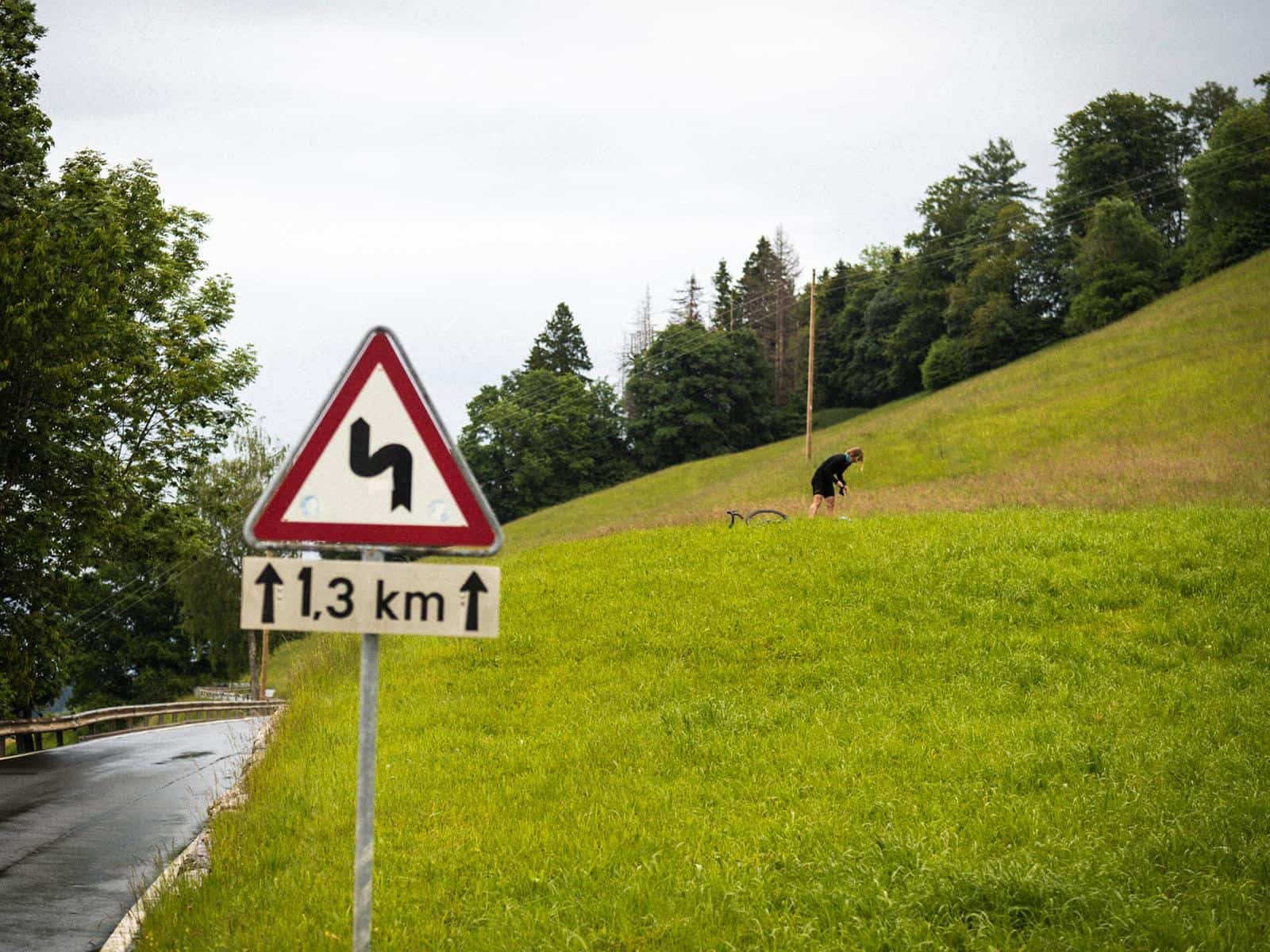
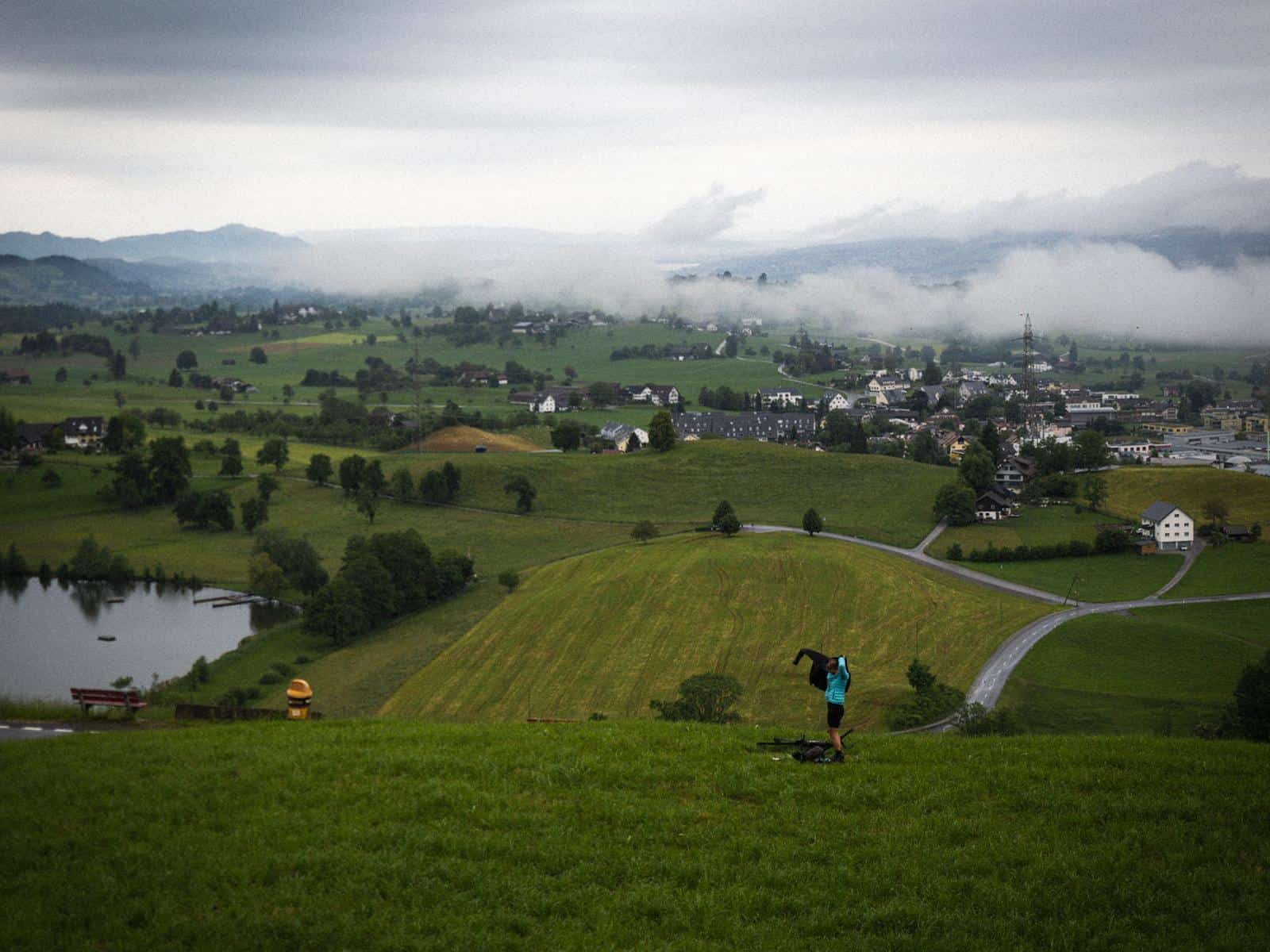
Sunday morning, a few hours after the cemetery, my plan is to head to the Raten pass to catch another group of riders at the little chapel of St. Jost, tucked in a clearing in the woods. I arrive just in time to briefly follow Rebecca past the pass, then head back.
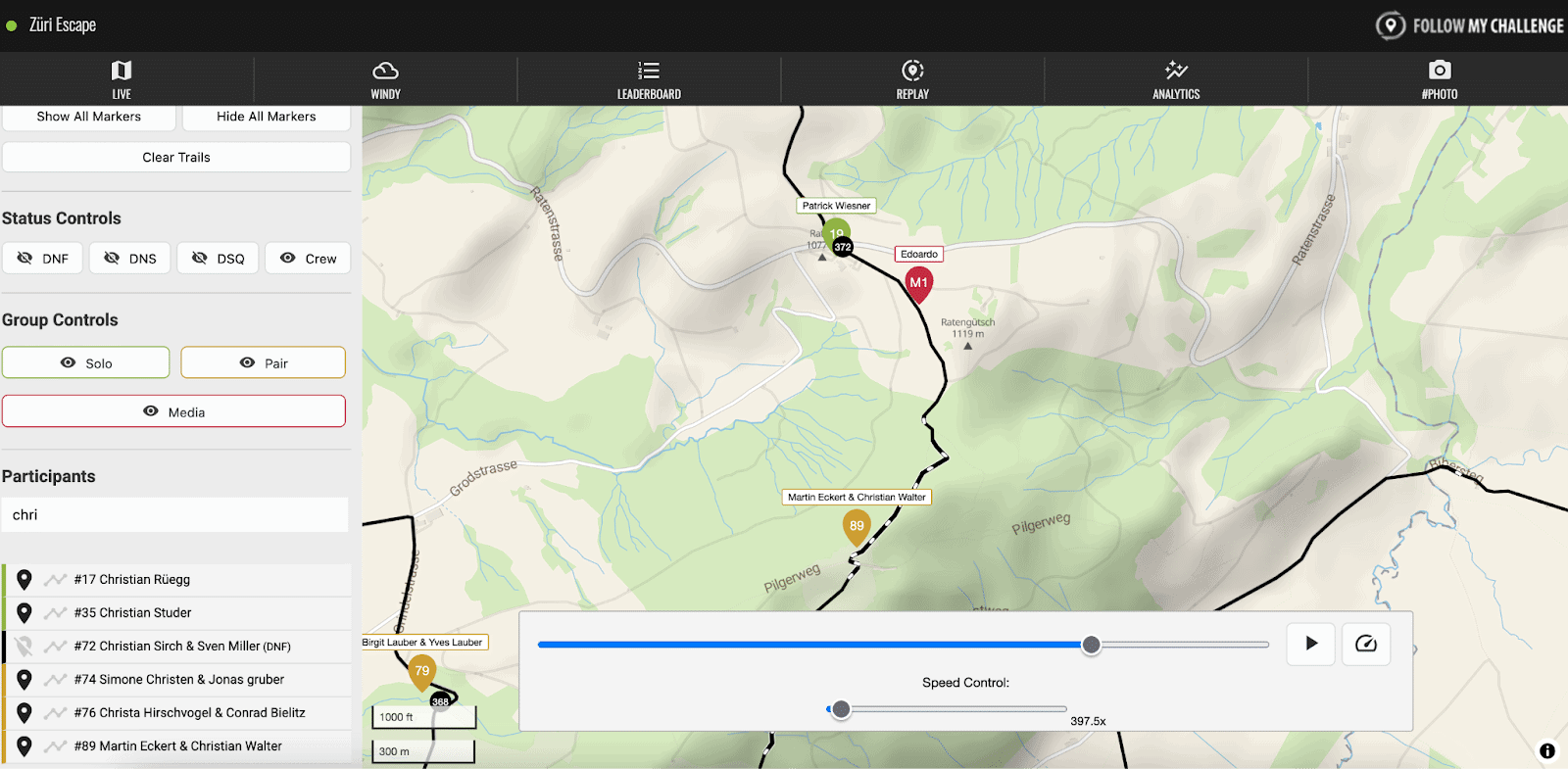
It’s 8am, the light is fairly flat. The paved road cuts across the pass east–west, and where it crosses the gravel track running north–south, there’s a car park with a restaurant. Usually nobody stops right at the bottom of a descent, but a gentle climb starts right after, and more importantly, it’s breakfast time — someone will stop. I start walking up toward the chapel, about a half-hour hike. Since it’s downhill for them, if I cross paths with any riders on the way up, all I’ll get are “action” shots at best. Not much.
One flies past, I don’t catch who; I grab a quick shot, then he stops to eat at the café. I check the tracker — more riders are climbing toward the chapel, but I risk arriving too late and only meeting them on their way back down. After them, there’s a thirty-minute gap with nobody. What now? I’m stuck: do I risk climbing to the chapel for nothing, and then miss breakfast too once I’m back down? Or do I take more photos at the rest stop, even though I already have plenty? It takes 20 minutes to climb to the chapel, but also nearly 10 to get back down to the café. The risk of losing both scenes is real, and it grows with every passing minute.
I decide to go down to the café: I can always go back up to the chapel later, since it’s an obligatory passage point, while once breakfast hour is over — and the finish gets closer — fewer and fewer riders will stop to eat.
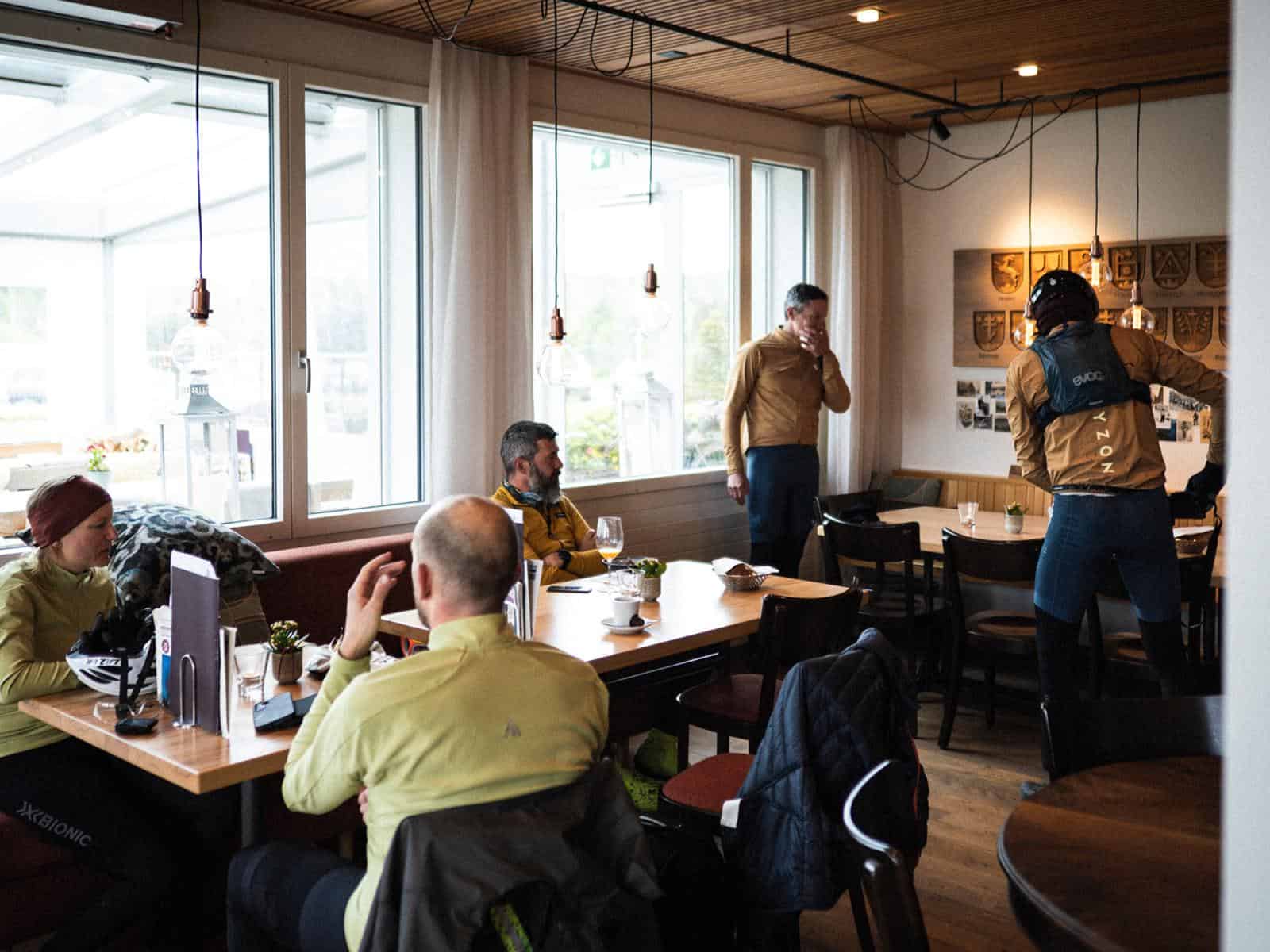
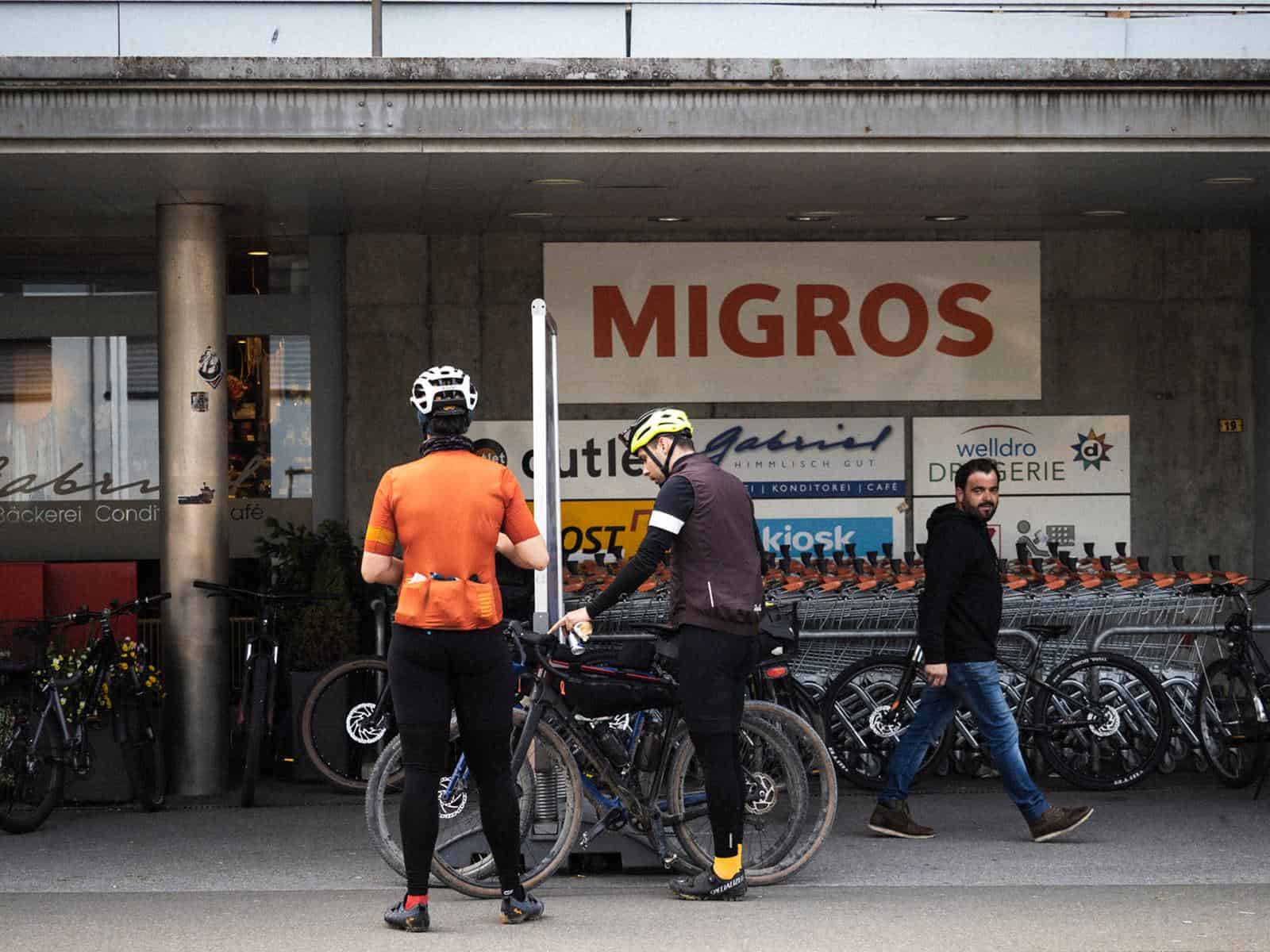
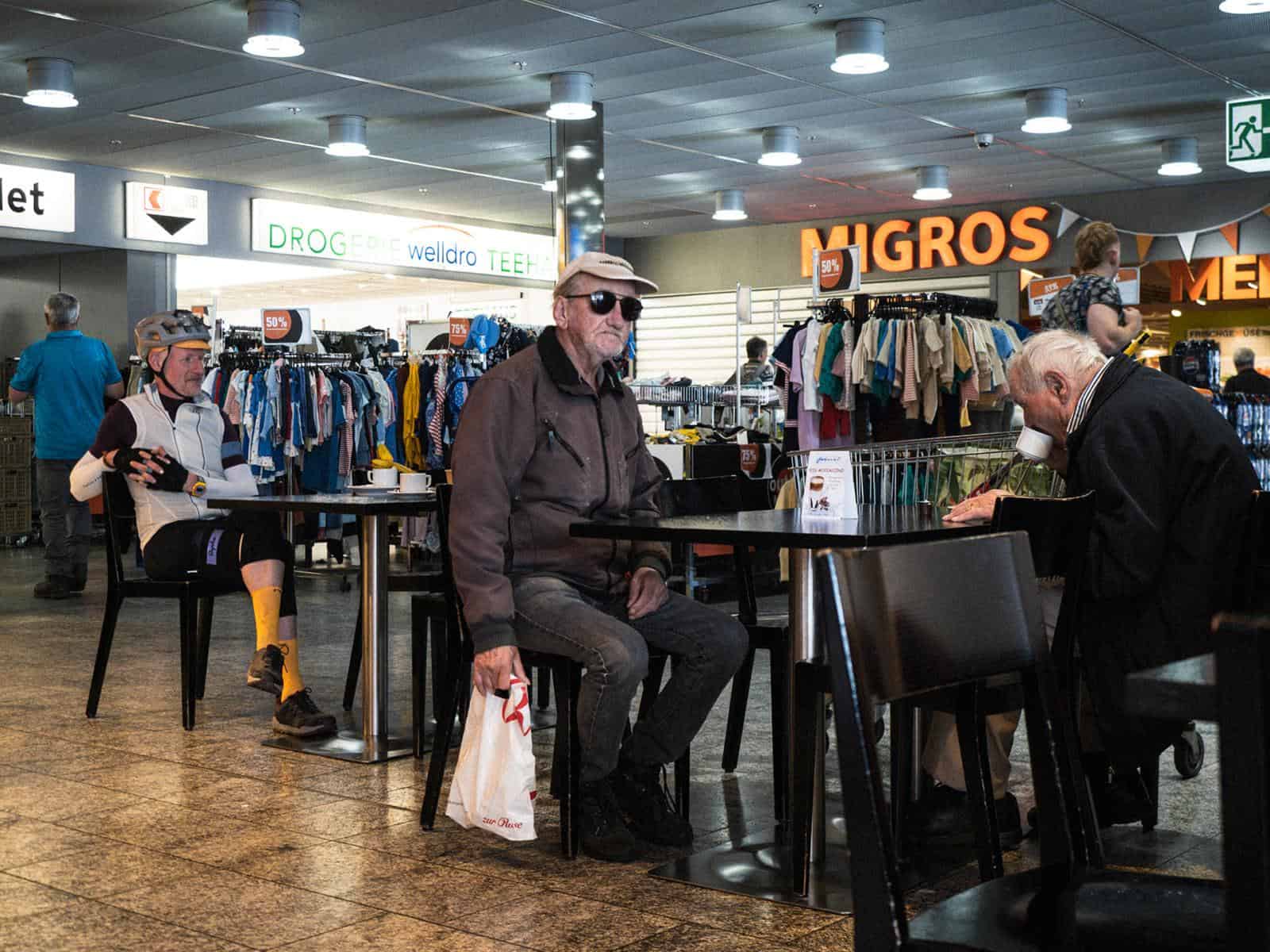
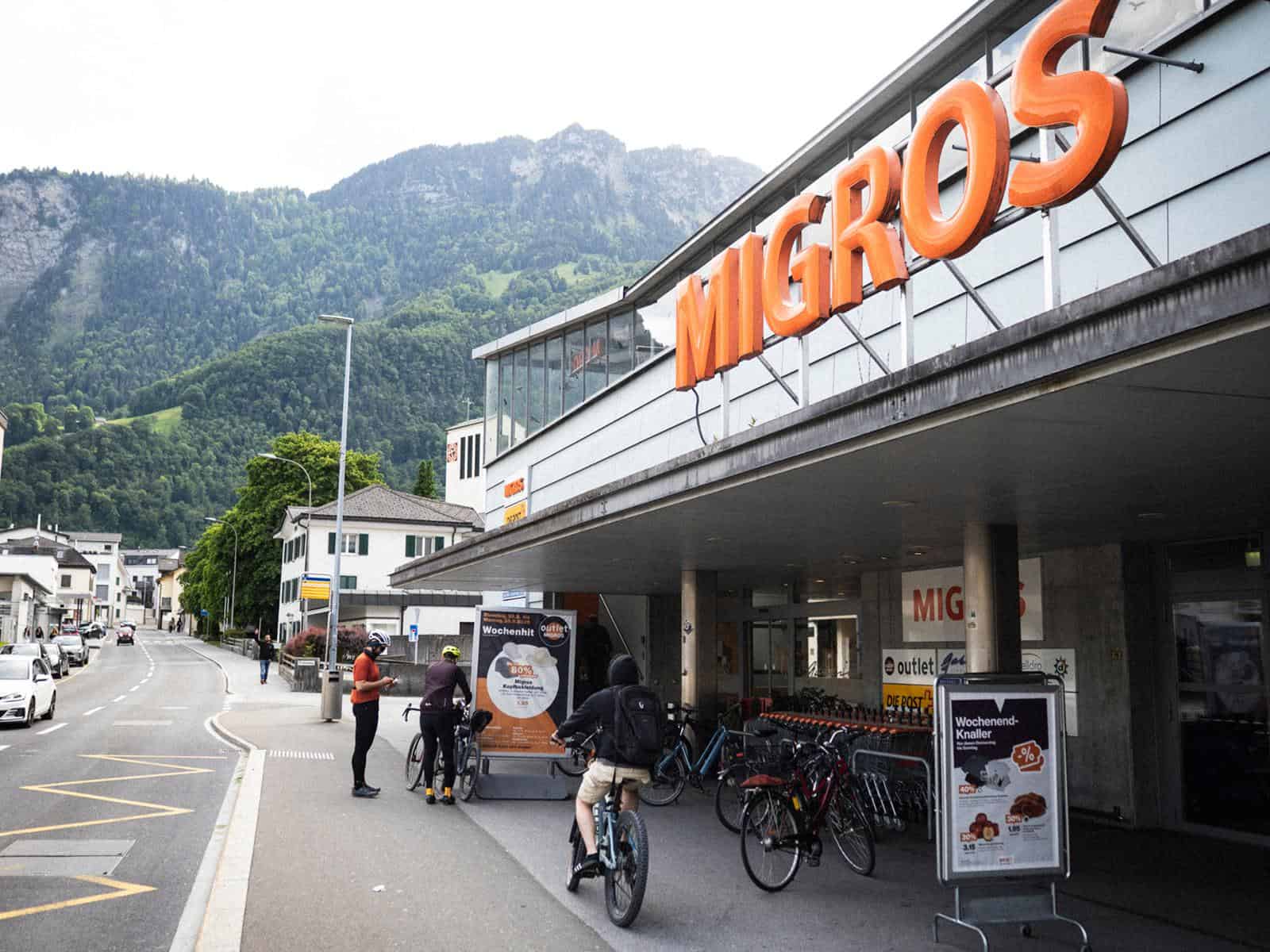
Actually, not even that — which would have had its own kind of charm. Car parks and supermarkets have a charm of their own too. The orange Migros signage, for instance, gave a faint sense of place to a couple of photos of Alessandro and Ivo, helped by their matching jerseys; the café gave me the chance for a couple of shots of Marco & Marco, though I’m not fully happy with how those came out.
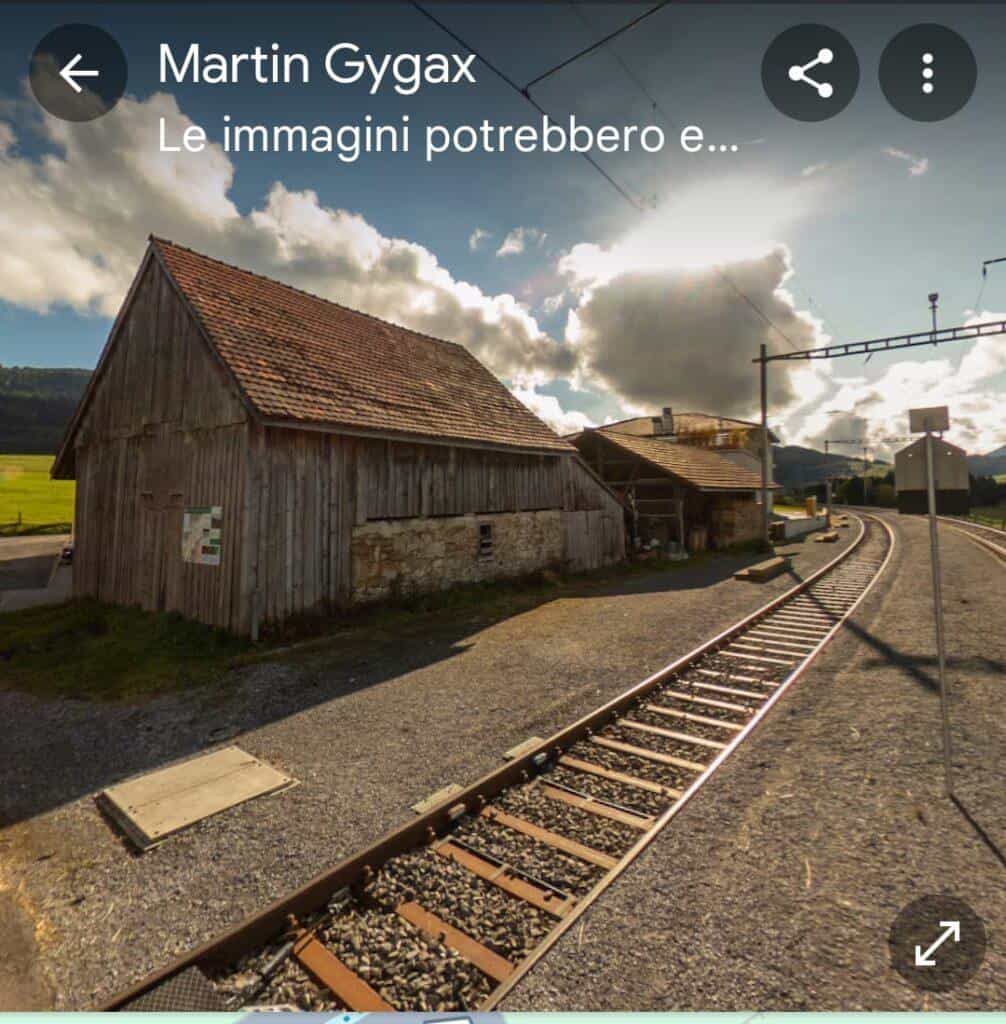
This case is different. Studying the route, I’d spotted a little gem: a level crossing with a very weathered wooden station house. Thoroughly Wild West, gorgeous. Add a couple of cyclists and you’re instantly in Wyoming, 1880 — how cool is that. One of those spots that earned more than a pin on the map — a mental note too: I’d planned to pass through sometime between day two and three depending on how things went, especially since the crossing also marked the start of a flat stretch through a half-marsh, a distinctive, one-of-a-kind spot on the route.
23:30, Gosia stopped. No shops, no shelter. Why there?

23:30, Gosia stopped. No shops, no shelter. Why there?
However hard you try to split your targets by chasing different groups half a day at a time, in the end a few characters keep coming back. It works a bit like a TV series, where every episode has its own story, but there are recurring characters who show up every so often — and eventually you grow attached to them.
[Photos: Wendy, first stop — Entering Niederurnen — deciding whether to scratch — the decision is made.]
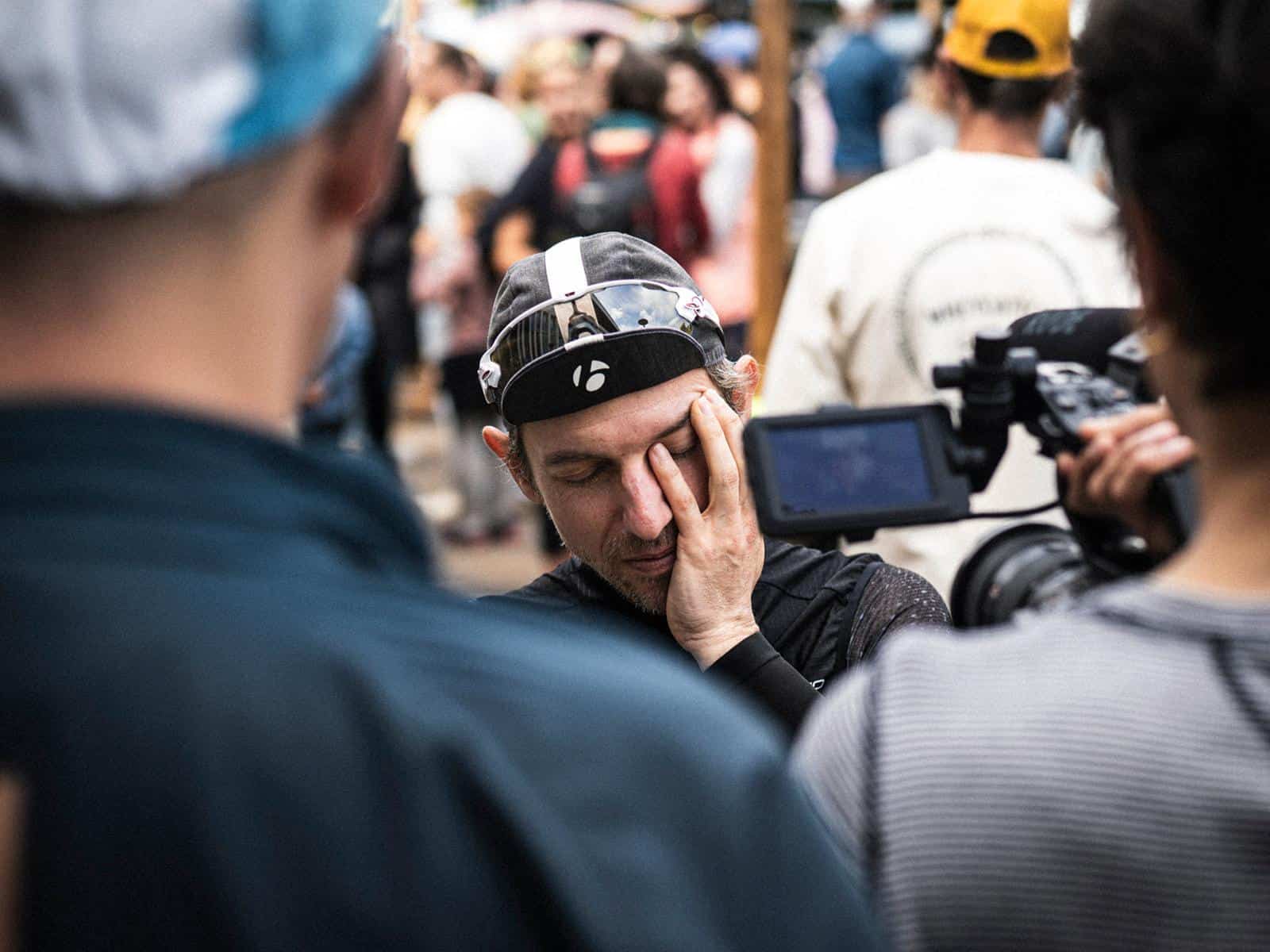
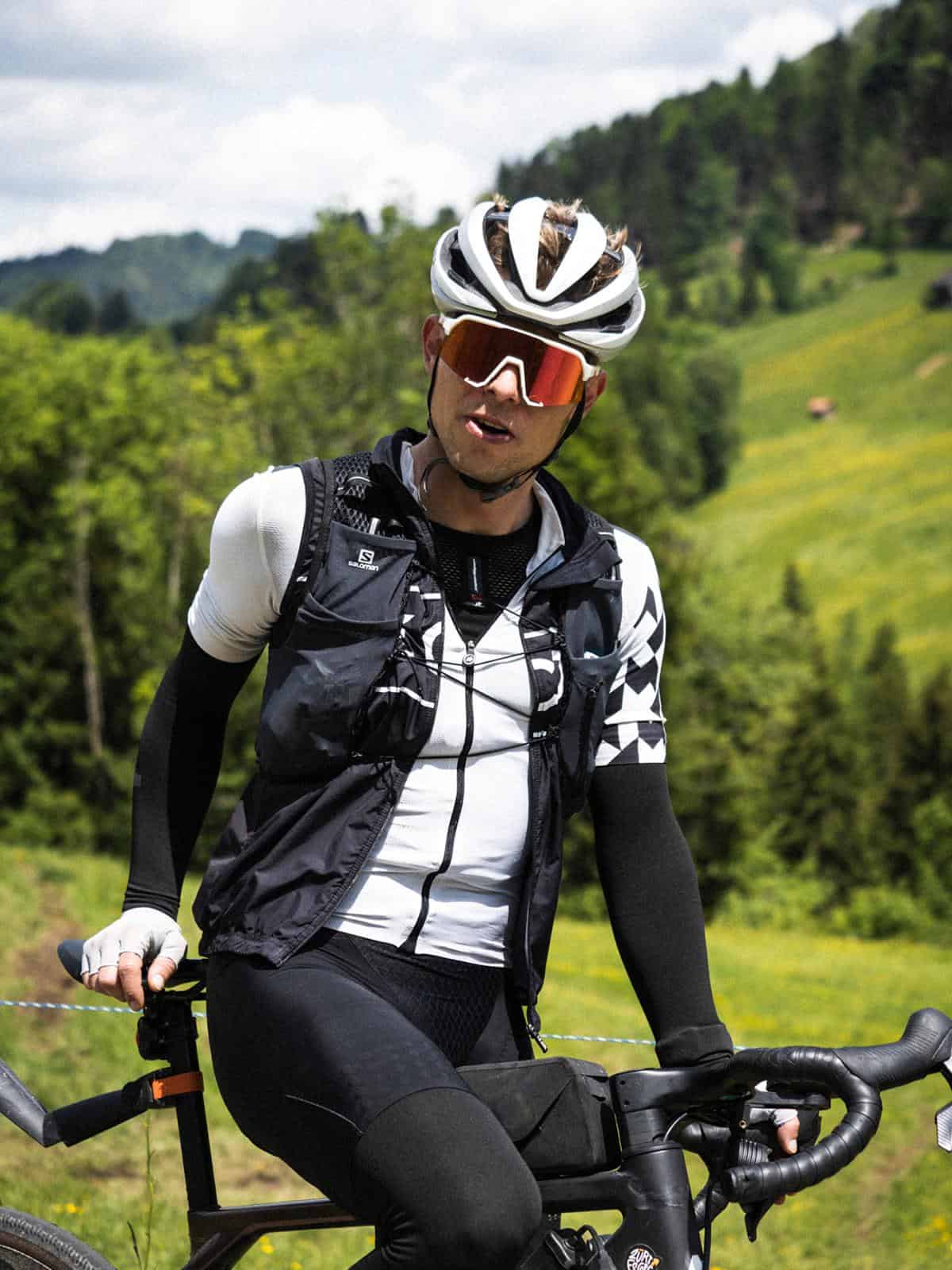
At the first useful stop, km50, I meet Wendy, a Cake Movement regular tackling her first Züri Escape. “The rocky sections are exhausting, tarmac has already become my favourite part,” she says while stocking up on coffee and snacks. “There are a lot of flowy grass and meadow sections, my favourites, because they clear my head and I can just fly.” I see her again in the woods later on, and again just before the climb to CP2, when she decides to scratch: the pace being slower than planned has wrecked her schedule, and she wouldn’t make it home in time.
Simone and Jonas are also a recurring encounter: on Saturday I find them sheltering from a light drizzle under a portico, snacking. I catch them again in the afternoon on the Tanzboden climb, toward CP1 — actually, just him this time: his girlfriend has scratched and gone to a spa, planning to come back later to tease her sweaty, filthy boyfriend. We cross paths again in the marsh, past the now-renovated Wild West station. A quick chat and I let him go, waiting for the next group. A little later, while gunshots from hunters echo across the hills, I see him pedalling back at full speed. Turns out they’re not hunters: the route runs right past a shooting range, and it seems to be practice time. Better not risk a stray bullet. Jonas takes a paved detour and quickly disappears from view.
One reflection is about people. On those same days, I was also following Seven Serpents, and admiring the photos with shepherds, Balkan cars, and interactions with locals. As Lael Wilcox puts it in the documentary about her round-the-world ride: “we ride through the lives of the people we meet”.
Photographically, that perspective is a constant in my own work, though honestly it’s a fairly classic one. It’s fascinating to document a race through the eyes of the outside people who happen to be there in that moment. During VIA Race we had memorable moments all across Italy; even in more formal jobs, it’s happened that a local presence made the photo.
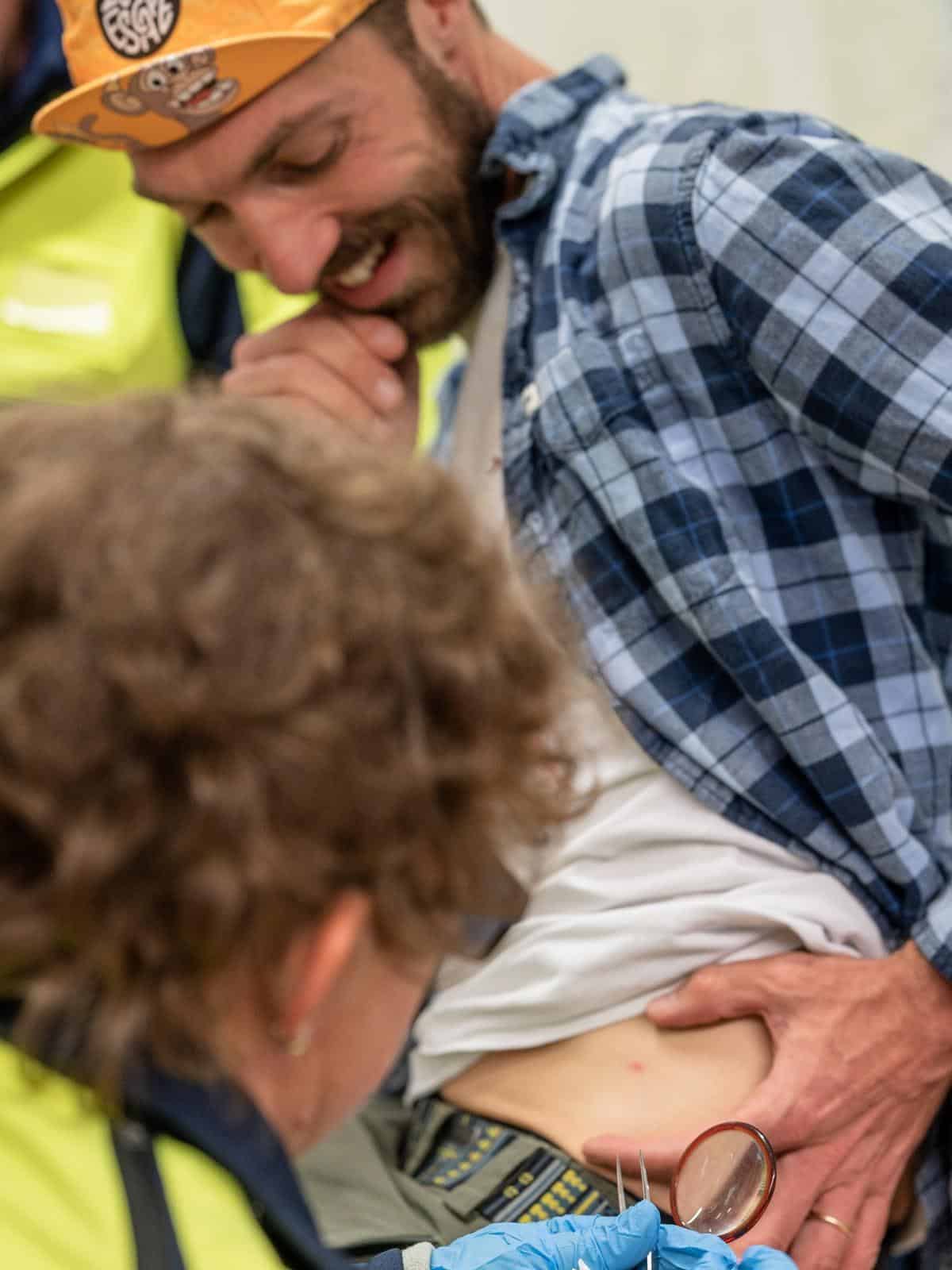
One low point: the tick I found in the shower on Sunday afternoon. A small souvenir from Switzerland, thankfully with no consequences. Thanks to Jennifer for documenting the moment, and to Red Cross for removing that!
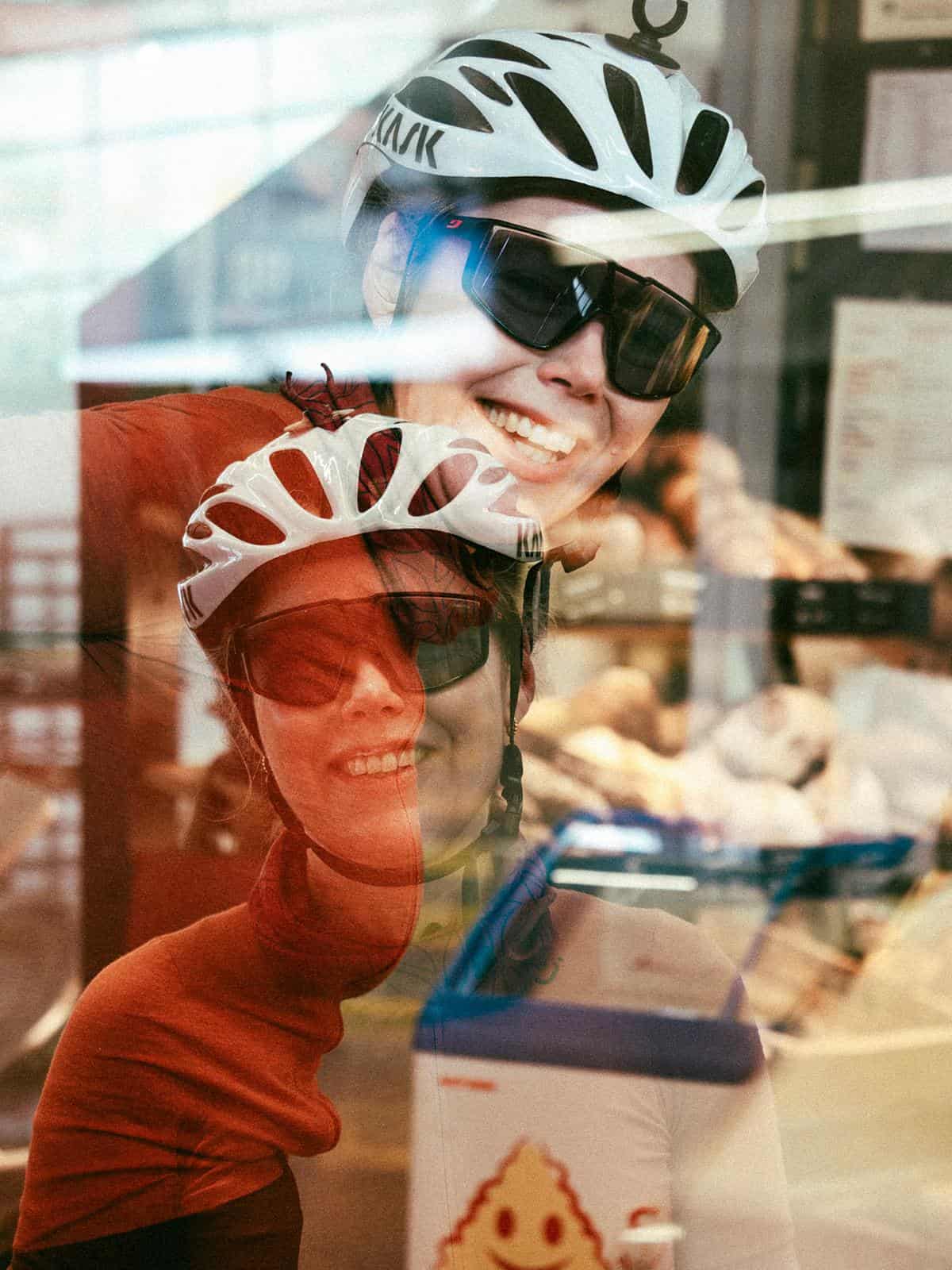
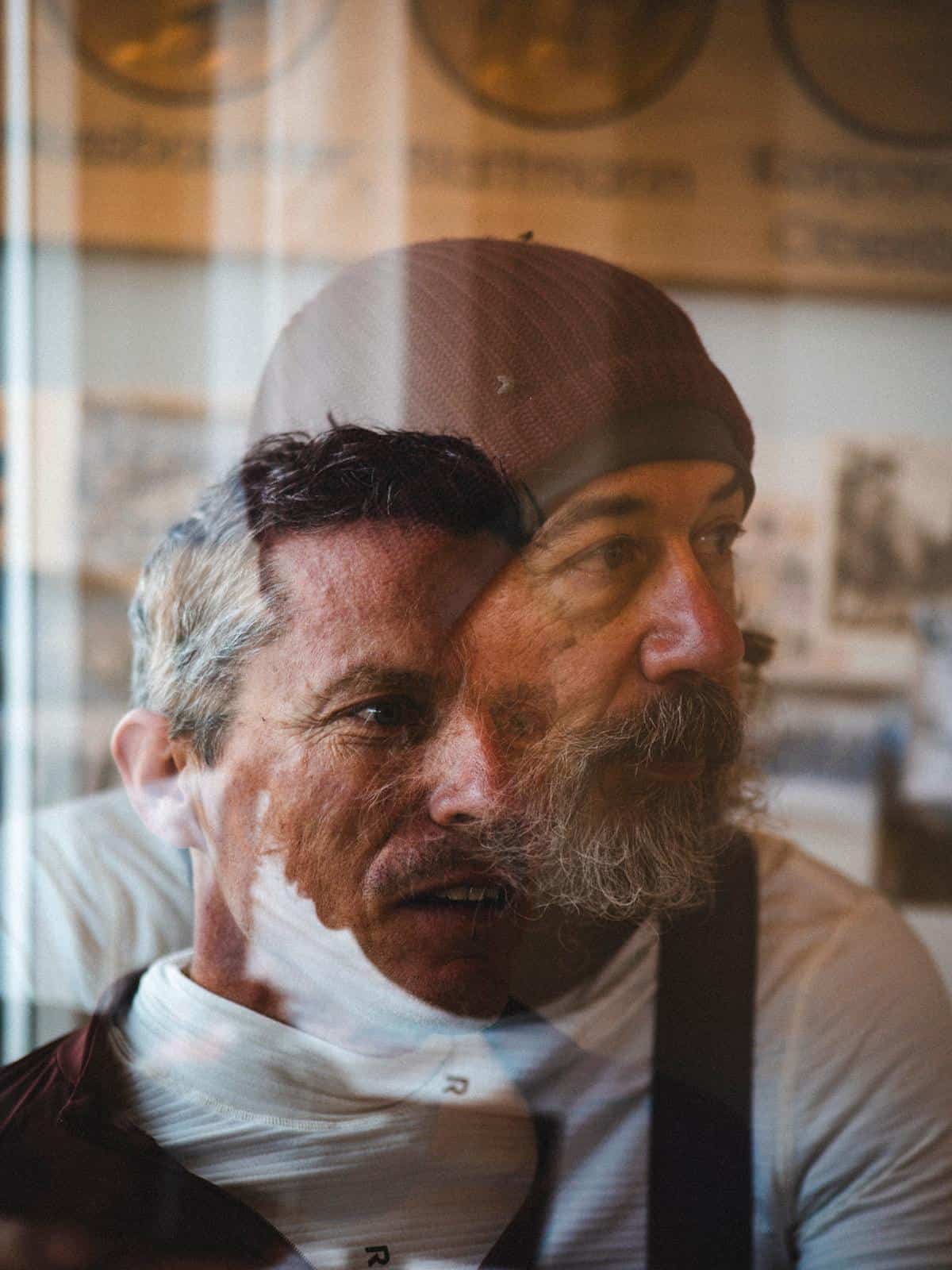
One more thing that didn’t go as I hoped? Double exposures. I’d set out planning to make good use of double exposures, and ended up shooting only two — one mediocre, one decent. Oh well.
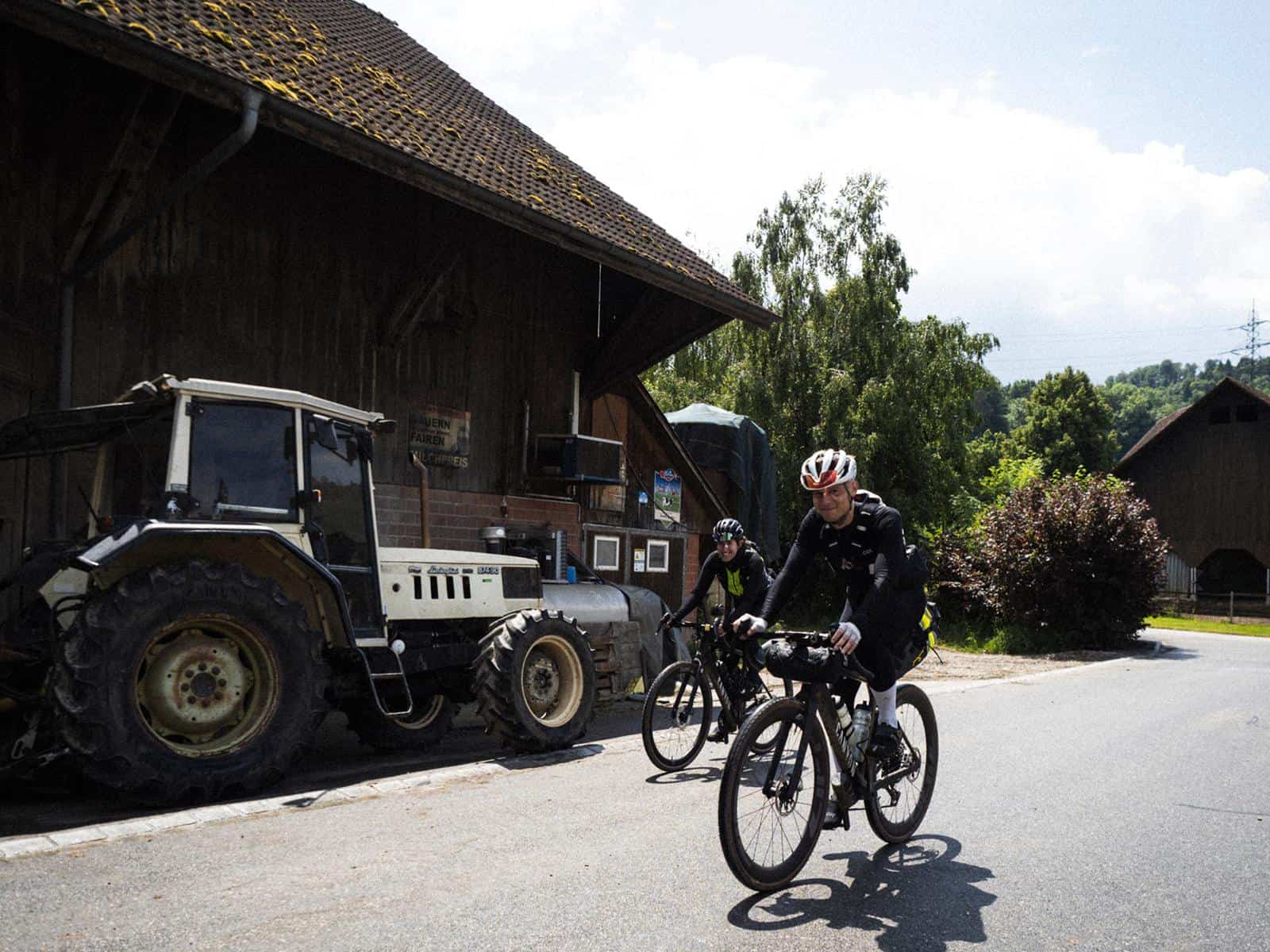
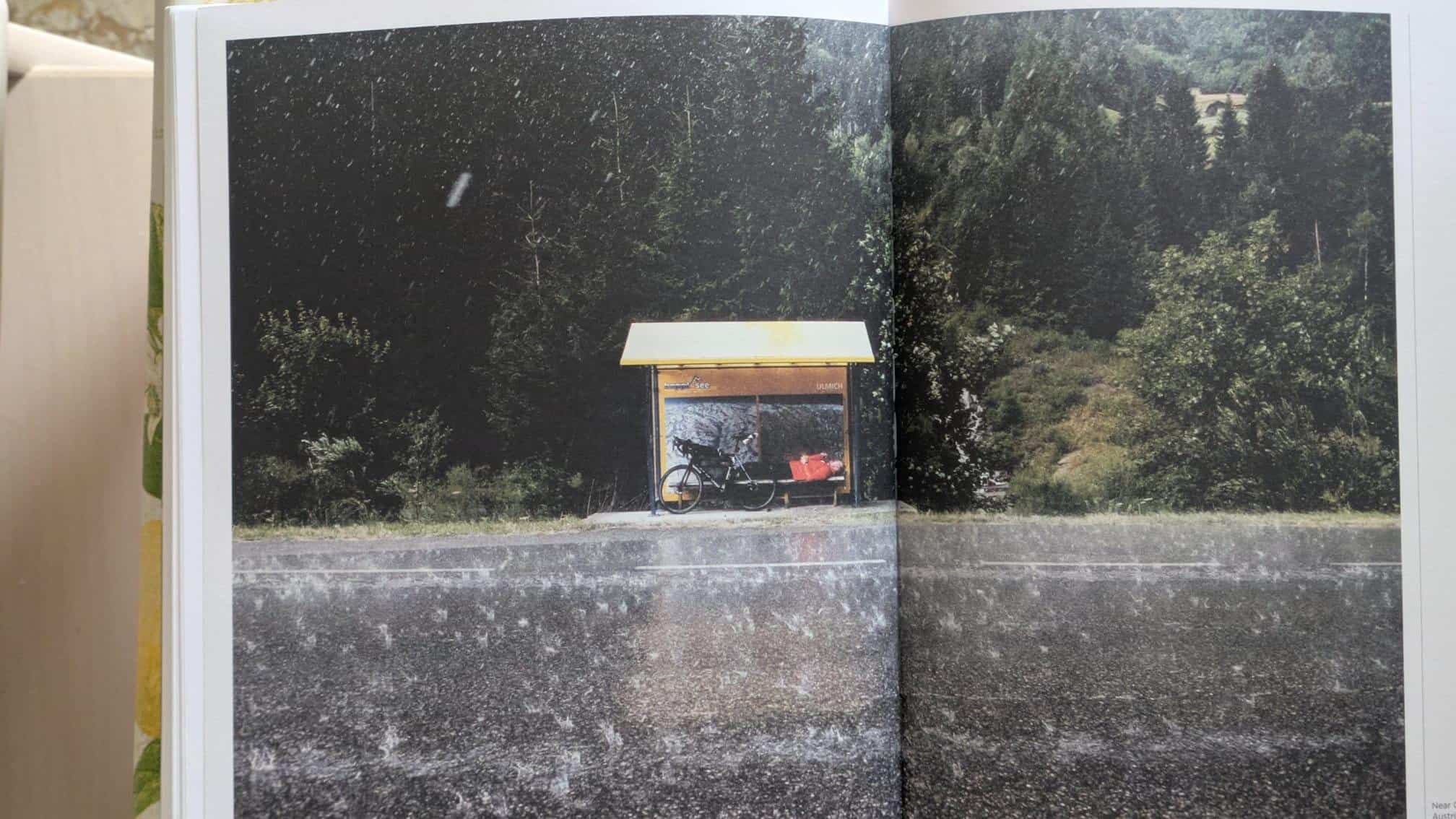
After that small sad story, here’s one with a happy ending: when I caught [two riders — names missing in the source] in the rain, I’d also set up a GoPro to grab some clips for Christian, of CdubFilms. Except the GoPro isn’t part of my usual workflow (not enough: I strongly dislike it), so of course, I forgot it, propped up next to a tractor. Late in the afternoon I lost two hours retrieving it, waiting for the quietest moment of the race to drive back and forth to pick it up.
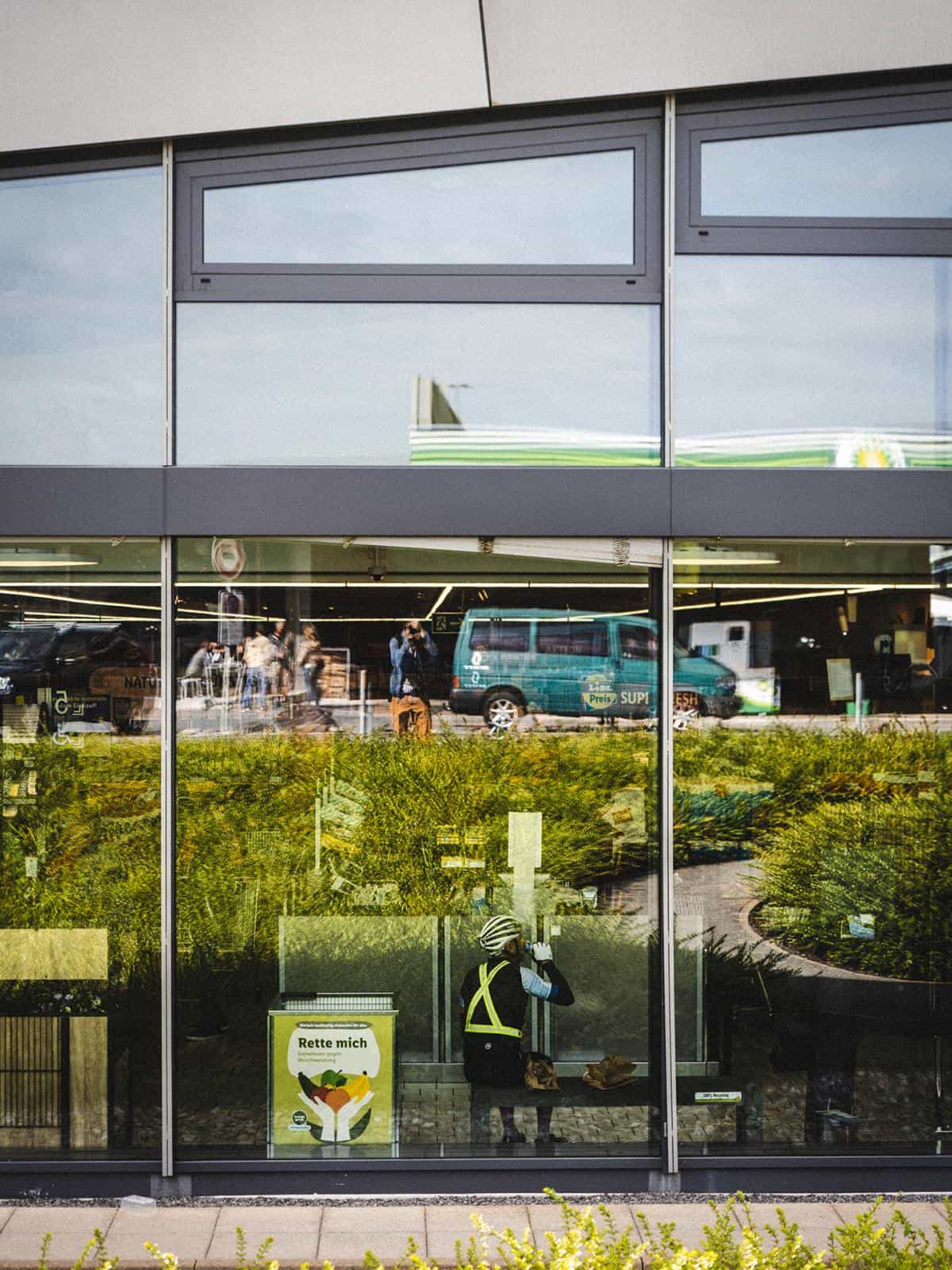
Let’s close out the Züri Escape report with a positive story — a genuine stroke of luck I only discovered once everything was done: when I ambushed Renzo at the Lidl, I got a shot of him from the front, where the shopping basket reads “rescue me.” Dominik pointed it out when I delivered the work — next time, I’ll need to brush up on my Swiss-German.
What do I take home, besides the fear of a tick-borne infection (thankfully unfounded)?
First, a bit more confidence: Dominik and Fabian gave me free rein, handing over the car and e-bike and telling me “just do what you do, see you Sunday.” Ha. How generous of them. But it worked out — I’m now more aware of what I’m actually capable of, so, thank you.
Second, a fairly obvious confirmation: having two people fully dedicated to driving is the next step for meaningfully improving efficiency and output. Every moment spent checking the tracker, consulting maps, editing the selection on the fly, coordinating with the team, or handling survival logistics — food, water, fuel — is precious time that could already be spent moving, or even shooting. So the ratio between time spent and photos produced would improve. Notes for next time — though working this way already is a rare luxury.
Want a taste of it yourself? Sometimes there’s room for one more person on the job — see my IG bio for upcoming assignments.
Or, register to the upcoming workshop: also see IG for the latest news.
Where to find interesting stories? Quick answer: where things and people are on the move.
Short stories from the field: people, places, and cemeteries, with some reflections on all this.
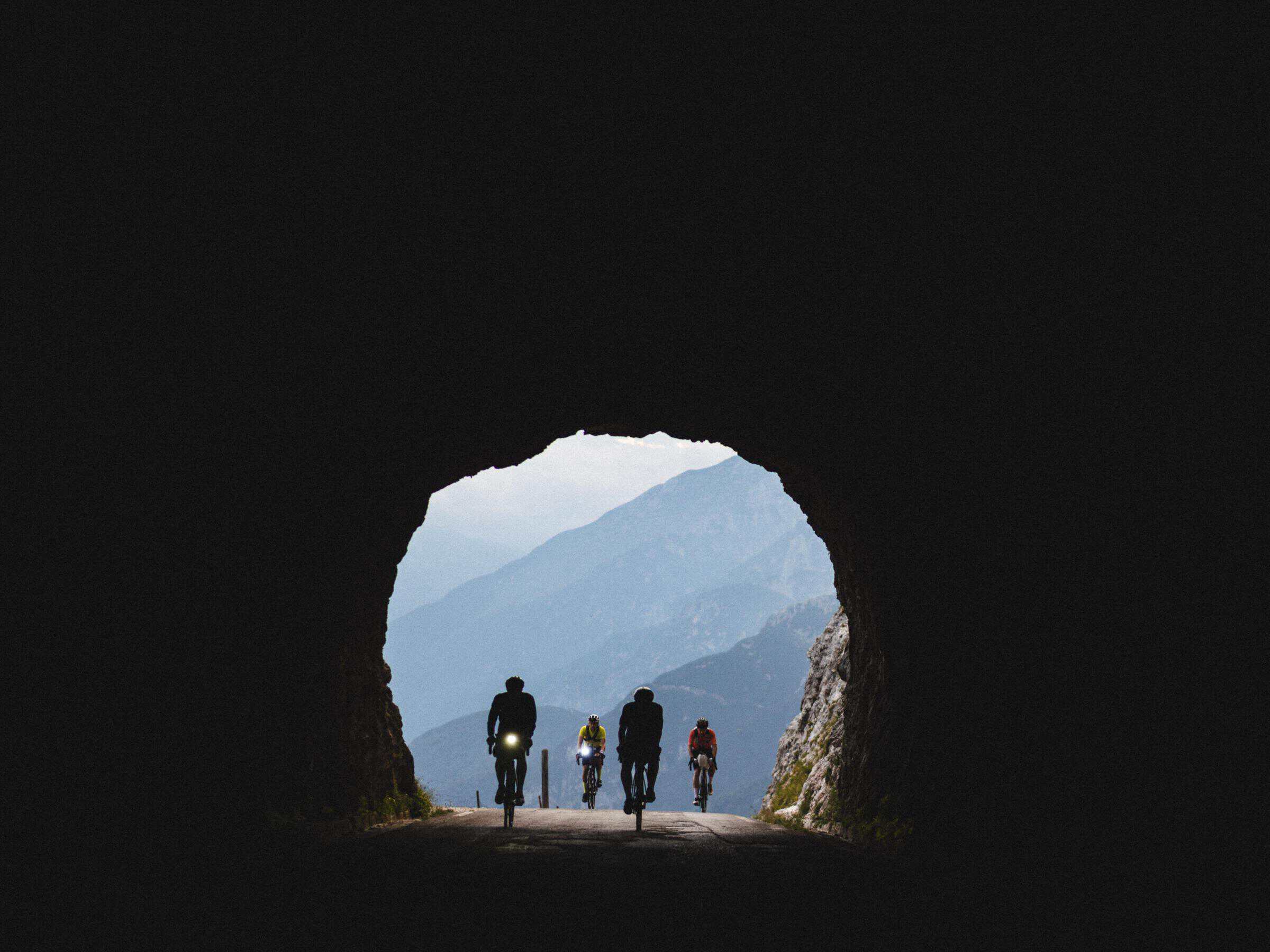
How do you actually find riders, and what do you do when you find them?
Where to find interesting stories? Quick answer: where things and people are on the move.
Short stories from the field: people, places, and cemeteries, with some reflections on all this.